REVIEW · MALLORCA
Private walking tour in Palma de Mallorca with local guides.
Book on Viator →Operated by Mallorca Free Tour · Bookable on Viator
Palma clicks faster with a private guide. You get a focused walk through Palma de Mallorca’s old-town sights with local commentary, fewer crowds, and plenty of time to ask questions. It’s set up for your group of up to six, so you can actually keep moving at a comfortable pace.
What I like most is how the route balances major landmarks with quieter courtyard-style stops—so you’re not just checking boxes. I also love the Jewish-quarter context built into the walk, including references to the Xuetas.
One thing to plan for: several stops list admission tickets not included, and Sa Llotja follows a schedule (it’s closed Mondays). If you’re the type who hates ticket logistics, you’ll want to budget a little extra for entries you choose to make.
In This Review
- Key highlights worth your attention
- Price and logistics: what you’re really paying for
- Sa Llotja: Guillem Sagrera and the day-by-day opening reality
- Palau de l’Almudaina: royal-era context without the time drain
- Catedral de Mallorca: La Catedral del mar, art styles, and light
- Patio Mallorquín homes: Can Oms and Can Bordils
- The Jewish quarter interpretation center: timing matters for your plans
- Santa Eulàlia and Can Corbella: church stop + neighborhood architecture
- Plaça Major and the modernist details you might miss solo
- Mercat de s’Olivar: a practical local finish
- How the guide changes the whole experience
- Who this private Palma walk is best for
- Should you book this private Palma walking tour?
- FAQ
- How long is the private walking tour in Palma?
- How much does the tour cost?
- Is the tour private?
- What language is the tour offered in?
- Are entrance tickets included?
- When can I visit the Jewish quarter interpretation center?
Key highlights worth your attention
- Private group, up to 6 people: better pace control, less standing around, more questions answered.
- Sa Llotja focus with a real architect name: Guillem Sagrera is part of the story you’ll hear.
- The Cathedral route includes both outside and inside: plus talk that connects art, light, and styles.
- Patio Mallorquín homes: Can Oms and Can Bordils add texture beyond big monuments.
- Jewish quarter interpretation timing: the center visit is only on certain days and in the mornings.
- Modernism stops near Plaça Major: you’ll spot quick hits of Catalan Modernism around town.
Price and logistics: what you’re really paying for
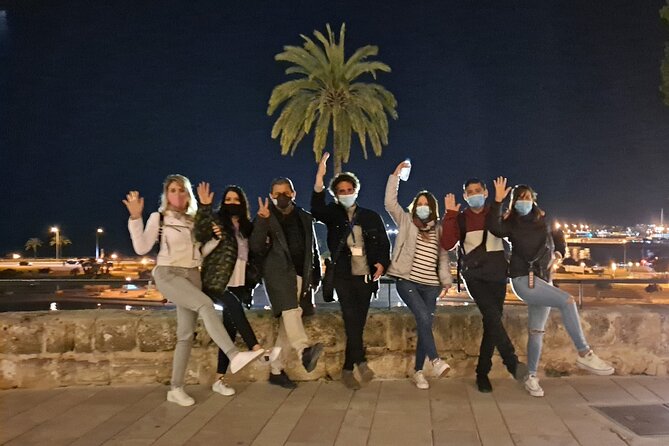
This is listed at $266.16 per group (up to 6) for about 2 hours in English. That pricing can feel steep if you’re comparing it to a mass walking tour—but the value is in control.
A private old-town walk matters in Palma because the sights you’ll cover aren’t isolated. They’re stitched across the historic center, and you’ll want a guide to keep the pace right and the explanations clear while you move from exterior views to more involved interiors. With a private group, you’re not trapped behind a slow moving crowd—or pressured to keep up with faster strangers.
The other practical upside: you get a mobile ticket, and your meeting point starts at Carrer del Moll. Ending point is Pl. Major, but it can be adapted to you, which is handy if you’re connecting to lunch or an afternoon plan.
You can also read our reviews of more walking tours in Mallorca

Sa Llotja: Guillem Sagrera and the day-by-day opening reality
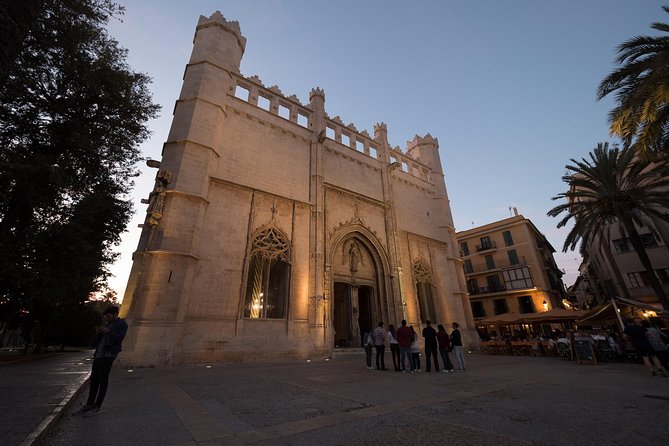
Sa Llotja is your first big stop, and it’s a great one to start with because it sets the tone for Palma’s historic trading and architecture. You’ll spend about 15 minutes here, and admission is listed as free via ticket.
The important catch is timing. Sa Llotja runs Tuesday to Sunday with specific windows: 10:30 a.m.–1:30 p.m. and 5:30 p.m.–11:00 p.m. Monday is closed. So if you’re planning around a tight itinerary, you’ll want your day to match those hours if you care about fully enjoying this stop.
What makes it especially worthwhile is that your guide ties the building to Guillem Sagrera, a famous Mallorca architect. That’s the kind of detail that turns a pretty facade into a story you can repeat later.
Palau de l’Almudaina: royal-era context without the time drain
Next is Palau de l’Almudaina, where you get history, architecture, and anecdotes focused on the royal family. This is a shorter 10-minute stop, and it lists admission as not included.
That short timing is actually smart for a 2-hour walk. You’re not losing the whole day to paperwork or long entries. Instead, you get the “why this matters” context, so when you glance at the building later on your own, the place has meaning rather than just shape.
If you’re the type who likes a quick, grounded background before you move on, this part of the route fits well.
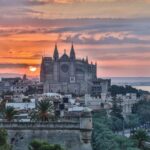
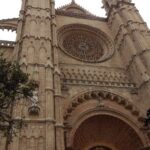
Catedral de Mallorca: La Catedral del mar, art styles, and light
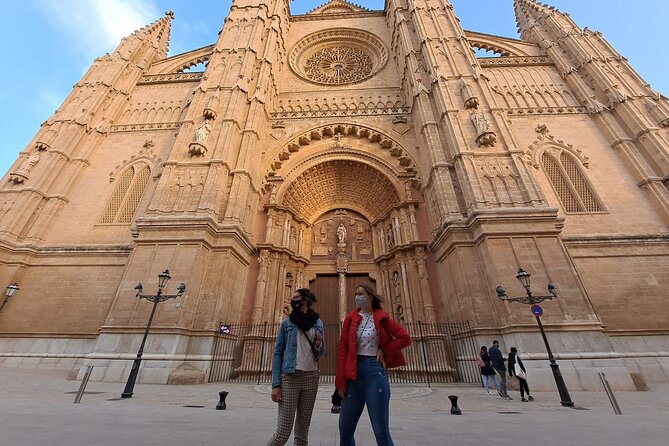
You hit the Cathedral twice: once for the outside area (history and curiosities, including last changes), then again for time inside. That two-part approach helps because you can compare what you see from street level with what the building feels like from within.
Outside stop: about 10 minutes, admission not included.
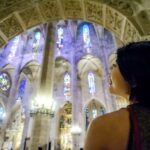
Inside stop: about 40 minutes, also admission not included.
Inside is where the guide’s explanation becomes the main attraction. You’ll hear about:
- the main artistic styles you’ll notice in different chapels
- the light games of the Cathedral
- Catalan Modernism and Gaudí connections
- Miquel Barceló and contemporary art
This isn’t just “look at this, next.” It’s designed to help you understand what you’re seeing—especially the way light and style work together in a big sacred space. It’s the difference between walking in and walking through.
The only drawback: because entry admission isn’t included here, you should expect to pay separately if you want the inside time. If you’d rather skip ticketed interiors, plan to treat the Cathedral segment as the biggest “either/or” moment of your tour.
Patio Mallorquín homes: Can Oms and Can Bordils
If you want Palma beyond grand monuments, these two stops are key. They focus on Patio Mallorquín style—those inner courtyards that shape daily life, light, and architecture in older homes.
Can Oms: about 7 minutes, admission free.
Can Bordils: about 20 minutes, admission free, and it has the interpretation center component.
Both stops include descriptions of the building inside and outdoors. That matters because Patio Mallorquín buildings are best understood by seeing both sides: the street presence and the inward courtyard experience.
You can also read our reviews of more private tours in Mallorca




The Jewish quarter interpretation center: timing matters for your plans
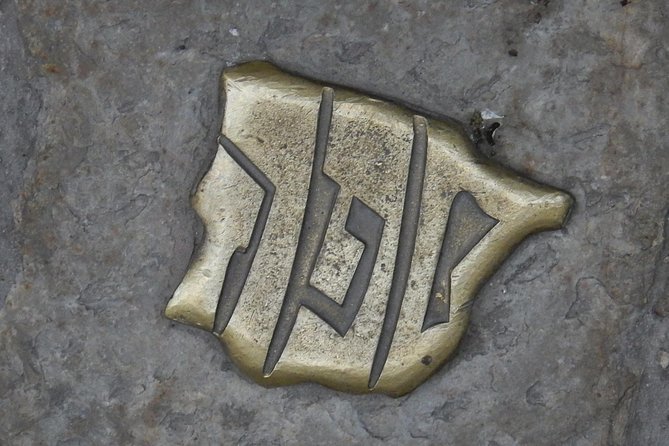
Can Bordils also includes a visit to the interpretation center of the Jewish quarters of Palma. The schedule is specific: it’s available only in the week and in the mornings. This part is about 20 minutes and is free.
Your guide will explain the history of the Jewish community in Mallorca, and you’ll hear about the Xuetas—a term your guide uses to connect the story to Mallorca’s later social history. You shouldn’t expect this to replace a museum visit, but it’s excellent for giving you vocabulary before you wander the neighborhood on your own afterward.
If your trip dates don’t line up with the morning weekday window, you may need to treat this section as “maybe” rather than guaranteed. The architecture stops still work on their own, but the interpretation visit is the extra value.
Santa Eulàlia and Can Corbella: church stop + neighborhood architecture
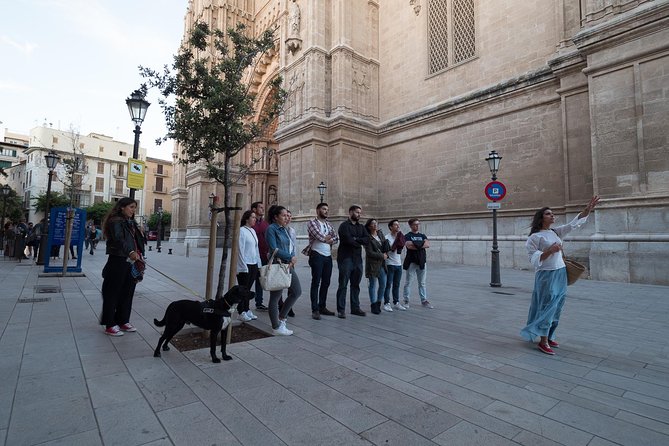
After the patio and the interpretation center, the walk moves through the area with more local character.
Santa Eulalia: about 10 minutes, admission free.
Expect a parish church stop tied to local expressions—less a lecture in formal history, more a sense of how local life and tradition show up in the streets and sacred spaces.
Then comes Can Corbella, about 15 minutes. Admission is listed as not included. This is described as a modernist building and part of the Jewish quarter.
Together, Santa Eulalia and Can Corbella help you connect the dots: you’re seeing religion and architecture side by side, and the guide’s commentary ties those locations back to the neighborhood story instead of treating them like isolated photo stops.
Plaça Major and the modernist details you might miss solo
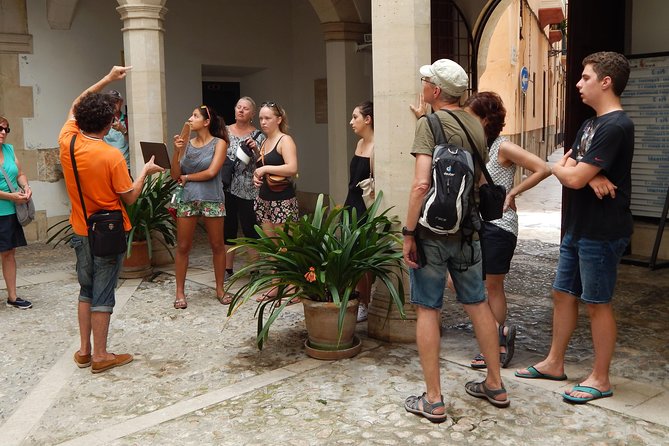
As you move toward the main square area, the tour starts rewarding your attention. The stops are short, but they’re chosen to catch the kinds of details people often skip.
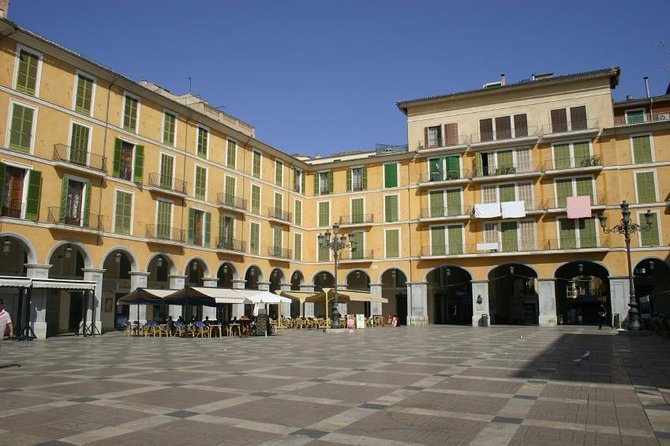
Ajuntament de Palma (Townhall): about 15 minutes, admission free. You’ll get context for the main square and the Banc de sino fos.
Plaça Major surroundings: about 10 minutes, admission free, including history and last changes.
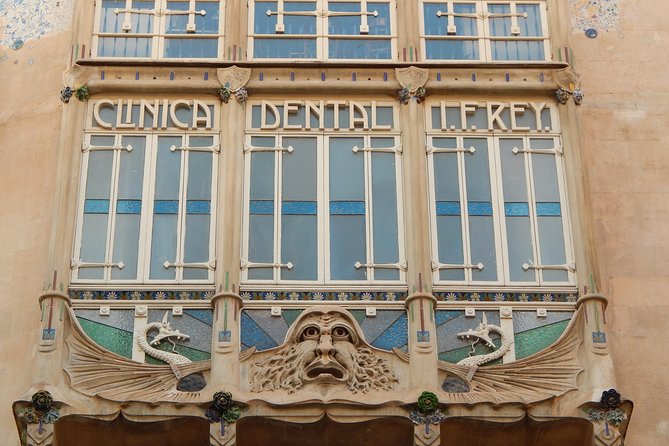
Can Forteza Rey: about 5 minutes, admission not included, with Catalan Modernism and a face.
Banc de s’Oli Oleoteca: about 5 minutes, admission free, with anecdotes about the environment and orange trees.
This section works because it’s not just sightseeing. It’s teaching you how to read Palma. A bench name like Banc de sino fos, a Modernist facade detail like a face at Can Forteza Rey, and an oleoteca-style stop about orange trees all push you to look closer than you would on your own.
It’s also the part of the walk that’s easiest to enjoy if you’ve got limited energy—short stop lengths keep it from feeling like a marathon.
Mercat de s’Olivar: a practical local finish
The last stop is Mercat de s’Olivar, with 10 minutes set aside. Admission is listed as free.
The market opening hours are Monday to Saturday, 7:30 a.m.–2:30 p.m. If your timing lands you during those hours, you’ll get a quick taste of local daily life after the architecture and courtyard stops.
Even if you don’t fully browse inside, it’s a smart way to end: it gives you something real and current to do right after the walk—buy a snack, grab fruit, or just soak up the everyday rhythm of the city center.
How the guide changes the whole experience
In a private tour, the guide isn’t a bonus. They’re the product.
This tour is built so you can chat and ask questions as you go. That matters in places like the Cathedral, where the “why” is often harder to see than the “what.” It also matters in the smaller courtyard buildings, where a guide’s explanation helps you notice features you’d otherwise overlook.
The guide names I’ve seen reflected in the tour’s reputation include Carlos and Maria. Carlos is described as friendly and focused on engaging, including when there were kids in the group. Maria is noted for giving solid historical background so the city makes sense as a whole, not just as a set of landmarks.
If you want your guide to tailor the story to your interests—architecture, religion, neighborhood history, or just getting a lay of the land—this format gives you that flexibility.
Who this private Palma walk is best for
This is a strong match if you:
- want a first-time orientation to Palma Old Town without spending half your trip in lines
- like architecture with clear explanations, especially modernist elements and patio homes
- want Jewish quarter context that’s built into the walking route (including a Xuetas mention)
- are traveling with a group of up to six and want everyone moving together
- prefer English commentary and direct Q&A instead of reading everything on your own
It’s also a good option if you’re mixing ages. With a private group, a guide can adapt pacing to your needs, and the stop lengths are short enough to keep attention from wandering.
Should you book this private Palma walking tour?
If you want a 2-hour, private introduction that hits the big names (Sa Llotja, Cathedral area, Plaça Major) and also threads in the Jewish quarter story and Patio Mallorquín architecture, this is a very logical booking.
I’d especially book it if you’re the kind of traveler who likes to understand what you’re looking at, not just where to stand for a photo. The Cathedral inside time, the explanation of artistic styles and light, and the modernist clues around town are worth having a guide for.
The main reason to pause: admission tickets are not included for many key stops, and Sa Llotja has strict days/hours with Monday closed. If your plan is very ticket-sensitive or your dates don’t align well with the morning weekday window for the Jewish quarter interpretation center, you might get less of the “extra” value.
If you can handle a few separate entrances and your schedule fits the key windows, this tour is a smart use of time in Palma—compact, structured, and built to help you read the city like an insider.
FAQ
How long is the private walking tour in Palma?
It’s listed as about 2 hours.
How much does the tour cost?
The price is $266.16 per group (up to 6 people).
Is the tour private?
Yes. It’s private, and only your group participates.
What language is the tour offered in?
The tour is offered in English.
Are entrance tickets included?
Some stops list admission as free, while several others list admission as not included. For example, Sa Llotja, Can Oms, Can Bordils, Santa Eulalia, Ajuntament de Palma, and Mercat de s’Olivar are listed as ticket free, while Palau de l’Almudaina and both the Cathedral exterior and interior are listed as not included.
When can I visit the Jewish quarter interpretation center?
The interpretation center visit at Can Bordils is only available during the week and in the mornings.