REVIEW · MALLORCA
2-Hour Private Walking Tour Through Palma’s Jewish Quarter
Book on Viator →Operated by Jewish Majorca · Bookable on Viator
Palma’s backstreets tell a quieter story. This 2-hour private walking tour uses the Jewish past of Palma to connect street names, walls, and landmarks—where synagogues once stood and what replaced them—without turning it into a museum lecture. I especially like how it points out physical details you can actually see, like the statue of Jafuda ben Cresques and the clues around Leather Maker Street and the former synagogue sites.
One thing to consider: it’s a walking tour, and while the route is generally manageable, you’ll want comfortable shoes. Also, it isn’t a pick-up-and-drop kind of experience; you’ll start and end at the same place near Plaça de Cort.
In This Review
- Key things to know before you go
- Palma’s Jewish Quarter is best seen with a local eye
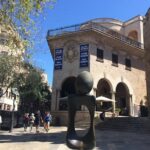
- Start at Plaça de Cort: your walk begins with a smart meeting spot
- Jafuda ben Cresques and the Catalan Atlas connection
- Leather Maker Street and Can Miquel: when a bakery marks a synagogue site
- The Tower of Love mural: a 1300s story told in paint
- Finding the main synagogue site where Montesion Church stands
- Street of the Wind: your last chance to spot what most people miss
- Private guiding makes a difference (and the guides are real people)
- What you get for the price: $120.68 per person, and why it can be worth it
- How much walking is this, really?
- Who this tour suits best
- FAQ
- How long is the private walking tour?
- How much does the tour cost?
- Where does the tour start and end?
- Is the tour private?
- What language is the tour offered in?
- Do I need to pay extra for admission?
- What if the weather is bad?
- Should you book this Jewish Quarter walking tour?
Key things to know before you go
- Private pace for your group, so you can move faster or slower without feeling rushed
- Street-level clues that link today’s buildings to former Jewish sites and names
- Stops tied to big names and specific places, from Jafuda ben Cresques to the former synagogue area now marked by churches
- A mural stop with a documented 1300s story connected to the Tower of Love
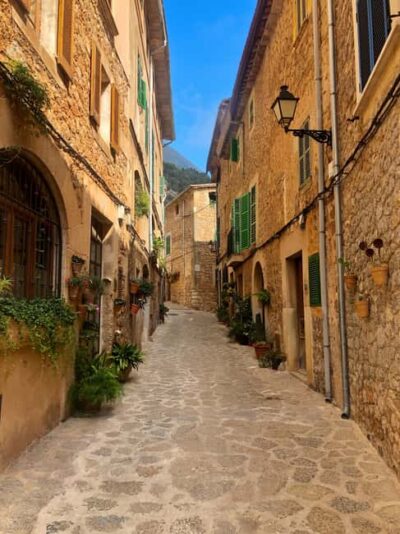
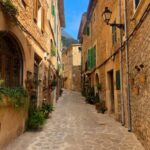
- You’ll walk lanes like Leather Maker Street and Street of the Wind, where details reward slow looking
- Language is English, with mobile ticketing and admission that’s free for the included parts
Palma’s Jewish Quarter is best seen with a local eye
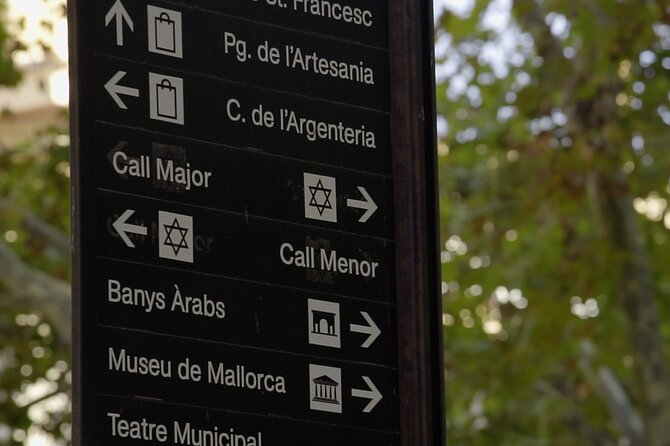
Palma’s city center looks familiar until you slow down and start reading it like a document. This tour gives you that skill: how to notice what’s been renamed, built over, or quietly referenced in stonework and street patterns. You’re not just looking at old buildings—you’re learning how a community’s presence can linger even after the physical sites change.
I like that the experience stays human-sized. The walk is long enough to feel like you’re getting somewhere, but short enough that you don’t have to spend your whole day in “tour mode.” And because it’s private, your guide can respond if you have questions—especially when the stories shift from big figures to everyday places.
You can also read our reviews of more walking tours in Mallorca

Start at Plaça de Cort: your walk begins with a smart meeting spot
You meet at Starbucks, Plaça de Cort, 1, in Palma’s central district. It’s a practical choice: easy to find, central, and near public transportation, which matters if you’re timing your walk around a lunch break or a cruise schedule.
The tour ends back at the meeting point, so you don’t have to worry about getting across town at the finish. In a city where streets can tangle together fast, this is one less logistical stress.
If you’re the kind of traveler who likes to get oriented first, you’ll appreciate that your route starts in the heart of everything and then guides you into narrower lanes where the details show up.
Jafuda ben Cresques and the Catalan Atlas connection
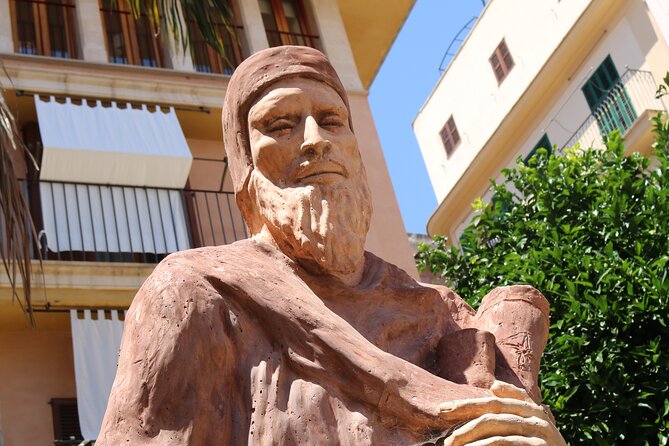
One of the tour’s strongest openers is the stop for the statue of Jafuda ben Cresques, a Jewish cartographer from the 14th century. The key reason this works is that it immediately links Palma to the broader world: Cresques helped create the famed Catalan Atlas, a map that people often associate with the era when European voyages were expanding.
Your guide uses this to set the theme for the walk: Jewish scholarship wasn’t trapped behind closed doors. It influenced how Europeans understood geography and travel. That framing makes the later street-level discoveries feel more than symbolic.
Practical takeaway: at this point, listen closely to the big-picture story, then later you’ll notice how the tour keeps returning to tangible place markers—street names, wall references, and sites that changed hands over centuries.
Leather Maker Street and Can Miquel: when a bakery marks a synagogue site
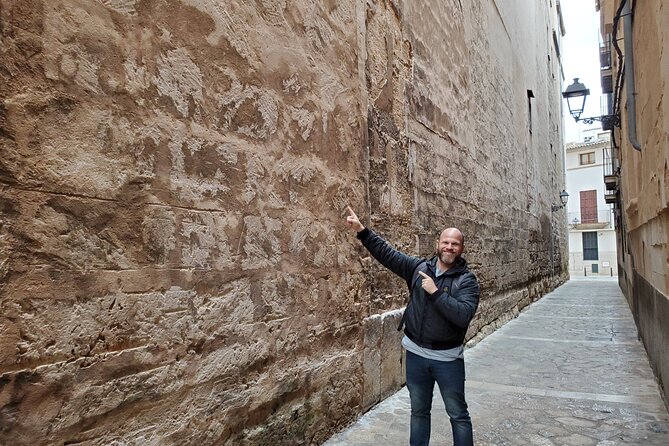
Next you head down Leather Maker Street, where you learn how businesses and buildings can inherit earlier meanings. One standout stop is the old bakery called Can Miquel, described as built on the site of the “sinagoga nova,” or the new synagogue.
This is one of those tours where you start thinking: wait, so the daily life of the street replaced a sacred place over time. That shift isn’t taught as a shocking twist for effect. It’s presented as a historical fact you can physically stand on.
And you also get a strong lesson in observation. You’ll look for signs and clues hidden within walls and street names that point back to a Jewish past. In many cities, you need a museum to learn this. Here, the “museum” is the street itself.
Drawback to keep in mind: if you prefer big architectural monuments only, this stop may feel smaller than you expect. But if you like history that hides in plain sight, it’s a highlight.
The Tower of Love mural: a 1300s story told in paint
The walk includes a mural recently painted during the pandemic that highlights a well-documented conflict between two Jewish people connected to the Tower of Love in the 1300s. This isn’t random color on a wall—it’s the tour’s way of showing that history includes tension, not just achievements and names.
What I like here is the tone. The tour treats the story seriously while still keeping it accessible, and you get the sense your guide is helping you understand how people lived, argued, and suffered in real time. You’re not only learning about expulsion and loss. You’re also learning about community life and internal events that shaped it.
When you see the mural after walking a few blocks of regular street scenery, it hits harder. You realize you’ve been walking through layers of memory the whole time.
You can also read our reviews of more private tours in Mallorca

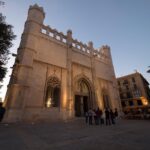


Finding the main synagogue site where Montesion Church stands
Another major stop is the site of the main synagogue, where the Montesion Church now stands. This is where the tour becomes especially powerful for people who like “then and now” comparisons.
Standing at a location like this, you can feel the weight of what changed. And because the tour connects it back to street names and surrounding markers, you don’t just get a location—you get an interpretation of the city’s evolution.
A note for practical expectations: the tour is designed around what you can see while walking. So even when you’re dealing with sites that have new structures, the experience still feels grounded in real-world streets rather than requiring you to sit in a ticket line.
Street of the Wind: your last chance to spot what most people miss
You also walk down Street of the Wind, where the tour promises something surprising. The surprise isn’t described in the details here, but the whole point of this final lane is similar to the rest of the experience: you’re trained to notice small things that connect you to the Jewish past.
By the time you reach this stage, the tour has taught you a method. You’ll find yourself looking at signage, wall textures, and the way streets lead you to certain spots. Even if a specific detail surprises you in the moment, the bigger win is that your eyes stay open afterward.
This is a good moment to ask your guide any burning question you’ve saved. Guides can often connect patterns you noticed earlier—like why certain references show up where they do.
Private guiding makes a difference (and the guides are real people)
This tour is private, meaning only your group participates. That matters in a city walk, because it changes how you experience pace, questions, and comfort. If your group is chatty, the guide can slow down. If your group is quiet, the guide can keep the story moving.
From the way guides have handled different guests, you can expect flexibility. For instance, one guide was praised for going out of their way to find an easier path when a guest was handicapped. That’s the kind of practical kindness that makes a historical walk feel more human and less rigid.
You might also hear names of guides such as Shaun, Peter, Shaul, Cristina, and Didi (Denisse), which tells me the experience relies on people who can tell stories clearly and keep them engaging.
What you get for the price: $120.68 per person, and why it can be worth it
At $120.68 per person for about 2 hours, this is not the cheapest way to “do Palma.” The value is in the private format and the street-level storytelling. You’re paying for interpretation that turns normal lanes into meaningful routes, plus the ability to customize pacing and what you focus on.
This price can feel more reasonable if:
- you’re traveling with a small group and can share the overall cost
- you care about learning more than what you can read on a sign
- you want an experience that’s structured but flexible
Two helpful notes: admission for the included parts is free, and all fees and taxes are included. That removes a layer of uncertainty. What’s not included is lunch, coffee/tea, alcoholic drinks, and bottled water, so plan to budget for a snack break afterward.
Also, since bookings often happen around six weeks ahead on average, it’s smart to pick a date early—especially if you want a specific time window.
How much walking is this, really?
It’s a walking tour, and there’s some time spent moving between sites. The good news: the terrain isn’t described as difficult, and one guide was specifically praised for choosing an easier route when needed. So if you’re generally comfortable walking city blocks, you should be fine.
Still, don’t treat this like a casual stroll with zero effort. Wear good shoes, bring a light layer (Palma weather can shift), and plan your water intake since bottled water isn’t included.
If you’re sensitive to walking time, treat the 2 hours as the point. You’ll be better off saving your museum hops for a later time window.
Who this tour suits best
This is especially good for you if:
- you like history that lives in everyday streets
- you want a clear, guided “what am I looking at?” experience
- you’re curious about Jewish, Converso, and Chueta threads in Majorca’s past
It’s also a strong fit if you’re doing Palma on a cruise day. Two hours gives you momentum without wiping out the rest of your itinerary.
If your travel style is mostly modern architecture and beach time, you may find the pace a bit story-heavy. But if you enjoy human stories—names, places, conflict, and change—this tour will feel like a focused introduction with payoff.
FAQ
How long is the private walking tour?
It’s about 2 hours.
How much does the tour cost?
The price is $120.68 per person.
Where does the tour start and end?
It starts at Starbucks, Plaça de Cort, 1, Palma, and ends back at the meeting point.
Is the tour private?
Yes. It’s a private tour/activity, and only your group participates.
What language is the tour offered in?
It’s offered in English.
Do I need to pay extra for admission?
Admission is free for the included parts of the experience.
What if the weather is bad?
The experience requires good weather. If it’s canceled due to poor weather, you’ll be offered a different date or a full refund.
Should you book this Jewish Quarter walking tour?
If you want Palma’s Jewish past explained in a way you can repeat later—by pointing at streets, murals, and specific sites—this is a very solid choice. The private format is the real advantage, because the guide can adjust the pace for your group, and you can ask questions as you walk.
Book it if you like street-level history and you have about 2 hours free in the center of Palma. Skip it only if your ideal trip is mostly beaches, big monuments, and zero walking.