REVIEW · MALLORCA
Palma: Old Town Walking Tour & Cathedral Skip-the-Line
Book on GetYourGuide →Operated by Tour Teatro · Bookable on GetYourGuide
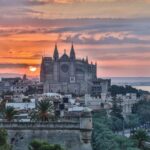
Palma can feel like a postcard if you only skim. This tour slows it down, pairing a guided walk through medieval streets with fast access into La Seu (Palma Cathedral). You’ll learn how the building kept changing shape over centuries, and why the city’s layers matter when you finally look up at the cathedral.
I especially like the focus: skip-the-line cathedral entry saves real time, and the itinerary connects the church to the streets around it, so the whole day makes sense. I also love the welcome touch of a traditional ensaïmada to start your morning on a local note. One thing to consider: cathedral rules are strict, so you’ll want to pack light and dress appropriately for a religious site.
If you’re the kind of traveler who likes stories with names and dates, you’ll get a lot out of this. Inside the Cathedral of Mallorca, the guide ties together three major artistic and monumental moments, including Antoni Gaudí’s reform and Miquel Barceló’s contemporary intervention. The other caution is simple: it’s a 2.5-hour walking tour, so comfortable shoes are not optional.
In This Review
- Key Things I’d Prioritize on This Tour
- Getting Oriented in Palma Old Town, Starting at the Tourist Office
- Skip-the-Line at Palma Cathedral: What It Actually Means for Your Day
- La Seu’s Big Story: Portal, Gaudí, and the 2007 Chapel Intervention
- From Palau de La Almudaina to Parc de la Mar: Why the Walk Before Matters
- The Courtyards, Santa Eulàlia, and Sant Francesc: The Old Town Pieces After the Cathedral
- Can Forteza Rey and Basílica de Sant Miquel: Finishing the Circuit with More Character
- Mercat de l’Olivar: Turn the End of the Tour into Lunch
- Price and Value: Is $50 Worth 2.5 Hours in Palma?
- Who This Tour Best Fits (and Who Might Want a Different Plan)
- Practical Stuff Before You Go: Dress, Bags, and a Smooth Start
- Should You Book This Palma Old Town + Cathedral Tour?
- FAQ
- How long is the Palma Old Town Walking Tour and Cathedral skip-the-line experience?
- Where does the tour start?
- How do I recognize the guide at the meeting point?
- Does this tour include entry to the Cathedral of Mallorca?
- What art and special features will I see inside the cathedral?
- Is food included?
- What should I wear for the cathedral?
- Can I bring a large bag or suitcase into the cathedral?
- Is the tour in English and is it wheelchair accessible?
Key Things I’d Prioritize on This Tour
- Skip-the-line access gets you into the Cathedral of Mallorca faster, which makes a big difference with sightseeing time
- La Seu’s three turning points are covered clearly: late-1800s portal reconstruction, Gaudí’s 1904–1914 reform, and Barceló in 2007
- A licensed English guide keeps you moving with explanations at the right moments, not random facts dumped all at once
- Old town context after the cathedral helps you connect patios, churches, and historic neighborhoods to what you just saw
- A local welcome ensaïmada gives the tour a genuinely Mallorca touch, not just a ticket-and-photos routine
Getting Oriented in Palma Old Town, Starting at the Tourist Office
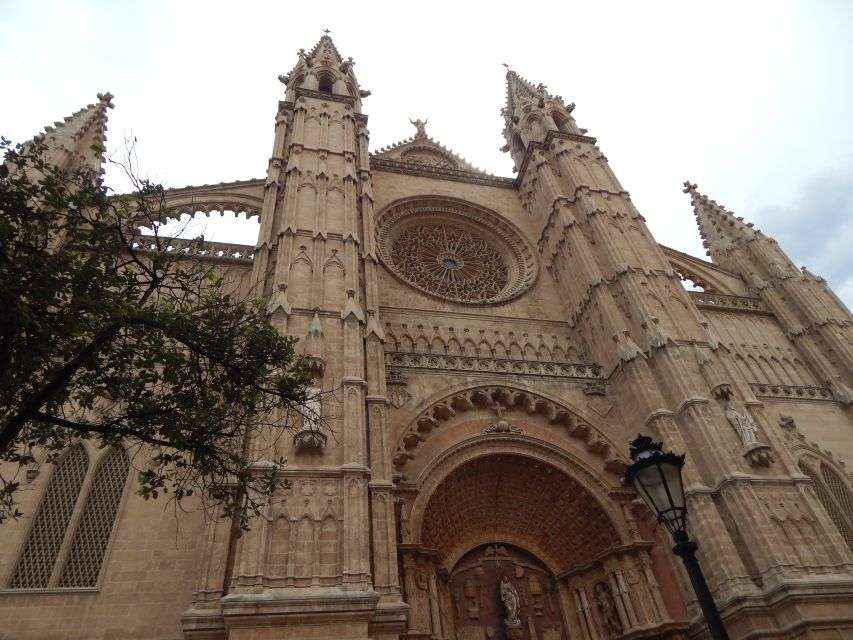
You start at the Informació Turística Ajuntament de Palma, easy to find thanks to the orange cube-shaped sign with the white letter i. The guide holds an orange umbrella, so you shouldn’t lose the group before you even begin.
From there, the tour builds momentum in a smart way. Early stops like Parc de la Mar, Hort del Rei, and Palau de La Almudaina act like short setup scenes. You’re not stuck in one long landmark queue. Instead, the guide gives you little pockets of context as the streets and viewpoints change, so when you reach the cathedral you’re already thinking in the right time period.
This approach is a big deal. Palma’s old town is full of beautiful corners that can feel disconnected if you wander on your own. A guided loop helps you connect the dots—where you are, what used to be there, and why the cathedral is the center of gravity.
You can also read our reviews of more walking tours in Mallorca

Skip-the-Line at Palma Cathedral: What It Actually Means for Your Day
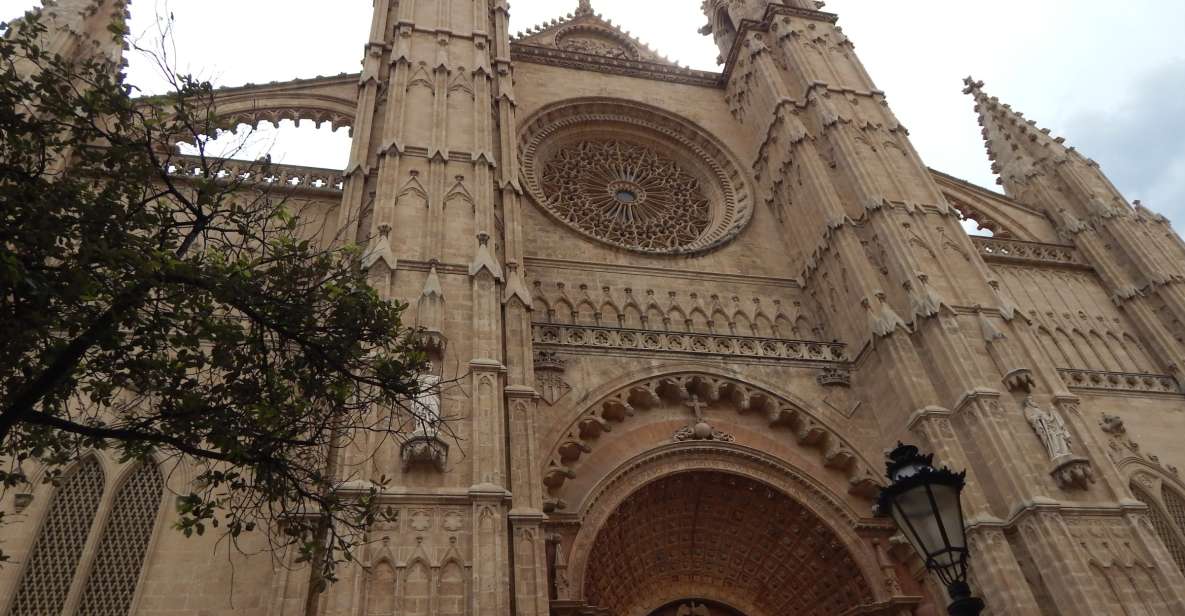
“Skip-the-line” sounds nice, but it’s worth understanding why it matters. The Cathedral of Mallorca is one of those places where you can lose momentum waiting. With fast entry, you protect your energy for the part that’s hardest to replicate later: a guided look at the building’s evolution and the art inside.
You get skip-the-line entry plus admission, so you’re not stuck coordinating tickets on the fly. Then you spend about 40 minutes inside with the official English guide, which is a sweet spot. It’s long enough to notice details, but not so long that you feel trapped when your attention starts to drift.
Important practical note: cathedral rules matter. You’ll need appropriate attire for a religious building (no swimwear or beachwear). And for security reasons, suitcases and large bags aren’t permitted inside, and there are no lockers on site. If you’re traveling with big luggage, plan to keep it outside the cathedral area. Light bag, quick check at the entrance, and you’re good.
La Seu’s Big Story: Portal, Gaudí, and the 2007 Chapel Intervention
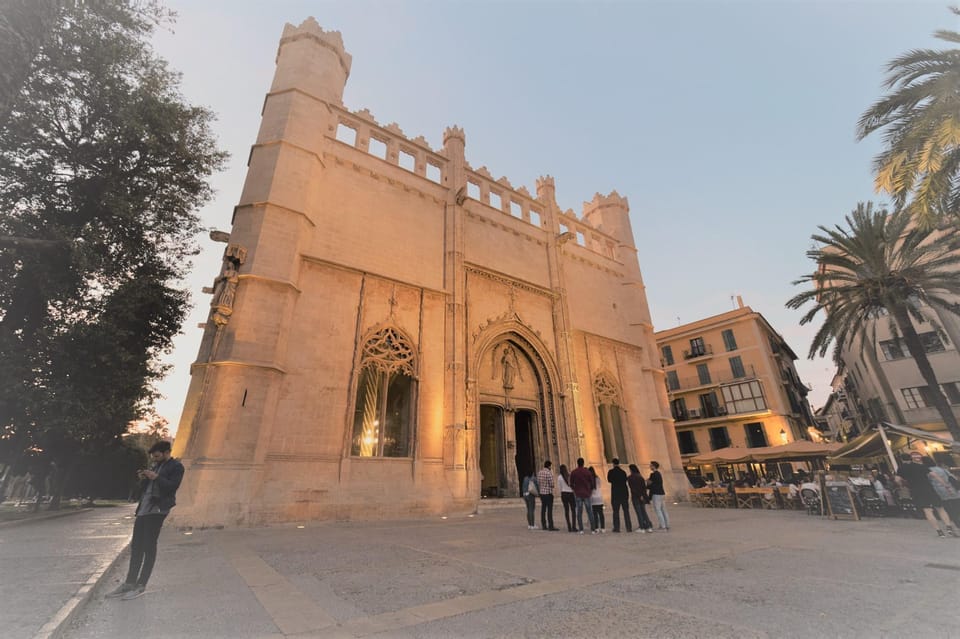
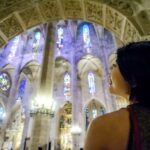
Once inside, the tour shifts from streets to architecture. The guide explains how Mallorca’s cathedral changed through three major interventions that shaped it over time. This is where the tour earns its keep.
Here’s what you’ll be walked through:
- The reconstruction of the main portal at the end of the 19th century
- A major reform by Antoni Gaudí between 1904 and 1914, commissioned by Bishop Joan Pere Campins
- A contemporary art intervention by Miquel Barceló in the Chapel of Sant Pere in 2007
You’re also not just watching the guide point at things. You’ll get answers to the kinds of questions that make the cathedral click in your head, like:
- Why is it called La Seu?
- Who is buried inside?
- When was it built?
Those questions turn a monument into a timeline. And they make your own looking sharper. If you know what changed and when, you can start spotting why certain parts feel different, why certain design choices landed when they did, and how each artistic layer sits on top of the previous one.
One more thing I like: the art isn’t treated like decoration. It’s treated like a chapter in the building’s story. That’s especially useful for first-timers, because you don’t need prior cathedral knowledge to follow along.
From Palau de La Almudaina to Parc de la Mar: Why the Walk Before Matters
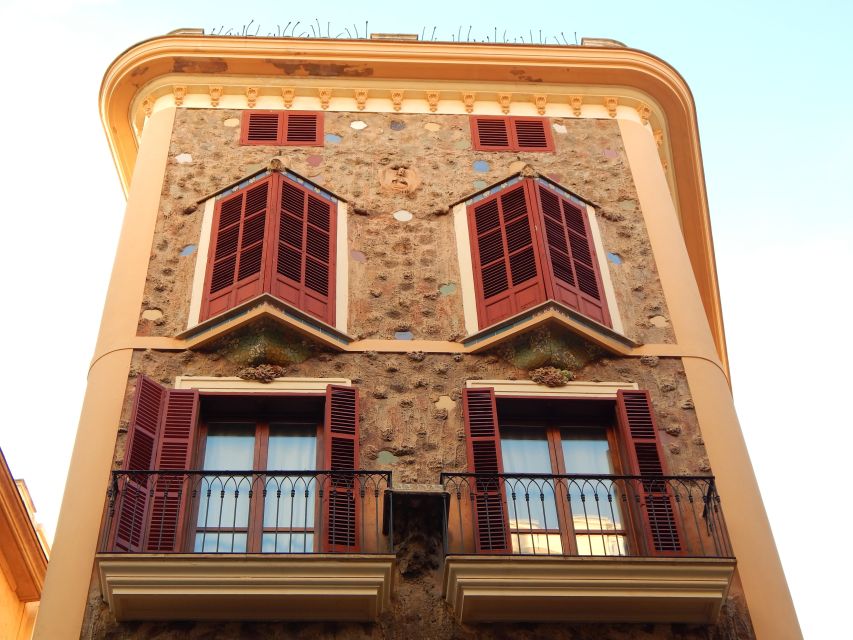
It’s easy to think cathedral tours start when you hit the doors. Here, the walk before the cathedral is part of the value.
The early stops—Parc de la Mar, Hort del Rei, and Palau de La Almudaina—give you landmarks to hang the story on. Even though each stop is brief, the guide uses them to set up the cathedral’s role in Palma’s identity. You’re building a mental map: the city’s historic spaces aren’t random. They form a system, and the cathedral sits at a key point in it.
This is also where the best guides shine. The tour is built for a licensed local guide, and you can feel that in the flow. A good guide doesn’t just recite dates. They connect what you’re seeing in the street to why the cathedral looks the way it does. In real terms, you’ll get better photos too, because you’ll know what to look at and when.
If you’re the type who likes to take a few slow minutes at each spot, you might wish the early segments were a bit longer. But the pacing is intentional. It keeps the group moving so you arrive at the cathedral ready for the main event, not fatigued.
The Courtyards, Santa Eulàlia, and Sant Francesc: The Old Town Pieces After the Cathedral
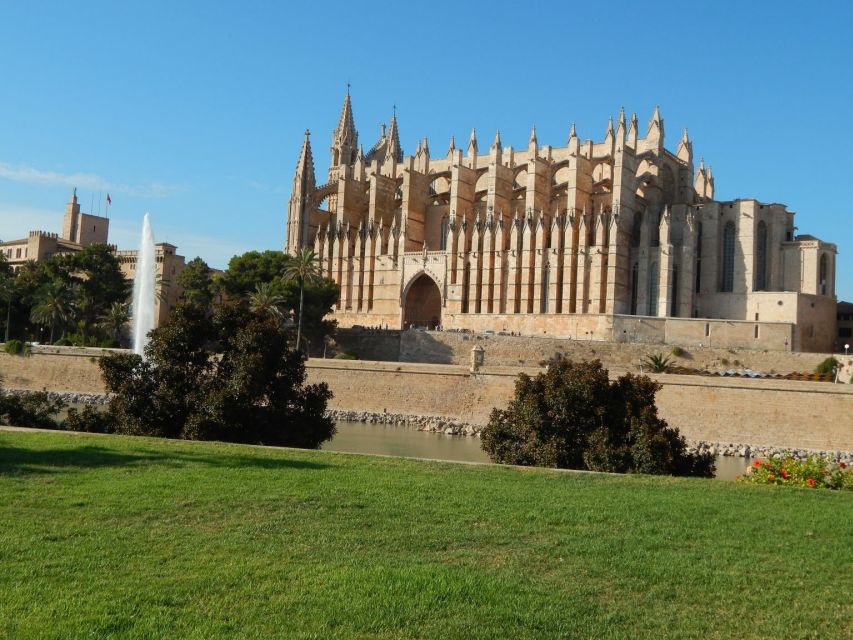
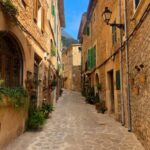
After the cathedral visit, the tour continues through the medieval streets of Palma’s old town. This is where the city becomes more than scenery. The guide connects the cathedral to everyday historic spaces you’d otherwise breeze past.
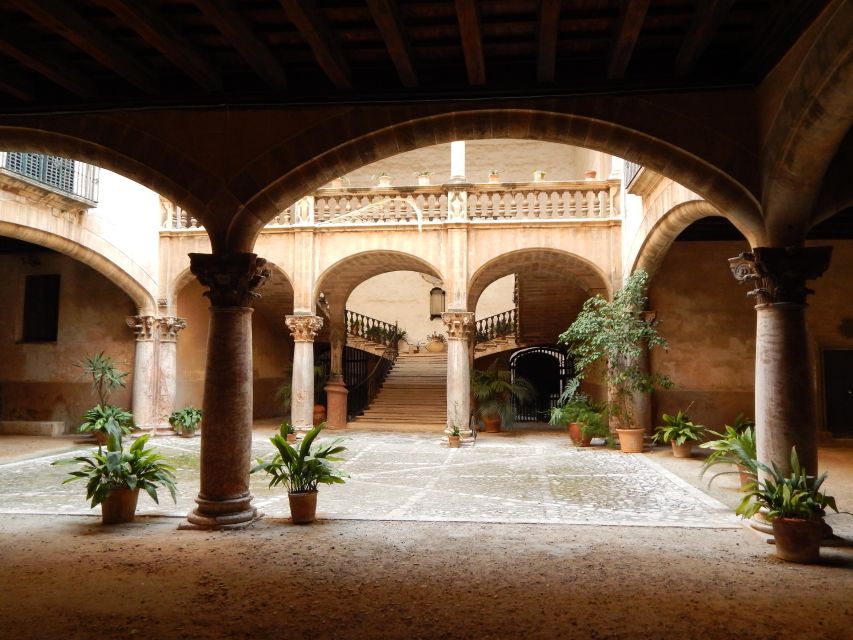
You’ll see traditional Mallorcan courtyards (patios)—one of those details that makes Palma feel lived-in instead of frozen in time. You also pass notable religious and historic sites, including the parish church of Santa Eulàlia, the Royal Convent of Sant Francesc, and Plaça de Cort. The tour also includes part of the former Jewish quarter, which adds another layer to the city’s story beyond purely Christian landmarks.
If you like architecture, this portion matters because it shows Palma isn’t only about one big building. It’s about how people organized space—courtyards, streets, and adjacent institutions—around the cathedral’s influence.
It’s also a helpful sanity check. The cathedral can be overwhelming at first glance. Seeing patios and older streets right after helps your brain switch from monumental Gothic details back to human-scale history.
You can also read our reviews of more tours and experiences in Mallorca

Can Forteza Rey and Basílica de Sant Miquel: Finishing the Circuit with More Character
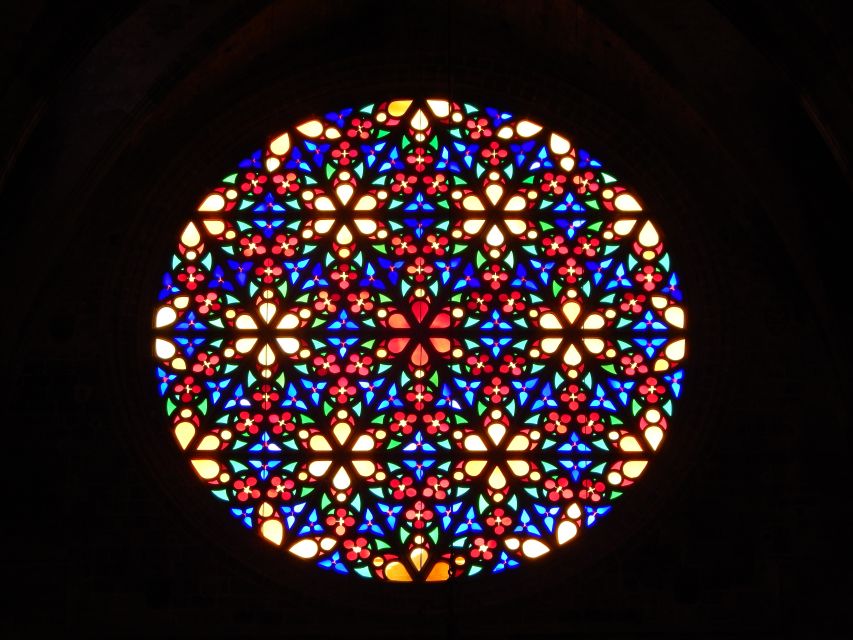
As the tour moves toward the end, you’ll continue passing historic spots like Can Forteza Rey and Basílica de Sant Miquel de Palma. Even when the guided time at each stop is short, this late-stage rhythm keeps the walk from feeling repetitive.
By now you’ve already learned how and why the cathedral changed. So when you see additional churches and historic structures, you’re more likely to notice how Palma’s different buildings reflect different eras. The best part is that you’re not just ticking off stops. You’re using what you learned inside the cathedral to interpret what you see outside.
In the final stretches, you also revisit the Ajuntament de Palma area for guided context before the walk winds down. Then the tour ends at Mercat de l’Olivar, which is a practical place to cash in your appetite.
Mercat de l’Olivar: Turn the End of the Tour into Lunch
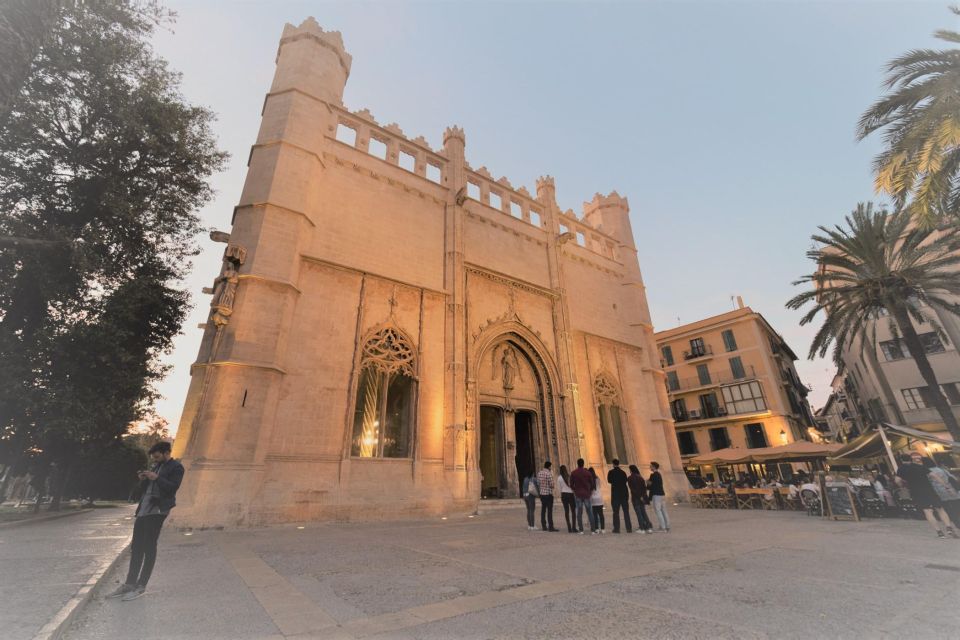
Finishing at Mercat de l’Olivar is a smart move. You’re not left stranded at a monument with nowhere sensible to go next. Instead, you land near Palma’s largest market, where you can experience local gastronomy or grab lunch at nearby restaurants.
This matters if you don’t want a full day of sightseeing cluttered by decision-making. A market finish turns the tour into a half-day that still leaves room for real life: tasting, browsing, and eating at your own pace.
And because the tour is about 2.5 hours, you’re not boxed in. You can keep exploring after lunch with energy left, instead of spending the whole day tied to a schedule.
Price and Value: Is $50 Worth 2.5 Hours in Palma?
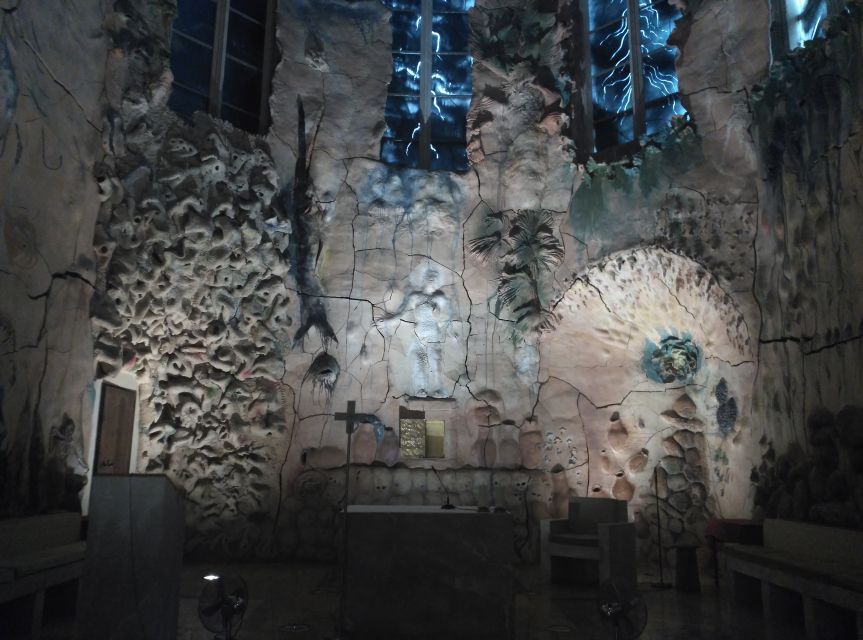
At about $50 per person for roughly 2.5 hours, you’re paying for three things that add up quickly in a city like Palma:
- The cathedral entry fee
- Skip-the-line access (time is money, especially with big monuments)
- An official licensed English guide who explains what you’re looking at, including the cathedral’s major artistic interventions
The tour also includes a guided old town walk that connects multiple landmarks rather than treating them as isolated photo stops. That’s where the value is. You’re not only paying to enter a building. You’re paying for a guided narrative that makes the buildings mean something.
What’s not included is normal and should be planned for: transport and food or drinks. The one clear food detail you do get is the traditional Mallorcan ensaïmada as a local welcome treat, which is a nice added touch at the start.
If you’re traveling with limited time in Palma or you want the cathedral experience without the stress of figuring out tickets and timing, this price feels fair. If you’re the kind of traveler who enjoys slow wandering without structured stops, you might feel the format is a little planned. But with skip-the-line and the Cathedral of Mallorca being the centerpiece, the structure is the point.
Who This Tour Best Fits (and Who Might Want a Different Plan)
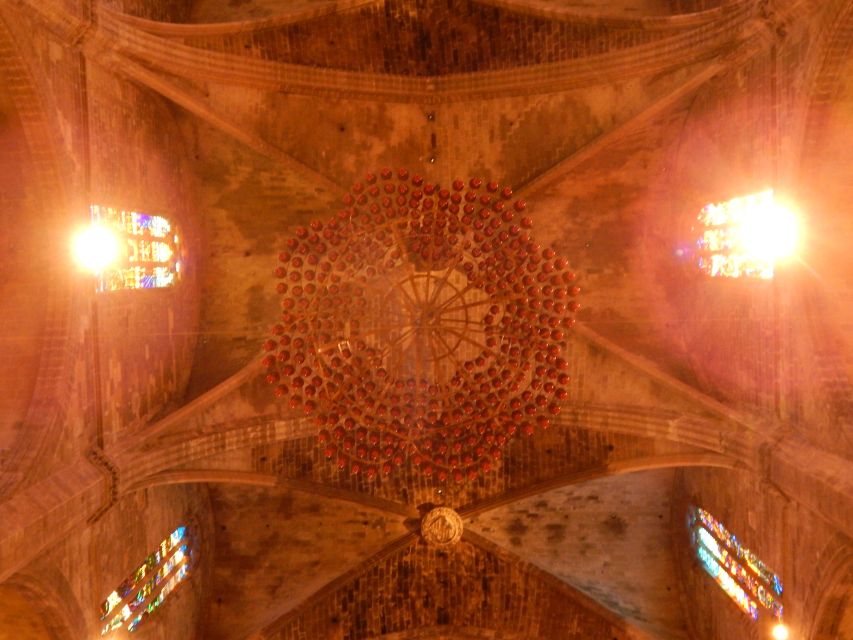
This tour fits best if you want:
- A strong cathedral focus with clear explanations
- A guide-led walk through historic Palma streets and neighborhoods
- A paced route that ends at a good place to eat
It’s especially good for first-timers. The cathedral story can be hard to piece together alone. With the three intervention timeline and the answers to questions like why it’s called La Seu, you’ll leave with a mental framework that makes future exploring easier.
You might consider a different style of tour if you’re traveling very slowly, dislike group walking, or prefer long stretches of free time in one place. This is a circuit with multiple stops and set guided segments, not a do-your-own-thing stroll.
Also, if you’re carrying larger luggage, the cathedral restriction is a real factor. No lockers means you’ll need a practical plan to keep bags manageable.
Practical Stuff Before You Go: Dress, Bags, and a Smooth Start
Before you head out, check the cathedral rules in your own head—not at the entrance. No swimwear or beachwear, and plan to keep large bags and suitcases out of the cathedral area. There are no lockers available on site.
For what to bring, think simple:
- A small day bag you can carry comfortably
- Comfortable walking shoes for a 2.5-hour old town route
- A light layer if you’re visiting in cooler months
For meeting up, watch for the details that keep the start painless. The guide is in front of the tourist office, holding an orange umbrella, with the orange cube sign and a white i nearby.
If you get stuck or arrive early, don’t panic. Being there at the start point with the umbrella is the easiest way to get on the right timeline.
Should You Book This Palma Old Town + Cathedral Tour?
If you’re coming to Palma mainly for the Cathedral of Mallorca, I’d book this. The skip-the-line entry is genuinely useful, and the guided story connects the cathedral’s most important transformations—Gaudí’s 1904–1914 reform and Barceló’s 2007 chapel intervention—to the streets around it. You’ll also get a local welcome with an ensaïmada, and the tour ends at Mercat de l’Olivar, which makes it easy to plan lunch without extra effort.
If your goal is only to see the cathedral from the outside, or if you hate guided structure, you could skip it and do a self-guided walk. But for most people—especially first-timers—this is one of the better ways to turn a limited time window into a real sense of place.
FAQ
How long is the Palma Old Town Walking Tour and Cathedral skip-the-line experience?
It lasts about 2.5 hours.
Where does the tour start?
You meet at Informació Turística Ajuntament de Palma.
How do I recognize the guide at the meeting point?
The guide waits in front of the tourist office holding an orange umbrella. The office has an orange cube-shaped sign with a white letter i.
Does this tour include entry to the Cathedral of Mallorca?
Yes. It includes the cathedral entrance fee and skip-the-line entry.
What art and special features will I see inside the cathedral?
Inside the cathedral, you’ll learn about its history and architectural evolution and see works by Antoni Gaudí and Miquel Barceló.
Is food included?
The tour includes a traditional Mallorcan ensaïmada as a local welcome treat. Food or drinks beyond that are not included.
What should I wear for the cathedral?
You need appropriate attire for a religious building. No swimwear or beachwear.
Can I bring a large bag or suitcase into the cathedral?
No. Suitcases and large bags are not permitted inside the cathedral, and there are no lockers available on site.
Is the tour in English and is it wheelchair accessible?
Yes, the guide is in English and the tour is wheelchair accessible.