REVIEW · MALLORCA
Palma de Mallorca Must-See Attractions Walking Tour With A Guide
Book on Viator →Operated by Guydeez · Bookable on Viator
Palma feels instantly walkable on this guided loop. You cover the key sights in about two hours, with a guide keeping the story straight and the route doable on foot.
I like that the stops are quick, mostly outside, so you don’t waste time hovering around doors. You also get context for major landmarks like the Baños Árabes without needing special museum time, which is a real plus if you’re on a tight schedule. One thing to note: this is a city tour, not an inside-the-monuments experience, and entry to monuments and museums isn’t included.
In This Review
- Key highlights to look forward to
- How the 2-hour Palma route stays friendly on your feet
- Starting at Passeig des Born and getting your bearings in Sant Agustí
- Plaça de Cort and the olive tree symbol you’ll keep spotting
- Convents in Palma: Santa Clara and the feel of daily life
- Baños Árabes: Moorish influence you can actually picture
- La Lonja area: La Bodeguita del Medio by Guillem Sagrera
- Santa Eulàlia and Sant Francesc: Gothic churches with real character
- Palau de l’Almudaina and Parc de la Mar: royal walls and sea air
- Cala Mayor beach time: a calmer ending with Mediterranean light
- Ca’n Joan de s’Aigo: the one food stop that feels like local Palma
- Price and value: what $37.71 really buys you
- Private or small group: which style fits your trip
- Who should book this Palma walking tour
- Should you book this Palma walking tour?
- FAQ
- How long is the Palma Old Town walking tour?
- Where does the tour start?
- What languages are the guides available in?
- Is this tour private?
- Is admission to monuments and museums included?
- Is food or drinks included?
- Can I cancel for a full refund?
Key highlights to look forward to
- A tight 2-hour Old Town circuit that’s easy to fit into a half day
- Moorish-era Baños Árabes stops with 10th-century details explained
- La Lonja area architecture including La Bodeguita del Medio by Guillem Sagrera
- Gothic church focus at Santa Eulàlia and Basilica de Sant Francesc
- Traditional food stop time at Ca’n Joan de s’Aigo for sweets or coffee
- Mobile ticket + friendly, in-person guiding in English (plus other languages available)
How the 2-hour Palma route stays friendly on your feet
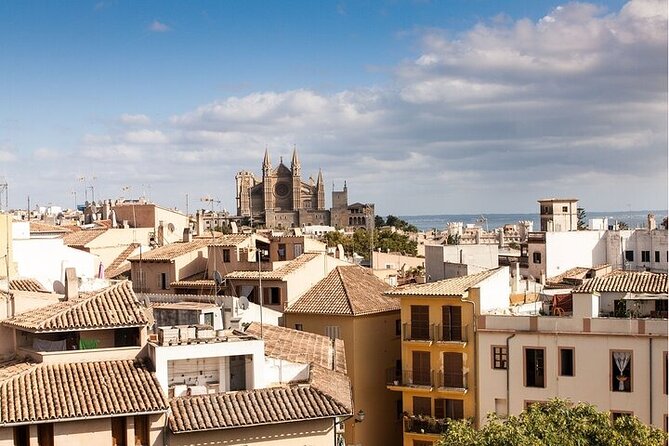
This is the kind of walking tour that helps you get your bearings fast. You start at Passeig des Born, 4 in Palma’s center and finish back at the same meeting point, which makes it simple if you’re hopping off a bus or trying to beat the heat.
The pacing is built around short stops (about 10 minutes each). That matters because Palma’s Old Town can feel like a maze if you’re doing it solo. With a guide, you spend more time understanding what you’re looking at and less time wandering in circles.
Also, you’re not signing up for a museum marathon. The tour is set up as a city walk, with explanations at points of interest rather than a full guided entrance to sites.
You can also read our reviews of more walking tours in Mallorca

Starting at Passeig des Born and getting your bearings in Sant Agustí
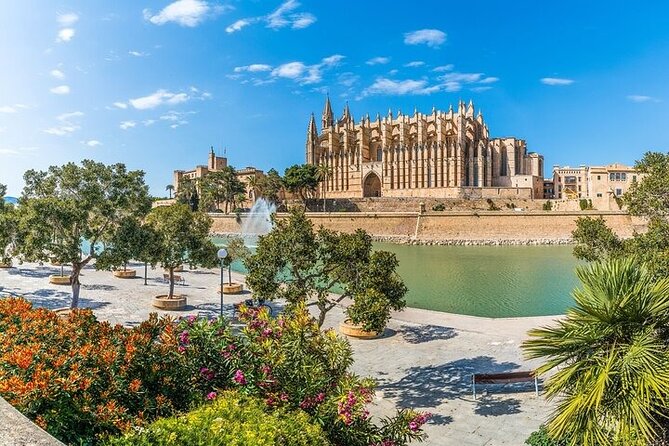
Your walk begins in a practical spot near Passeig des Born, so you’re not forced into a long pre-hike just to start. From there you head toward the Old Town lanes around Carrer de Sant Agustí, where the architecture does most of the work for you.
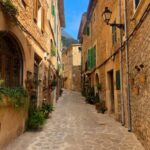
At the first stop (Carrer de Sant Agustí, 7), the goal is orientation. Narrow cobblestone streets, centuries-old buildings, and small details help you understand the “shape” of Palma—where the historic core sits and how the neighborhoods connect.
This is one of the best parts of the format: early on, the guide sets the frame so the later sights make more sense. If you’re new to Palma, that can save you from the usual first-day confusion.
Plaça de Cort and the olive tree symbol you’ll keep spotting
Next comes Plaça de Cort, a central square with strong connections to Palma’s civic life. The olive tree in the square isn’t just a decorative touch—it’s used as a symbol tied to Mallorcan tradition and ideas of peace.
What I like here is the stop length. You get enough time to look at surrounding façades and understand why the square matters, without it dragging on like a lecture. If you’re the type who likes photos but also wants meaning behind them, this stop fits.
Practical note: this area is very walkable, but it’s also the sort of place where you’ll see lots of pedestrians and casual chatter. Keep your bag secure, and if the group gets thin, don’t be afraid to pause and rejoin when you can.
Convents in Palma: Santa Clara and the feel of daily life
You’ll then move into the calmer side of the Old Town with stops connected to Santa Clara. One stop focuses on the Convent de Santa Clara as a quiet refuge from busy streets. Another stop highlights the day-to-day reality of nuns living with long-held traditions.
Even when you’re not going inside somewhere ticketed, the experience can still land. Convents are built to feel separate—different pace, different sound, different light. A good guide helps you notice what to look for, like how the spaces hold their own identity within a city full of movement.
This section is also a nice balance if you’re spending the afternoon bouncing between Moorish and Gothic styles. The contrast keeps the tour from becoming repetitive.
Baños Árabes: Moorish influence you can actually picture
The Baños Árabes is the kind of stop that makes the whole tour feel more than just a list of landmarks. These Arab Baths trace back to the 10th century, and the guide’s explanation helps you imagine how Moorish design and water culture shaped Mallorca.
The best value here is context. Even if you don’t go deep into ticketed interiors, you can still read the architecture with the right framing—materials, layout ideas, and the purpose of the baths. It turns stone and arches into a story about daily life long before modern Palma.
Because you’re on a timed walk, the stop won’t turn into a long sit-down. But it gives you enough to understand why this place is such a signature example of Moorish influence in the city.
You can also read our reviews of more guided tours in Mallorca


La Lonja area: La Bodeguita del Medio by Guillem Sagrera
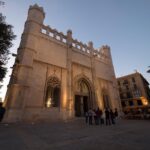
One of the most interesting architecture moments comes near La Lonja: La Bodeguita del Medio de La Lonja, connected to the work of Guillem Sagrera.
What makes this stop useful is the way it breaks up the typical “church, square, repeat” pattern. This is the sort of landmark where the building itself feels a little unusual, and a guide can point out what to notice so you don’t miss the design details.
If you enjoy architecture without needing a formal museum ticket, this is a smart stop. It’s also a good mental reset mid-walk.
Santa Eulàlia and Sant Francesc: Gothic churches with real character

Two church stops anchor the Gothic side of the itinerary: Plaça de Santa Eulàlia and Reial Covent De Sant Francesc (Basilica de Sant Francesc).
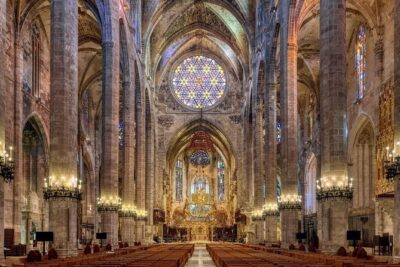
At Santa Eulàlia, you’ll see a stunning Gothic façade dedicated to Palma’s patron saint. The guide also gives time to step inside, where you can look for intricate carvings and religious artworks. Even if interiors aren’t your main goal, the chance to go inside at least one church helps you feel the style in a more complete way.
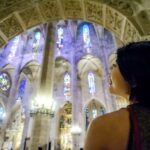
Then the tour heads to Basilica de Sant Francesc, framed as a major Gothic masterpiece. The focus here is what the basilica represents and how its relics and artifacts shape its historical role.
Tip for church stops: keep your pace steady and your eyes open. Don’t try to see everything at once. Look for one or two features the guide points out, then let the rest be background atmosphere.
Palau de l’Almudaina and Parc de la Mar: royal walls and sea air
After the churches, the tour shifts toward power, ceremony, and views.
You’ll visit Palau de l’Almudaina, described as medieval architecture that once served as a royal residence. This stop is a great way to add a “who lived here” layer to the city picture—Palma wasn’t only about religion and trade. It also had rulers shaping the urban story.
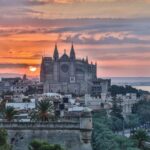
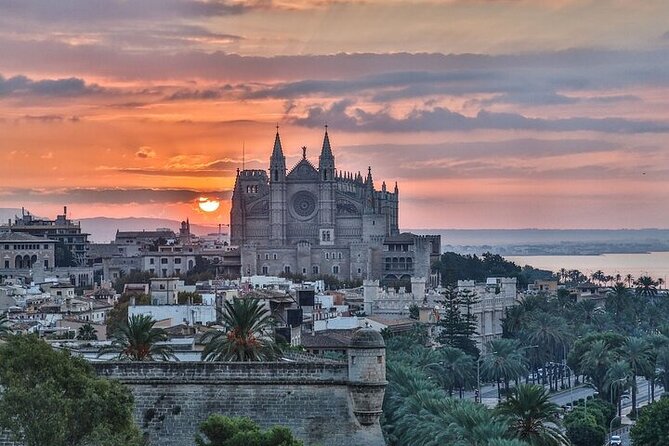
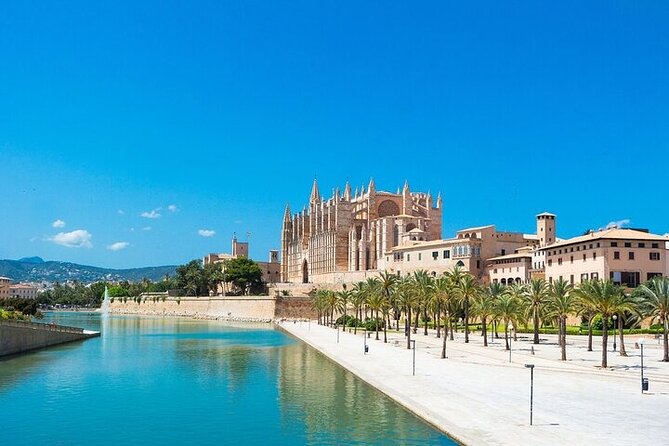
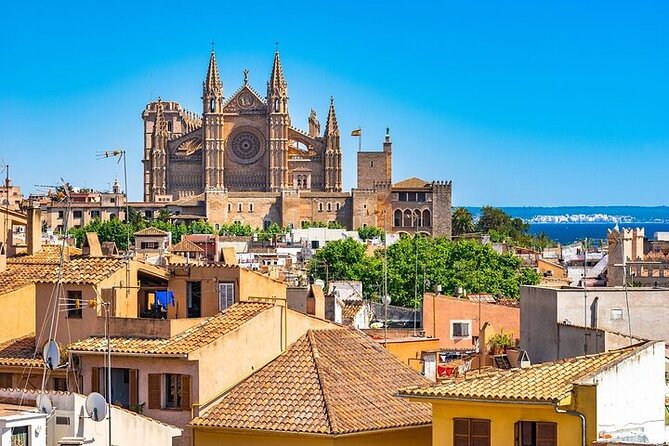
Then comes Parc de la Mar, positioned between the sea and the city. It’s a breather in the route—less “look harder” and more “reset your brain.” From here, you get panoramic views of the Mediterranean and also a look toward the Cathedral of Santa Maria area.
On a warm day, Parc de la Mar is where you’ll appreciate the break. It’s also a good place to catch your breath and take photos with less crowd pressure than the busiest streets.
Cala Mayor beach time: a calmer ending with Mediterranean light
To wrap, you’ll have time for Playa de Cala Mayor. The point isn’t deep beach time; it’s a simple stroll along golden sand with sea breeze and that end-of-walk feeling.
This is a smart way to end a Old Town walking tour because it lets your body transition from “city pace” to “slow pace.” You’ll also likely find it easier to plan your next move after the tour if you’re near the water.
If you came in from a cruise day, this kind of ending can be extra helpful. It gives you an option for a slower final stretch rather than rushing back the moment the tour ends.
Ca’n Joan de s’Aigo: the one food stop that feels like local Palma
Part of the walk includes Ca’n Joan de s’Aigo, a historic café associated with traditional Mallorcan cuisine. The tour sets aside time for sweet treats and pastries, and the vibe is meant to feel like a genuine stop rather than a “tourist snack trap.”
Now, a small but important detail: drinks and food aren’t listed as included in the tour. Still, the schedule gives you the chance to grab something while you’re there—and at least one experience run is described as including a coffee and pastry stop.
My advice: if coffee and pastry are your thing, this is the moment to do it. If you’d rather wait for a proper meal later, you can use the time just to taste one small sweet and keep your appetite for dinner.
Price and value: what $37.71 really buys you
At $37.71 per person for about 2 hours, the value depends on what you want.
You’re paying for:
- a guided walk (in-person, offered in English)
- a route that covers multiple major sights without forcing you to make a bunch of decisions
- group discount options
- help from the team to book tickets for additional visits you might want
You’re not paying for:
- monument and museum entry (this is a city tour, not an inside-everything tour)
- transport during the walk
- drinks and food
- tips (optional)
For me, the best value is the “first-time help” factor. If you’re arriving in Palma and don’t want to spend time figuring out which sights connect logically, this tour does that work for you. It’s also a nice choice if you like structure but still want freedom afterward.
Private or small group: which style fits your trip
This is offered as a private tour/activity, meaning only your group participates. That’s a real benefit if you want a more personal pace, questions answered on the spot, or if your group includes people with different interests.
There’s also an option for small group dynamics with a minimum of 2 participants for the group option. If you’re traveling solo, a private format can be pricier than a shared group, but it’s simpler in terms of meeting and leaving together.
Language-wise, English is available, and the guide team can also speak Spanish, French, and Italian. If you’re choosing based on language comfort, English availability is confirmed in the listing details.
Who should book this Palma walking tour
I’d point you to this tour if:
- you want major Old Town landmarks without turning the day into a logistics puzzle
- you like guided context at stops rather than long museum time
- you’re visiting on a tight schedule, like a half day or cruise port window
- you’d rather see a lot first, then pick one or two sites for deeper paid visits later
I would also say it fits “low-stress tourism.” The tour is designed for walking and quick viewing time, so you don’t need to be an expert planner.
If you’re the type who always wants to go inside every major site, you might still enjoy this walk, but plan to add paid interior visits separately. The tour is clear about not being an all-access monument tour.
Should you book this Palma walking tour?
If you want a smart, short, guided introduction to Palma’s Old Town, I think this is a good bet. The best part is the balance: you get several iconic landmarks in a couple of hours, and you get enough explanation to make the stones make sense.
The main reason to skip would be if your priority is paid interior access at multiple major sites. Since this is a city walk and entry isn’t included, you’ll get explanations and viewpoints, but not a full “inside everything” day.
Given the strong overall rating (4.6 with 93% recommending it) and the repeated praise for guides like Romina (Romi), Christina, and Mimi for being friendly, organized, and willing to tailor the walk, it’s the sort of experience that tends to leave people feeling oriented rather than rushed.
FAQ
How long is the Palma Old Town walking tour?
It runs for about 2 hours.
Where does the tour start?
The meeting point is Passeig des Born, 4, Centre, 07012 Palma, Illes Balears, Spain.
What languages are the guides available in?
The tour is offered with guides who speak English, and also Spanish, French, and Italian.
Is this tour private?
Yes. It’s listed as a private tour/activity, so only your group will participate. A group option also exists with a minimum of 2 participants.
Is admission to monuments and museums included?
No. Entry to monuments and museums is not included. The experience is described as a city tour and not a tour inside the monuments.
Is food or drinks included?
No. Drinks and food aren’t included, though there is a stop at Ca’n Joan de s’Aigo.
Can I cancel for a full refund?
Yes. You can cancel up to 24 hours before the experience starts for a full refund.