REVIEW · MALLORCA
Spanish Cooking Class Palma meals+drinks 7 dishes Full meals
Book on Viator →Operated by Nautic Mooring SLU · Bookable on Viator
Cooking in Palma is a tasty shortcut.
This small-group Spanish cooking class starts near Plaça de l’Olivar and moves into a real food experience with a market stop and a full, multi-dish meal. It’s designed for people who want to learn while eating their way through classic Mallorca-and-Spain flavors, plus fusion twists that keep things interesting.
What I like most is how practical it feels: you get guided, hands-on help while the chef keeps the rhythm moving for a 3-hour evening. One thing to consider, though: this isn’t set up like a strict classroom where everyone cooks independently at their own station the entire time. It’s more like you’re contributing to dishes with close direction, so your role may vary by course.
In This Review
- Key points at a glance
- From Plaça de l’Olivar to Mercat de s’Olivar: the real starting line
- How the class works in about 3 hours
- The 7 courses you’ll eat: Tortilla, ceviche, chistorra, paella, and more
- Spanish tortilla: the egg-and-potato backbone
- Ceviche: a Mediterranean-Peruvian twist
- Chistorra al sake: sausage with cider/sake pairing
- Seafood paella: the icon course
- Espuma de crema catalana: dessert gets a modern twist
- Drinks that are actually included: open bar value for your budget
- The people factor: small group, big personality, and good translating
- Value check: is $107.63 for this 7-course cooking class a smart buy?
- Practical tips before you go (so you enjoy every course)
- Should you book the Palma Spanish cooking class?
- FAQ
- FAQ
- Where is the meeting point for the cooking class?
- How long is the cooking class?
- Is the class offered in English?
- How big is the group?
- What dishes are included in the menu?
- Are drinks included?
- Is hotel pickup or drop-off included?
- Is the class hands-on, or do I just watch?
- Can the class handle dietary needs like gluten free?
- What happens if there are not enough participants?
- Can I get a full refund if I cancel?
Key points at a glance
- Mercat de s’Olivar start: you begin where locals shop, not in a tourist-only kitchen.
- 7-dish full meal format: multiple courses rather than a token taste.
- Small group (max 12): easier questions, more attention, less waiting.
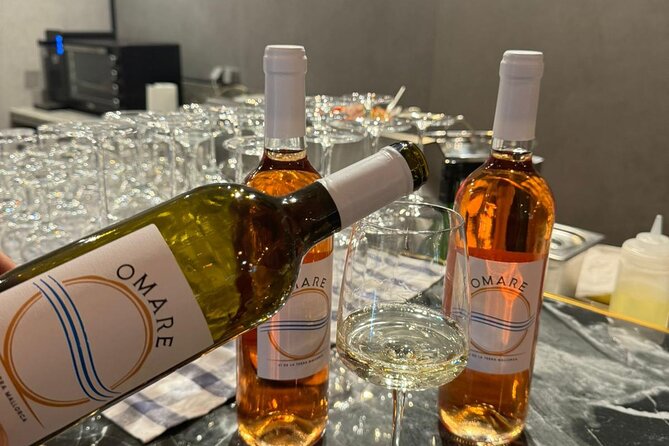
- Included open bar: water, soft drinks, and wines are part of the package.
- English instruction: helpful for non-Spanish speakers.
From Plaça de l’Olivar to Mercat de s’Olivar: the real starting line
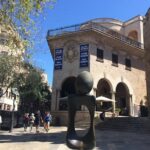
The experience kicks off at Plaça de l’Olivar, 5 in the Centre area of Palma. It’s a good pick if you want something walkable and simple to reach, and you’re not tied to a long hotel pickup shuffle.
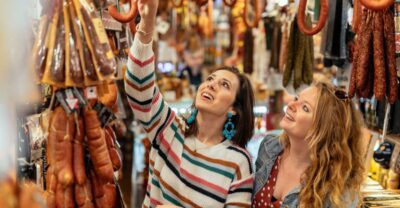
The itinerary includes a stop at Mercat de s’Olivar, which matters more than it sounds. You’re getting pulled into the local rhythm early, so later when you see how ingredients become dishes, you make the mental link fast. Even if you’re not “a market person,” this gives you context for why Spanish cooking leans so hard on fresh staples like eggs, potatoes, onions, seafood, and seasonal produce.
You can also read our reviews of more cooking classes in Mallorca

How the class works in about 3 hours
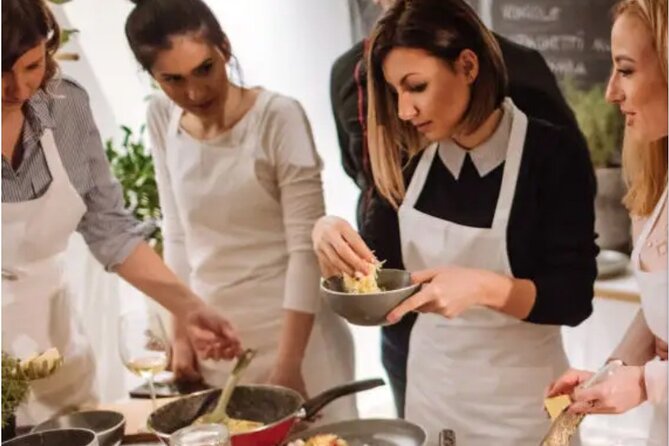
The class runs around 3 hours and keeps the group to up to 12 people. That small size is a big deal in a cooking setting. It usually means you get time for questions and you’re not stuck watching from the corner while someone else handles everything.
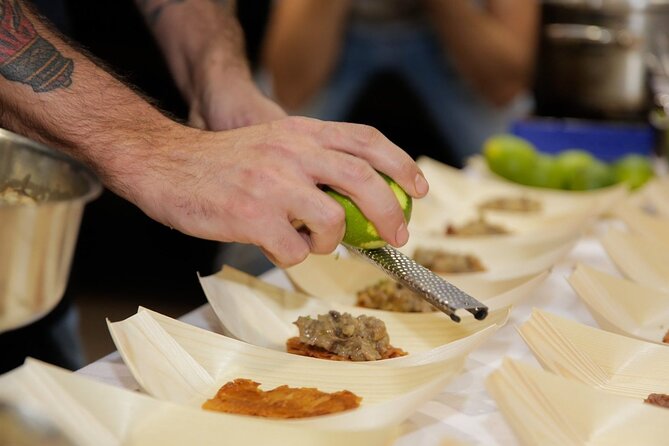
You’ll also get instruction in English, and the setup is built around hands-on participation with chef-led demonstrations. One theme that shows up in the experience style: the hosts and chefs keep things moving, explain what you’re doing, and keep drinks flowing while you work through each course.
Quick reality check: some sessions are described as more “volunteer help with guidance” than “everyone takes over the stove.” If you want nonstop independent cooking, you may feel slightly less in control than you expected. If you want a friendly, guided evening where you learn techniques and then eat what you helped make, it fits well.
The 7 courses you’ll eat: Tortilla, ceviche, chistorra, paella, and more
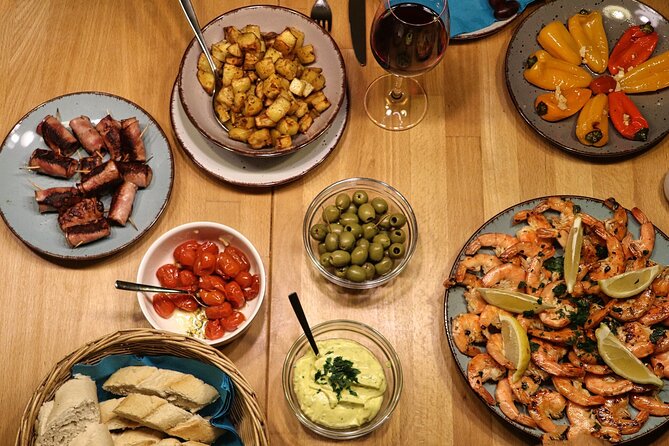
The course list is built as a full meal with multiple dishes, and the menu examples include five named plates. Reviews also describe additional starters and boards, so plan for a satisfying, layered meal rather than a single cooking project.
Here’s what the published menu points to, in the order you’ll likely encounter it:
Spanish tortilla: the egg-and-potato backbone
You start with The Spanish Tortilla, made with potatoes, onions, and eggs. This dish is worth learning because it’s simple in ingredients and tricky in timing. A lot of people think they understand tortilla, then realize the difference is texture and heat control. It’s a great first course because it teaches you what “Spanish comfort food” means without being heavy.
Ceviche: a Mediterranean-Peruvian twist
Next comes Ceviche, described as a fusion of Mediterranean and Peruvian flavors. The big value here is learning how acidity changes seafood and how flavors wake up fast when you balance salt, citrus, and freshness. Some sessions also keep things practical for all ages and kitchen comfort levels by avoiding flame-heavy steps on certain dishes.
You can also read our reviews of more tours and experiences in Mallorca


Chistorra al sake: sausage with cider/sake pairing
Then you’ll tackle Chistorra al sake, paired with cider. Chistorra is a crowd favorite because it’s flavorful on its own, and the pairing idea is what makes this course feel like more than a standard “cook sausage” task. You’ll get to think about how liquids and seasonings affect the final bite.
Seafood paella: the icon course
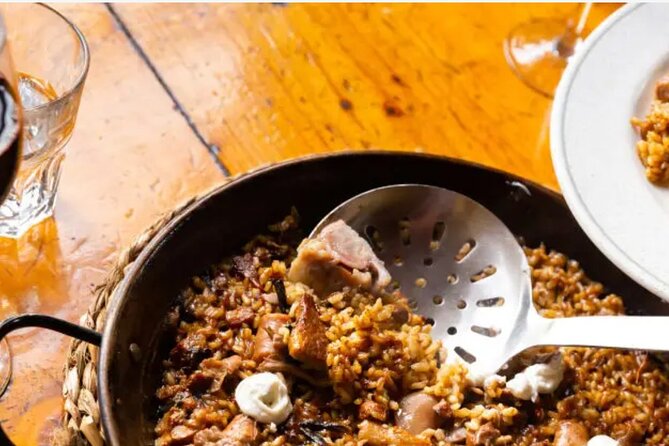
The main dish is Paella Sea Food. Paella is described as an iconic Spanish dish with roots traced back to the 19th century. I like it as the centerpiece because it’s not just “a recipe.” It’s a whole logic: heat management, rice texture, and how seafood flavors distribute.
One practical tip for paella lovers: don’t treat it like a vague dish you just order. In a cooking class, the goal is to understand what changes when the pan is hot enough, when the broth hits, and how the finish gets you from liquid to set rice.
Espuma de crema catalana: dessert gets a modern twist
Finally, dessert is Espuma de crema catalana, combining the classic custard idea with a yuzu-ice-cream inspired touch. Crema catalana has that signature creamy base and caramelized top feel, and this version shifts the vibe toward something lighter and more playful. It’s a fun way to end, especially after richer savory dishes.
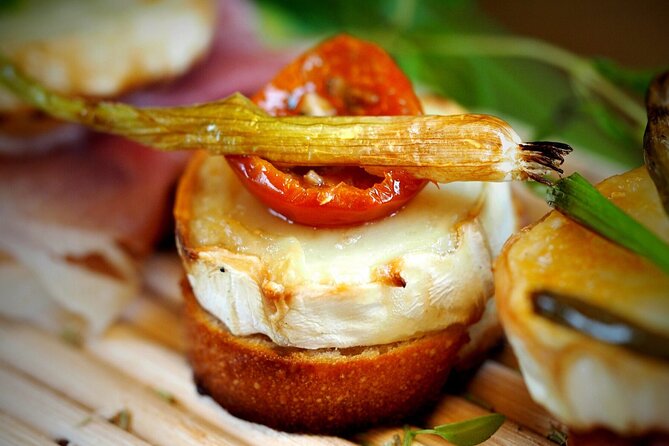
Some sessions also start or add plates like a tapas-style board or charcuterie spread, depending on the timing of the class. Either way, the idea stays the same: you’re building a full meal across multiple bites, not just eating one plated dish.
Drinks that are actually included: open bar value for your budget
This experience includes an open bar with water, soft drinks, and wines. That alone is useful when you’re budgeting, because it changes the price math. When a cooking class includes the meal and drinks, you’re not forced to decide, mid-experience, whether it’s worth ordering something else.
Many people also report a stronger start to the evening, like receiving a glass such as cava at the beginning, plus a lively wine flow during the courses. Some also mention tasting other pours such as beer or tequila. The only safe assumption for your planning is what’s explicitly included: water, soft drinks, and wines. If you want to try mixed or stronger alcohol beyond that, treat it as a bonus rather than a guarantee.
The people factor: small group, big personality, and good translating
One of the most praised parts is the team’s energy and ability to keep the night friendly and organized. Reviews mention hosts and chef names like Charlotte, Amo, Ceci, Andreas, Lorena, Milli, Bai, and Andres. You might not meet the exact same people each time, but the takeaway is consistent: the team tends to focus on making instruction clear and keeping the atmosphere fun.
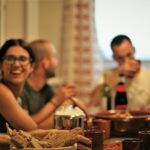
If you’re coming solo, I like that the format makes it easy to connect. In small groups, you’re not stuck in silence, and you’ll often end up chatting while you work on your course tasks. Couples also tend to enjoy it because it feels like a shared project plus a shared feast, rather than a rigid sit-and-watch activity.
Value check: is $107.63 for this 7-course cooking class a smart buy?
At $107.63 per person for about 3 hours, you’re paying for more than “someone teaching you a recipe.” The included value stack is the key:
- cooking class instruction and demonstration
- ingredients and cooking materials
- recipes
- meals across multiple courses
- an open bar with water/soft drinks/wines
If you’ve ever paid for paella, starters, and a couple of drinks separately in Palma, you know how fast costs add up. Here, you’re bundling it into one experience. The other value piece is confidence: you’re not just tasting. You’re leaving with techniques and a recipe card approach that helps you repeat dishes later.
The main caution is expectation-setting. One person noted that their experience felt different from the promise of full participation (not being invited to cook much, and feeling like courses/drinks were lighter). That doesn’t seem to be the norm, but it’s a reminder: if you want high involvement, go in ready to participate and ask where you can help during each course.
Practical tips before you go (so you enjoy every course)
A few things I’d do if I were booking this for Palma:
- Arrive a bit early at Plaça de l’Olivar, 5 so you can settle in before the market start.
- Wear something comfortable. You’re in a working kitchen environment, even if it’s indoors.
- Be ready to help during each course. Even when you’re not the lead cook, you’ll likely prep or assist at some point.
- If you have food needs, ask. One guest specifically reported gluten-free was handled well, so it’s worth checking directly.
- Keep an eye on the drinks you’re offered first. Since wines and soft drinks are included, you can plan around that and avoid surprise costs.
Should you book the Palma Spanish cooking class?
I think this is a strong choice if you want a small-group, multi-course meal in Palma that teaches you something you can use again at home. It’s especially good for food lovers who like learning by doing, and for couples and small groups who want a fun evening that doesn’t require cooking experience.
Skip it (or temper expectations) if you’re expecting a totally independent, every-minute stove experience. This style can be more “chef-led with shared tasks” than “everyone cooks start to finish at their own station.”
FAQ
FAQ
Where is the meeting point for the cooking class?
It starts at Plaça de l’Olivar, 5, Centre, 07002 Palma, Illes Balears, Spain, and ends back at the same meeting point.
How long is the cooking class?
It lasts about 3 hours.
Is the class offered in English?
Yes, the experience is offered in English.
How big is the group?
The class has a maximum of 12 travelers/participants.
What dishes are included in the menu?
The menu examples include Spanish tortilla, ceviche, chistorra al sake, seafood paella, and espuma de crema catalana. The experience is described as a 7-dish full meal.
Are drinks included?
Yes. An open bar with water, soft drinks, and wines is included.
Is hotel pickup or drop-off included?
No, hotel pickup and drop-off are not included.
Is the class hands-on, or do I just watch?
It is described as a chef-instructed, hands-on cooking class with demonstration and instruction, though the exact level of stove-time can vary by course.
Can the class handle dietary needs like gluten free?
One guest reported that gluten free was accommodated with no problem.
What happens if there are not enough participants?
The experience requires a minimum number of travelers. If it’s canceled for that reason, you’ll be offered a different date/experience or receive a full refund.
Can I get a full refund if I cancel?
Yes. You can cancel up to 24 hours in advance for a full refund.