REVIEW · MALLORCA
Palma’s Alternative History: A Self-Guided Audio Walk
Book on Viator →Operated by VoiceMap Audio Tours · Bookable on Viator
A city you can hear is a city you understand. This self-guided audio walk lets you piece together Palma de Mallorca’s story—slow, personal, and at your pace—through an alternative history lens. You’ll start by Parc de la Mar, with its odd little salty lake and views toward the Cathedral and Almudaina Palace, then work your way through churches, squares, and old power centers like the Almudaina.
What I love is the freedom: you can start, pause, and resume whenever you want, so the walk fits your energy. And the price is hard to beat for the time you get—about 1 to 1.5 hours—plus lifetime access to the English (or French) audio. One key drawback to plan around: this experience runs through the VoiceMap app, and if the app has trouble on your phone, it can slow you down (battery drain and occasional crashes are real considerations).
In This Review
- Key Highlights You Should Know Before You Go
- Why an Alternative History Audio Walk Fits Palma So Well
- Your Route Map: Parc de la Mar to Plaça de Cort
- Stop-by-Stop: What You’ll Hear and Why It Matters
- Start: Parc de la Mar and a Square Built Over the Sea
- The Art Nouveau Monument from the Early 1900s
- Can Marcel: A 17th-Century House Turned Lounge Stop
- Santa Eulalia Church: One of Majorca’s Oldest, and a Free Visit
- Where Sa Riera Once Cut Through: The Street That Used to Divide Palma
- Plaça Major: Mile Zero and the Walk’s Natural Turning Point
- A Square Tied to Saint Sebastian (and Palma’s Patron Saint)
- The Cathedral of Palma (Seu): Construction Spanning Centuries
- Almudaina Palace: Arabic Roots, Royal Use, and Museum Space
- The Maritime Stock Exchange Building: Gothic and Free
- VoiceMap App Reality Check: How to Keep the Walk Smooth
- Price and Value: Is $9.99 a Good Deal?
- Timing, Flexibility, and How Long You Should Plan
- Where It Fits Best (and Where It Doesn’t)
- Should You Book Palma’s Alternative History Audio Walk?
- FAQ
- How long is Palma’s Alternative History audio walk?
- Where does the audio tour start and end?
- Is the tour available in English?
- Do I need tickets for the sights on the route?
- Can I use the audio offline?
- Do I need headphones?
- What does the tour cost?
- What happens if I cancel?
Key Highlights You Should Know Before You Go
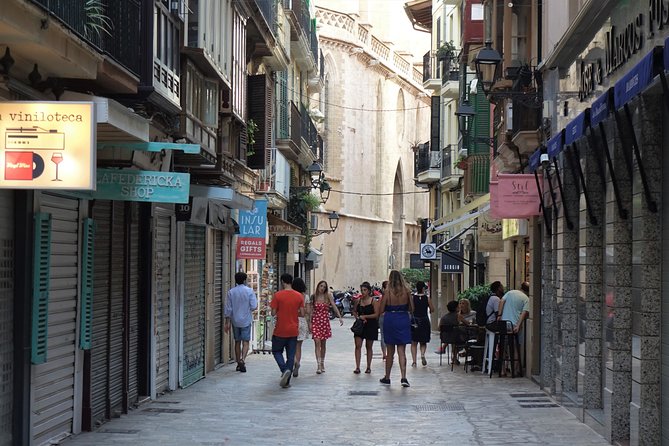
- Sandra’s resident voice: a longtime Palma local guides the walk with street-level context and anecdotes.
- Offline audio + maps: download ahead so you’re not stuck chasing signal.
- Major landmarks, but with story: you’ll hit the Cathedral area, Almudaina Palace, and the Gothic stock exchange building.
- Free stops along the route: Santa Eulalia Church and the maritime stock exchange building are described as free to visit.
- You control the pace: stop for photos, bars, or quiet pauses without a group schedule.
- The route makes sense in one pass: it’s designed as a clean thread through the historic center, ending near Palma’s town hall area.
Why an Alternative History Audio Walk Fits Palma So Well
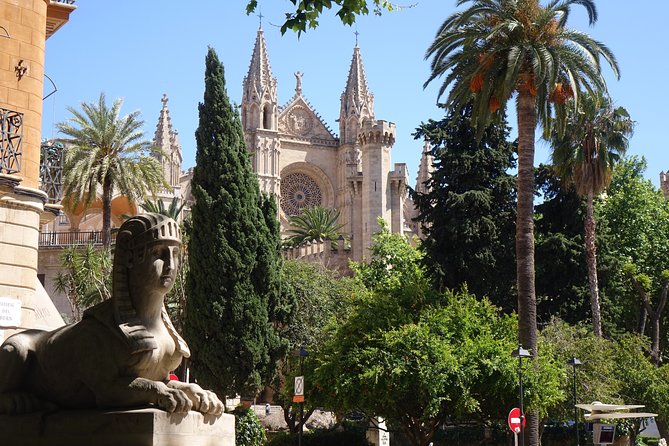
Palma can feel like two different cities at once. There’s the grand Gothic sweep of the Cathedral. Then there are streets and buildings that hint at earlier worlds—Arabic rule, medieval power, and later civic life shaped by waves of tourism and change. This audio walk helps you stitch those layers together without forcing you to do museum-by-museum planning.
Also, Palma’s old center is the kind of place where timing matters. You’ll bounce between squares that are easy to miss when you rush. The audio format is useful because it slows you down exactly when you’re standing still anyway—right at the moment you need context.
Finally, I like that the tour is story-first. It’s not just a list of names. When the route mentions a former torrent that once cut the city in two, you start noticing why certain streets feel the way they do. When it talks about coronations before the Cathedral was completed, you understand why the older church still matters.
You can also read our reviews of more walking tours in Mallorca

Your Route Map: Parc de la Mar to Plaça de Cort
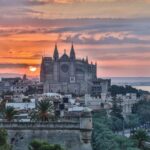
You’ll begin at Parc de la Mar (Parque del Mar). This square sits right across from the Cathedral and the Almudaina Palace. The walk begins with a quick explanation of how this area was built over the sea in the 1960s, during Palma’s tourism surge—an early clue that the city’s present was shaped by big decisions, not just slow history.
From there, the route winds through the historic center with a clear end point: Plaça de Cort, near the town hall area. Along the way, you’ll hit a mix of grand monuments and “pause-and-breathe” stops where an explanation makes the architecture feel personal.
The walking time is ideal for a first visit. You’re not asked to do a full-day endurance march. It’s designed as a compact story circuit that still covers a lot of ground.
Stop-by-Stop: What You’ll Hear and Why It Matters
Below is how the walk unfolds, and what each stop gives you beyond the postcard view.
Start: Parc de la Mar and a Square Built Over the Sea
At Parc de la Mar, you get a strong orientation. The audio frames the square’s setting—there’s a small salty lake, and it faces major symbols of Palma’s power. The key point here is the timeline: this part of Palma wasn’t always land in the way you see it now. You learn that the tourism boom of the 1960s reshaped the waterfront, so your first photo doesn’t just capture beauty; it captures a turning point.
Practical tip: arrive early or plan a quick slow-down. The square is one of those places where you’ll want a minute to look back toward the Cathedral and Almudaina before moving on.
The Art Nouveau Monument from the Early 1900s
Next comes a splendorous monument tied to early-1900s Art Nouveau design—one of Palma’s notable examples. This stop is useful because it signals Palma isn’t stuck in the medieval section of your brain. It has a modern pulse too, and the city’s architecture reflects changing tastes over time.
What to watch for: stand back and look at the details rather than only the shape. Art Nouveau can look “pretty” on the go. It turns into something more rewarding when you slow down long enough to spot ornament.
You can also read our reviews of more guided tours in Mallorca


Can Marcel: A 17th-Century House Turned Lounge Stop
Then you’ll reach a typical noble Majorcan house called Can Marcel (originally associated with the name Can Marcel). It dates to the seventeenth century and today it hosts a lounge bar with a rustic, authentic feel.
This is the tour’s smart “break” moment. Food and drink aren’t included, but the audio sequence gives you a built-in reason to pause: it’s an intentional reset between heavier sites. Even if you don’t buy anything, you’ll likely enjoy lingering for the atmosphere.
If you’re doing this on a tight schedule: use this stop to check your battery level and confirm the app hasn’t drifted from your location.
Santa Eulalia Church: One of Majorca’s Oldest, and a Free Visit
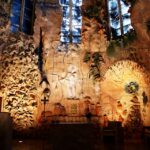
A church that dates back to the thirteenth century comes next, with a richly decorated Baroque interior. The audio explains that earlier kings of Majorca were crowned here before the Cathedral was completed in 1601. That one detail changes how you see the usual Cathedral focus. You start realizing Palma didn’t run on one building. It ran on a chain of places that held authority at different moments.
Even better: the church is described as free to visit. So you’re not just getting story—you’re getting a legitimate savings option if you step inside.
Where Sa Riera Once Cut Through: The Street That Used to Divide Palma
Then you’ll hear about the former torrent of Sa Riera, which flowed through this street and divided the city into two parts. The audio also adds a vivid angle: knights’ tournaments were organized along the torrent.
This stop works if you enjoy “invisible history.” Today, the street may feel ordinary. But the explanation makes you imagine the older geography—how moving water and land shape movement, defense, and crowd life.
Plaça Major: Mile Zero and the Walk’s Natural Turning Point
The walk’s momentum shifts at Plaça Major, described as the city’s Mile Zero. This is where you’ll likely feel the historic center tighten into focus. You finish the tour roughly about an hour later near Palma’s town hall area, but Plaça Major is the emotional gear change: you’ve made it through the key nodes of the story.
A Square Tied to Saint Sebastian (and Palma’s Patron Saint)
After that, the audio brings you to a beautiful central square built in the mid-nineteenth century. It’s connected to the feast day of Saint Sebastian on January 19, described as a major celebration for Palma.
Even if you’re there on an ordinary day, this stop adds meaning. It helps you see why certain squares feel built for gathering—because they were.
The Cathedral of Palma (Seu): Construction Spanning Centuries
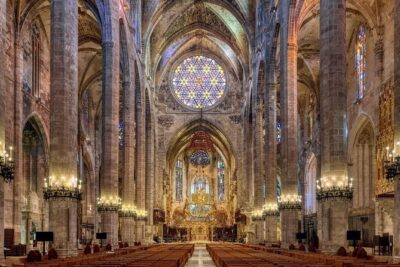
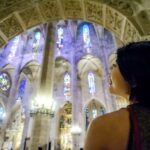
Then comes the crown jewel moment: the Cathedral of Palma, also called the Cathedral of Light or Seu. The audio gives the big timeline: construction began in 1230 and finished 371 years later, in 1601.
That long build time is more than trivia. It’s why you’ll often see a mix of influence and why the building feels like a project measured in lifetimes, not years. Pride is part of the message too—this cathedral remains a major source of identity for Majorcans.
Photo tip: take at least one shot from a slightly wider angle. The Cathedral is impressive up close, but it reads best when you capture it with its surroundings.
Almudaina Palace: Arabic Roots, Royal Use, and Museum Space
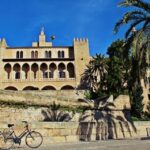
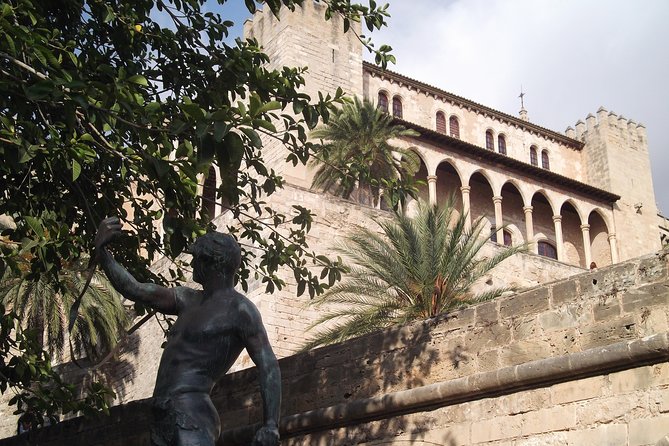
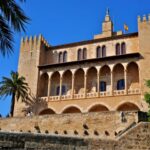
Next is the Almudaina Palace, described as an Arabic king palace built in the tenth century and identified as Palma’s oldest monument. Today, it’s the official King Philip VI residence, where official visitors are received. It’s also described as a museum and a military building.
This stop is a good reminder that history in Palma isn’t only past tense. It’s used. It’s administered. It’s still part of how power works.
What you can do: you can treat this as mostly a viewing stop unless you find museum access time works during your visit. The audio gives enough context to make the exterior and surrounding space meaningful even without going inside.
The Maritime Stock Exchange Building: Gothic and Free
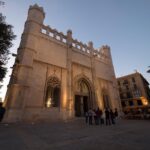
After the palace, the walk heads to a Gothic-style building built in 1428, described as the former maritime stock exchange. It’s described as open to the public, and admission is free.
This is one of those stops that makes the walk feel worth it even if you’ve already seen other big sights. It connects Palma’s commercial history to its physical structure. You understand why the port-and-trade city needed formal spaces.
If you like to peek inside buildings: plan a little extra time here. Even a short visit can add a lot.
VoiceMap App Reality Check: How to Keep the Walk Smooth
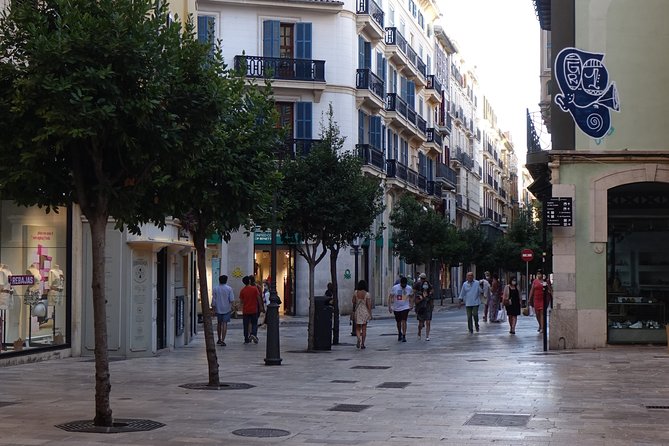
This tour lives in an app: VoiceMap (English or French access included for lifetime after purchase), with offline audio and maps. You’ll also get offline geodata, which matters because Palma’s center can still make mobile data unreliable.
Here’s the practical checklist that keeps the experience pleasant:
- Bring your headphones (smartphone and headphones are not included).
- Charge your phone before you start. The route is long enough that low battery can ruin the mood fast.
- Download the offline content ahead of time if your schedule allows. That helps avoid last-minute signal issues.
- If the app does something weird—pausing at the wrong place or blocking—pause calmly and get your bearings. Some people report needing to close and reopen the app and manually mark the point.
One review-based frustration that you can prevent: if you get off track, relocation can be awkward. A simple workaround is to keep a map on hand for visual orientation even if you’re not using it constantly. If you rely only on the audio app, you can lose time when you step aside to photograph something beautiful.
If you want the best experience, treat this as a “walk with instructions,” not a “walk with autopilot.” You’re in control, but you still need basic phone care.
Price and Value: Is $9.99 a Good Deal?
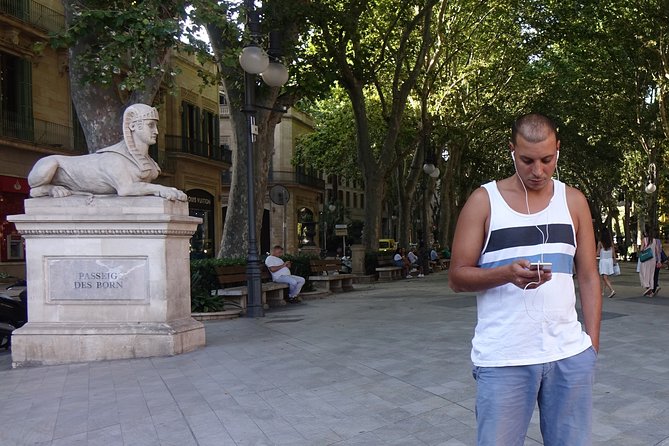
At $9.99 per person, this audio walk is priced like a budget-friendly story ticket. And the value mostly comes from three things:
- Time coverage: you get around 1 to 1.5 hours of structured wandering through major historic areas. It’s great when you don’t want to plan too hard.
- Lifetime access: once you buy, you can replay later (English or French). Palma is the kind of city where your understanding changes on a second pass.
- Free entrances on the route: at least two stops are described as free—Santa Eulalia Church and the former maritime stock exchange building. That doesn’t replace tickets elsewhere, but it reduces the overall cost of doing “real” stops.
You should also factor in what’s not included: tickets, food, and drink. If you’re the type who likes to step into everything, budget a little extra time and possibly extra money for anything not listed as free.
In short: for the cost, you’re buying guidance. If you like independent walking and you’re comfortable using an app, it’s a fair deal.
Timing, Flexibility, and How Long You Should Plan
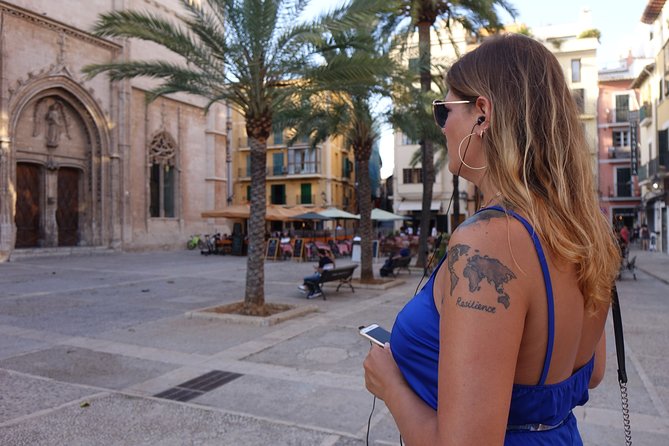
This is an all-day option in practice (the stated hours run from 12:00 AM to 11:59 PM daily). But your personal schedule still matters.
For the smoothest experience, I’d plan:
- About 60 minutes if you mainly look from the street.
- Up to 90 minutes if you pause for photos, step inside Santa Eulalia, and take a few moments at plazas.
Because you can start and stop the audio at will, you can also build in “human breaks”—especially at Can Marcel and around the cathedral area. That matters if you’re visiting in hot weather or you simply want to enjoy cafés without committing to a guided-group rhythm.
If you need one line to guide your plan: treat it like a first-history layer, not the final word.
Where It Fits Best (and Where It Doesn’t)
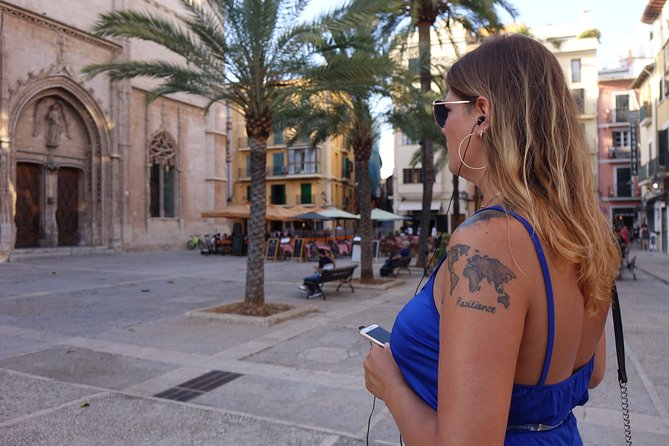
This tour is ideal for:
- First-timers who want Palma highlights plus context in one compact route.
- People who dislike rigid schedules and want pause-anytime flexibility.
- Anyone who enjoys a clear narrative thread—especially when the story includes geography like Sa Riera.
It may not be the best choice if:
- You hate relying on apps while walking (or if your phone battery is often fragile).
- You want heavy “inside-only” museum time. The walk is story-driven, and not every stop is framed as a long entry experience.
- You plan to do tons of detours off-route. If you drift far, app-based geolocation can become a hassle.
Should You Book Palma’s Alternative History Audio Walk?
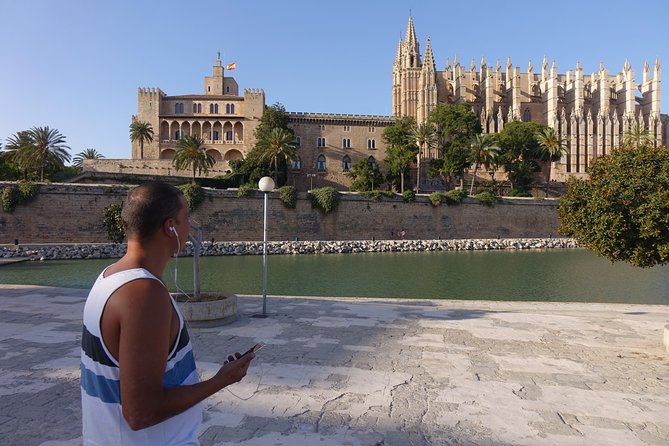
Book it if you want a low-stress way to understand Palma’s layers—especially if you care about why certain places matter. Parc de la Mar sets the scene, the Cathedral and Almudaina give you the big anchors, and the free stops (Santa Eulalia and the maritime stock exchange building) give you practical payoffs.
Skip it (or be cautious) if you know your phone struggles with apps or battery life. In that case, the story concept is great, but you’ll want a backup plan so the route doesn’t turn into tech troubleshooting.
FAQ
How long is Palma’s Alternative History audio walk?
It typically takes about 1 hour to 1 hour 30 minutes.
Where does the audio tour start and end?
It starts at Parque del Mar (Parc de la Mar), Palma, and ends near Plaça de Cort in the city center.
Is the tour available in English?
Yes. The audio is offered in English (and lifetime access can be used in English or French).
Do I need tickets for the sights on the route?
Tickets or entrance fees are not included. However, the Santa Eulalia Church and the maritime stock exchange building are described as free to visit.
Can I use the audio offline?
Yes. It includes offline access to audio, maps, and geodata.
Do I need headphones?
You’ll need your own smartphone and headphones. They are not included.
What does the tour cost?
The price is $9.99 per person.
What happens if I cancel?
It is non-refundable and cannot be changed for any reason.