REVIEW · MALLORCA
Palma de Mallorca Private Guided Walking Tour
Book on GetYourGuide →Operated by Travmonde OÜ · Bookable on GetYourGuide
Palma’s streets show their age fast. In a tight 1.5 hours, you’ll get a clear picture of Palma’s layers, from Talayotic-era roots and Roman traces to Moorish and Christian landmarks that still shape what you see today. I especially like the stops around Palma’s historic core and the way the guide ties each place to a different chapter of the city. One watch-out: entrance fees are not included, so some of the best moments may cost extra once you’re there.
The format is simple and practical. This is a private group (up to 15) with a local professional guide who stays with you the whole time, and you can adjust things on the spot. The main drawback is that 1.5 hours is short, so you’ll see highlights and learn fast, not slow-stroll every corner.
You’ll meet at Plaça de Cort, right by the Ayuntamiento, and your walk is built for orientation. As you move between key sites like the Church of Santa Eulalia and the Gothic Convent of San Francisco, you’ll also get the big-picture view of what makes Palma feel like a crossroads in the Mediterranean. Plus, one review noted that guide Cristina not only guided well, she also recommended and even reserved a good restaurant after the tour, which is a nice extra when you want the next step handled.
In This Review
- Key takeaways
- Why Palma’s old core feels like layered chapters
- Plaça de Cort and the Ayuntamiento: where civic Palma gets theatrical
- Santa Eulalia: a medieval church with a clear anchor story
- San Francisco Convent: Gothic details you can spot once you know what to watch
- The Museum stop: connecting what you saw to what it means
- Banys Àrabs (Arab Baths): a surviving Moorish remnant
- Santa Maria of Palma and La Almudaina: cathedral vs. palace views
- Making the most of 1.5 hours (and not feeling rushed)
- Guide quality matters more than you think
- Who this tour fits best
- Price and value: $280 per group can be a bargain or a splurge
- Should you book this Palma private guided walking tour?
- FAQ
- Where does the tour start?
- How long is the Palma walking tour?
- Is this tour private?
- What language is the guide in?
- What is included in the price?
- Are entrance fees included?
- Can I customize the tour while I’m there?
- How many people can be in the group?
- What’s the cancellation policy?
- Can I reserve now and pay later?
Key takeaways
- Start at the Ayuntamiento (Plaça de Cort) and get context fast, not after you wander.
- Church of Santa Eulalia gives you a solid medieval anchor for the city’s Christian story.
- Gothic Convent of San Francisco is where the style shifts and the details start to matter.
- Museum time helps you connect what you see outside with Mallorca’s cultural threads.
- Banys Àrabs (Arab Baths) is a rare surviving Moorish remnant you can experience firsthand.
- Optional on-the-spot tweaks mean you can steer the emphasis toward what you care about.
Why Palma’s old core feels like layered chapters
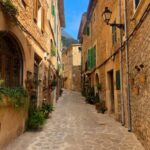
Palma de Mallorca is a small city that packs serious time periods into walkable streets. You’re not just looking at buildings; you’re watching the city explain itself. The Talayotic tribe roots and Roman era come up as background so you understand why the footprint of the city matters. Then the focus shifts to what most visitors remember: Moorish influence that still lingers, and Christian structures that changed the city’s shape and power over centuries.
What makes this tour work is the way it balances legend-level history with real places. You’ll hear the storyline as you stand in front of the buildings—so the history stays attached to geography. For me, that’s the difference between reading about Palma and getting your bearings in Palma.
And since it’s a private walking tour, you’re not fighting for attention. Your English-speaking guide stays with your group the entire time, which means you can ask quick questions and get straight answers.
You can also read our reviews of more walking tours in Mallorca

Plaça de Cort and the Ayuntamiento: where civic Palma gets theatrical
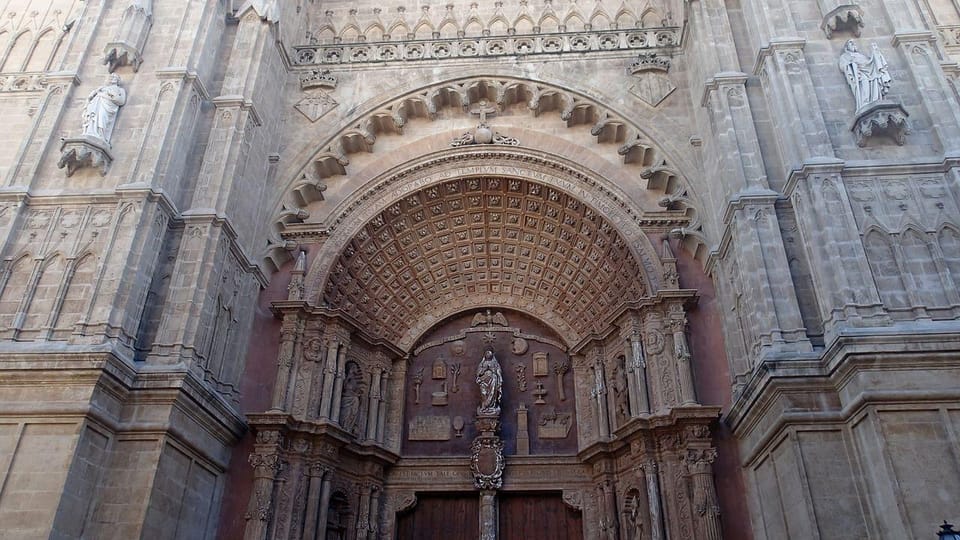
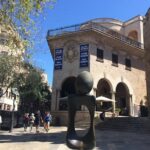
Your tour begins at the Ayuntamiento area on Plaça de Cort (Plaça de Cort, 1). This square is a smart starting point because it’s central, recognizable, and tied to the city’s civic identity.
The Ayuntamiento stop is more than a photo stop. You learn how Palma’s identity shows up in a 17th-century town hall setting and, most memorably, in the famous giant wooden roof. That roof is the kind of detail you can miss if you’re walking past it at normal tourist speed, but with a guide, it becomes a clue to how power and design work together in the city.
Even if you’re not an architecture person, I think you’ll enjoy this part because it’s practical. You get a sense of where you are in Palma and what kind of city you’re in. After this, everything else you see has a clearer frame.
Santa Eulalia: a medieval church with a clear anchor story
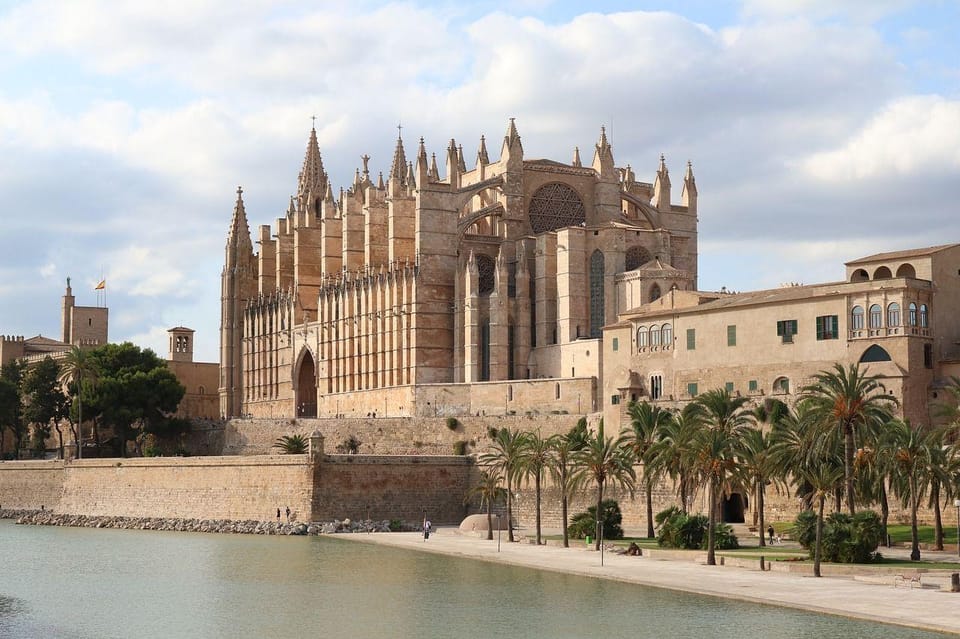
Next up is the Church of Santa Eulalia, and you step into its medieval world. Santa Eulalia is tied to the martyr and patron saint of Barcelona, so the church carries a wider regional connection beyond Palma. That’s a useful detail, because it reminds you that the Mediterranean wasn’t divided into isolated islands. People, stories, and religious influences moved.
What I like about this stop is the way it works as a timeline anchor. You’re in a medieval Christian setting, and you can compare it in your mind to what you’ll see later in the Moorish Arab Baths. It’s the same city, different belief systems and different architectural language.
Possible drawback: if you’re expecting a long, slow visit inside, note the tour is only 1.5 hours total. You’ll get the main points and the most important takeaways, but this isn’t the time to plan a deep, museum-like pacing. Think highlights with context.
San Francisco Convent: Gothic details you can spot once you know what to watch
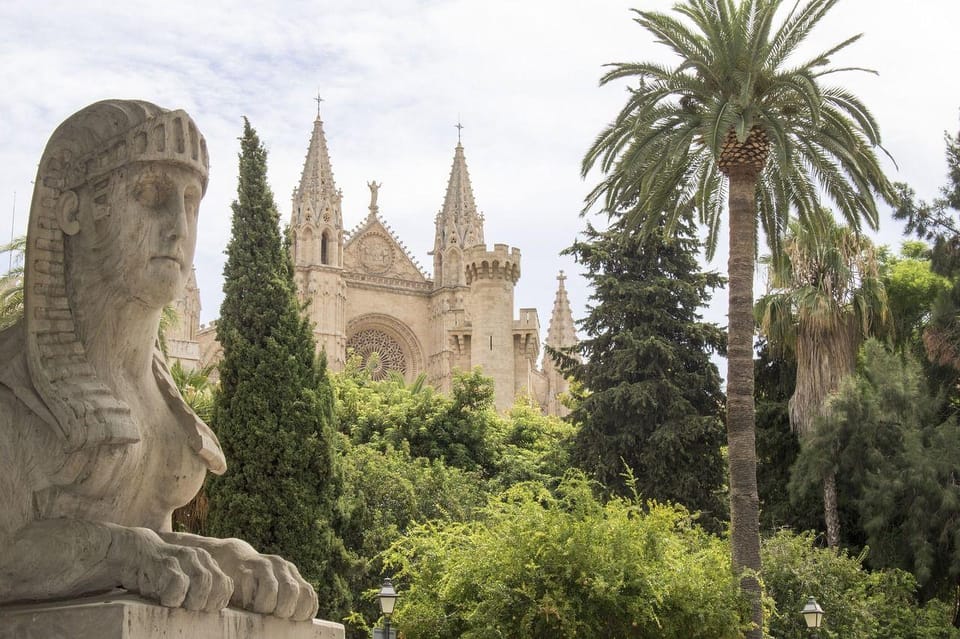
After Santa Eulalia, the focus shifts to the Gothic Convent of San Francisco, a 13th-century structure in the Gothic style. This is one of those stops where the value comes from learning how to look.
Gothic architecture can feel like one big pile of stone if you’re not sure what to notice. With a guide, you start identifying the cues that differentiate the Gothic language from earlier or later styles. You also get a sense of how religious institutions shaped daily life in Palma, not just the skyline.
This stop also helps you understand why Palma’s center feels like a layered argument across centuries. The convent represents a Christian architectural phase that built permanence—then later, other influences and power centers appeared.
The Museum stop: connecting what you saw to what it means
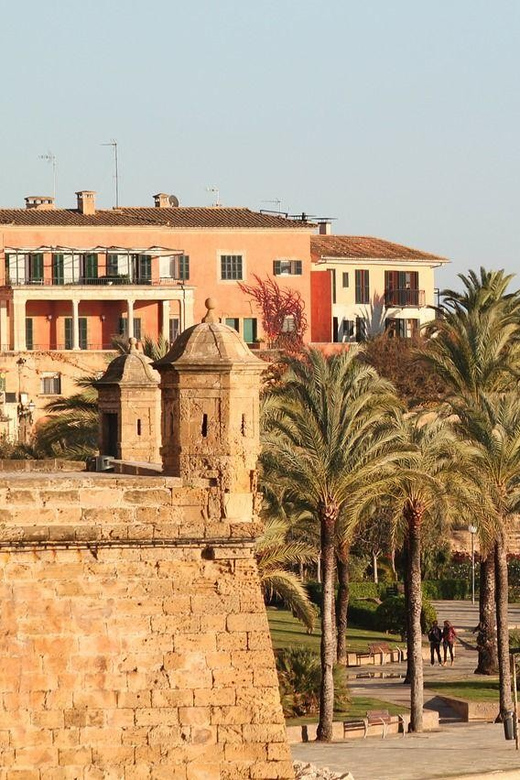
The tour includes time to discover Mallorca’s treasures in the Museum. The key benefit here is that it helps you connect exterior landmarks to interior meaning. You’re getting explanations in the street, then your brain gets a chance to organize that information with artifacts and context (even if you don’t know what to expect from the exhibits yet).
Because the tour data doesn’t specify which museum collection or what type of items you’ll see, I’ll keep this practical: use this stop to ask the guide what to focus on. When you’re short on time, you don’t want to drift. A guide can point you toward the pieces that connect directly to the periods the tour highlights—Talayotic-era roots, Roman influence, the Moorish layer, and the Christian expansions.
Budget note: entrance fees are not included. So if you want to fully enjoy museum time, plan for that extra cost.
You can also read our reviews of more guided tours in Mallorca


Banys Àrabs (Arab Baths): a surviving Moorish remnant
If you only remember one part of Palma from this tour, make it the Arab Baths—Banys Àrabs. This is described as one of the few surviving Moorish heritage remnants, which is exactly why it matters. Moorish influence shaped Palma, but not everything from that period survives intact. So when you can actually experience a remnant in person, it hits different.
What to expect here is a change in atmosphere compared with the churches and convents. The architectural and cultural cues are different, and your guide will help you read what you’re seeing in a way that doesn’t require prior expertise. You won’t just get a fact list; you’ll get the sense of how this space worked and why it endured.
One consideration: again, entrance fees aren’t included, so check how your schedule handles paid access. If you hate spending money on tickets mid-trip, this might be the moment you’ll want to plan for in advance.
Santa Maria of Palma and La Almudaina: cathedral vs. palace views
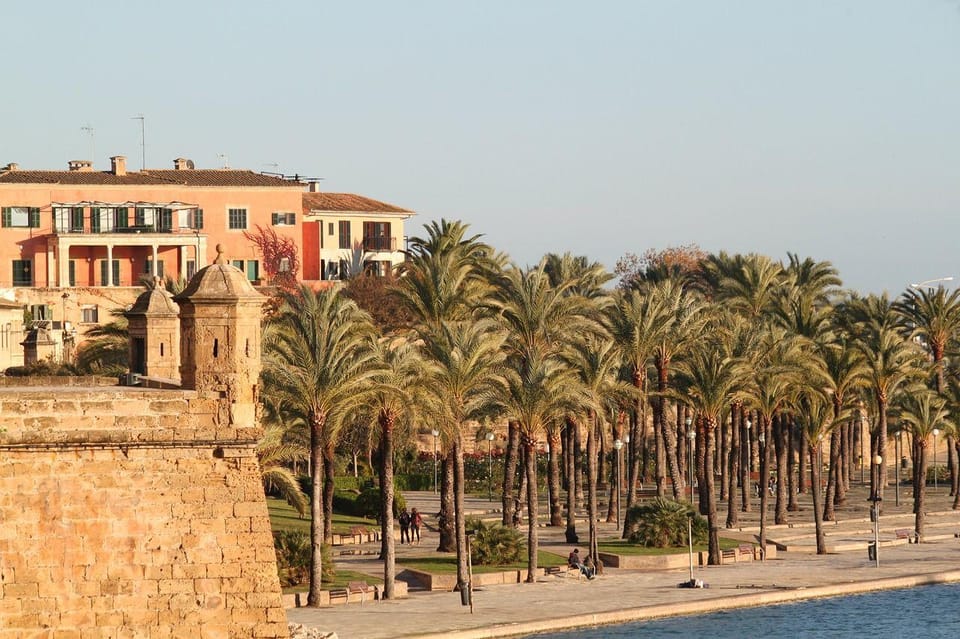
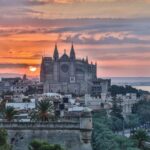
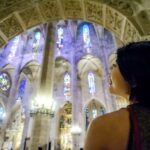
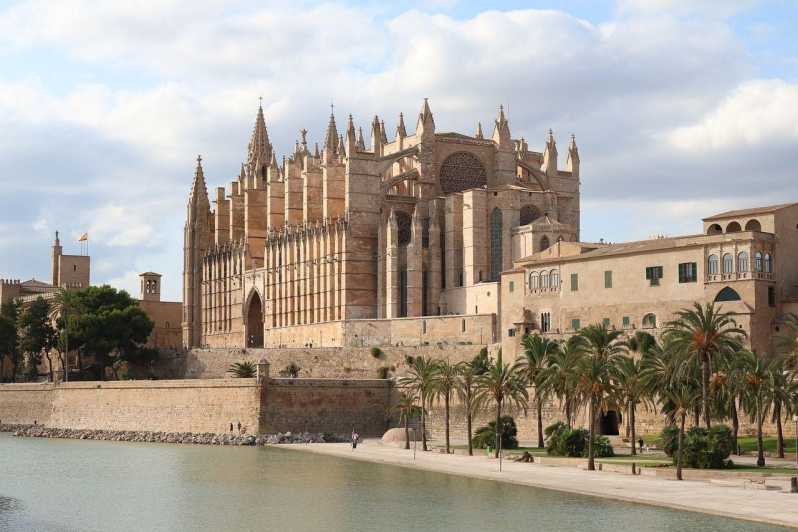
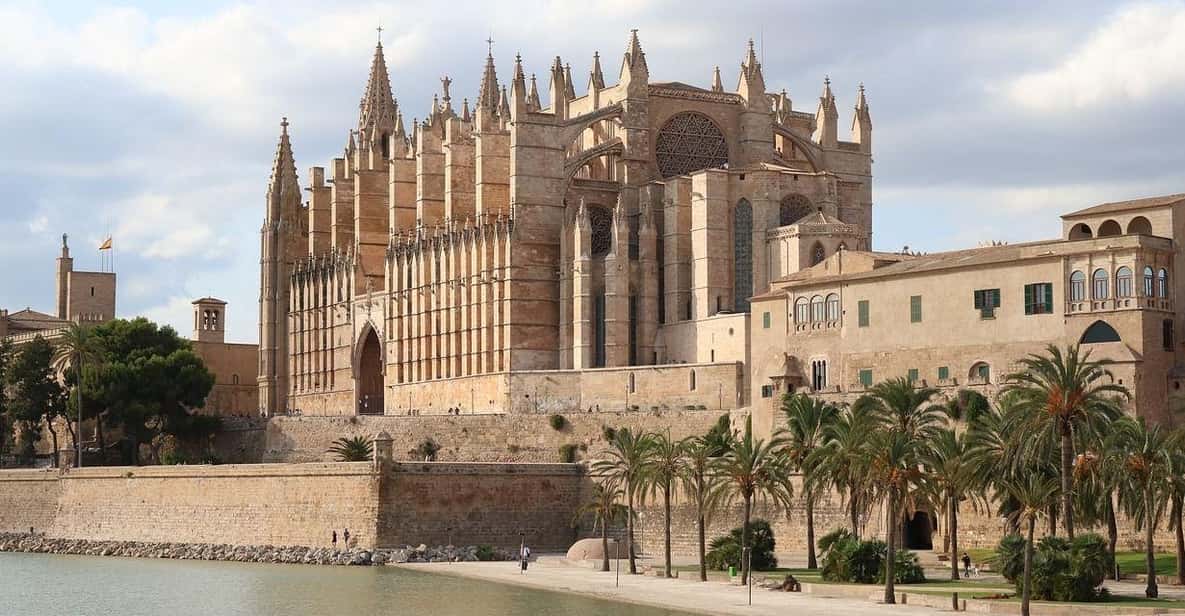
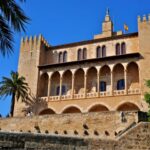
As you walk through the historic core, your guide points out the 13th-century Catalan Gothic Cathedral of Santa Maria of Palma. It sits atop the former citadel, which gives it a built-in dominance over the city view. You’re not just seeing a church—you’re seeing how elevation and power combine.
Opposite it is the Royal Palace of La Almudaina, former Alcázar of Palma, a former Arabian fortress later claimed as the official royal residence. The Spanish Royal family still spend their summers there, which turns a medieval narrative into something still living and used.
This contrast is one of the tour’s strongest teaching moments. You’re learning the way one era overwrites another, but without erasing everything. Even without going into a lecture, the physical positioning does the work: citadel church above, royal residence across, both tied to the city’s long strategic story.
Making the most of 1.5 hours (and not feeling rushed)
A 1.5-hour private walking tour is ideal when you want direction, not exhaustion. You get a concentrated hit of the key landmarks that represent Palma’s identity: civic roots at the Ayuntamiento, Christian landmarks like Santa Eulalia and the Gothic Convent of San Francisco, a museum connection, and the Moorish remnant at the Arab Baths. Then you finish with the larger skyline-level context around Santa Maria and La Almudaina.
Here’s how to get the most out of it:
- Ask your guide to prioritize the Moorish vs. Christian comparison if that’s what you care about most.
- Wear shoes that handle uneven old streets. You’ll be walking between sites, and you don’t want sore feet killing your attention.
- If you’re paying for entrances, treat this like a small budget item. It’s not included, and you’ll likely want to go in at least for the core stops.
Value check: the price is $280 per group up to 15. That’s the big thing to understand. For a solo traveler, it can feel steep, but for friends or a small group, it becomes reasonable fast. If you split it among even a handful of people, you’re essentially buying focused local guidance and efficient routing instead of spending hours trying to figure out what matters.
Guide quality matters more than you think
Because the tour is private, the guide’s approach has outsized impact. One review specifically praised Cristina for doing an excellent job and for recommending and reserving a very good restaurant after the tour. That kind of follow-through tells you two things:
1) the guide cares about the whole experience, not just the walking portion, and
2) you can ask for practical help right after you finish.
That’s especially useful in Palma, where you’ll likely want a good place to eat nearby without spending time chasing recommendations.
Who this tour fits best
This Palma private guided walking tour is a great fit if you:
- want a fast, guided orientation to medieval Palma plus Moorish remnants
- prefer a private group setup over joining a larger crowd
- want an English-speaking local guide who stays with you the whole time
- like history that’s tied to places you can see, not just dates
It’s less ideal if you:
- want a long, slow, “let’s linger” pace
- don’t want to pay any entrance fees beyond the tour price
- need a route with a lot of downtime or extensive free time
Price and value: $280 per group can be a bargain or a splurge
Let’s talk value like a grown-up traveler. You pay $280 per group, capped at 15 people, for about 1.5 hours. If you’re traveling solo or as a couple, you may feel like you’re paying for a whole group even when you’re not. In that case, it’s often better when you’re comfortable paying extra for convenience and a guide who can tailor things quickly.
If you’re a small group of friends or a family unit, it can become a solid deal because:
- you get a local professional guide reserved for your group only
- you cover multiple major stops in one efficient walk
- you get context that would take you longer to research on your own
Also, remember entrance fees aren’t included. So the true cost depends on what you choose to enter during the tour. Still, the structure is designed so you’re spending time on the places that make Palma’s story make sense.
Should you book this Palma private guided walking tour?
I’d book it if you want the best version of Palma in a short window: old-town orientation, strong storytelling, and a real Moorish experience through the Arab Baths. The private format helps a lot, especially if you like asking questions or want the guide to adjust the emphasis.
I’d hesitate if you’re the type who refuses entrance fees or you need a very long time inside each site. This is built for highlights with context, not slow, standalone sightseeing marathons.
If your goal is to come to Palma, understand it fast, and then enjoy the rest of your day with clearer direction, this tour makes that easy. Start at Plaça de Cort, follow the layers in the right order, and you’ll walk away with Palma’s past feeling much less abstract.
FAQ
Where does the tour start?
It starts at the seating area of the Ayuntamiento city hall, Plaça de Cort, 1, 07001 Palma, Balearic Islands, Spain.
How long is the Palma walking tour?
The tour duration is 1.5 hours.
Is this tour private?
Yes. It’s a private group tour, and your local professional guide will be with your group only.
What language is the guide in?
The live tour guide is in English.
What is included in the price?
A local professional guide is included. The tour also allows possible customizing on the spot with your local guide.
Are entrance fees included?
No. Entrance fees are not included.
Can I customize the tour while I’m there?
Yes. The tour allows possible customizing on the spot with your local guide.
How many people can be in the group?
The price is $280 per group up to 15.
What’s the cancellation policy?
Free cancellation is available if you cancel up to 24 hours in advance for a full refund.
Can I reserve now and pay later?
Yes. The booking option includes reserve now & pay later, so you can keep your plans flexible.