REVIEW · MALLORCA
Mallorca: Discover Scuba Diving for Beginners
Book on GetYourGuide →Operated by Adventure Tours Mallorca S.L. · Bookable on GetYourGuide
First breath underwater feels strangely manageable. This Mallorca experience turns your first scuba training into a small-group lesson in a protected marine reserve, with two PADI instructors keeping a close eye, like Marvin and Levi.
I love the way the training is built around calm, shallow water. You practice core skills such as mask clearing and ear equalizing step by step, slowly, until you feel ready, before a guided underwater section with a max depth of 6 meters.
One consideration: the gear is heavy, and you may need to walk a bit to reach the shore entry steps. If that’s hard for you, plan ahead and take your time.
In This Review
- Key highlights worth your attention
- A beginner-friendly Mallorca setup that keeps you calm
- The 3.5 hours: what happens from meeting to finished certificate
- Shallow-water skills: why they matter more than people expect
- The protected marine reserve: what you’ll likely see at first-timer depth
- Shore entry logistics: minivan rides and the heavy-kit walk
- Price and value at about $176 per person
- Who this is best for, and who should skip it
- Where to meet in Playa de Palma vs driving to Cabo Regana
- My verdict: should you book this first scuba session?
- FAQ
- Do I need any scuba experience to join?
- How small is the group, and how many instructors are there?
- What’s the maximum depth during the underwater part?
- What’s the minimum age?
- Do I need to complete a medical questionnaire?
- What should I bring, and is alcohol allowed?
- Do I get a certificate, and are photos included?
Key highlights worth your attention
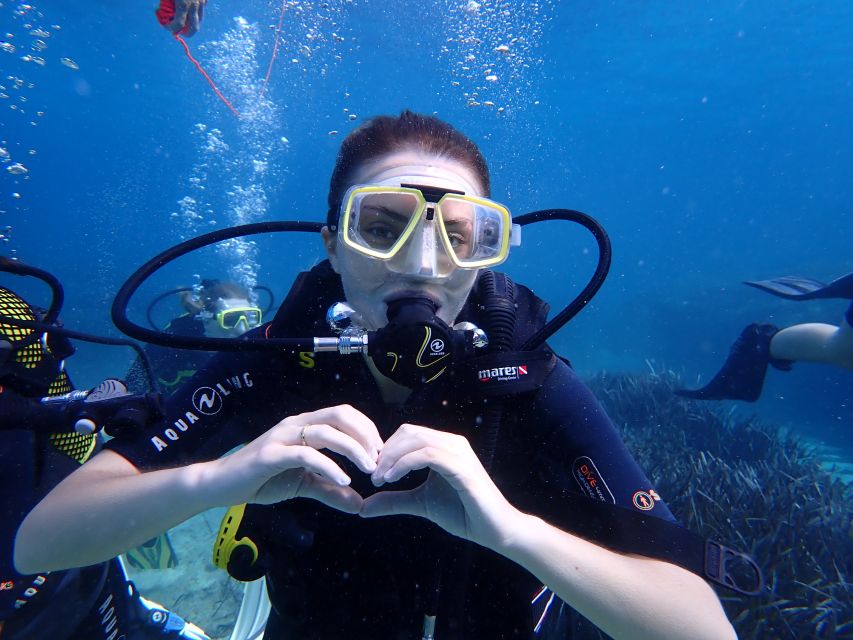
- Max 6 people, two PADI instructors in the water for close supervision and quick help
- Protected marine reserve along Mallorca’s coast, with a controlled setup for beginners
- Shallow-water skill practice (breathing, mask clearing, ear equalizing, hand signals) at your pace
- Shore entry with steps after a short transport by air-conditioned minivan
- Official PADI Discover Scuba certificate included after you successfully complete the session
A beginner-friendly Mallorca setup that keeps you calm
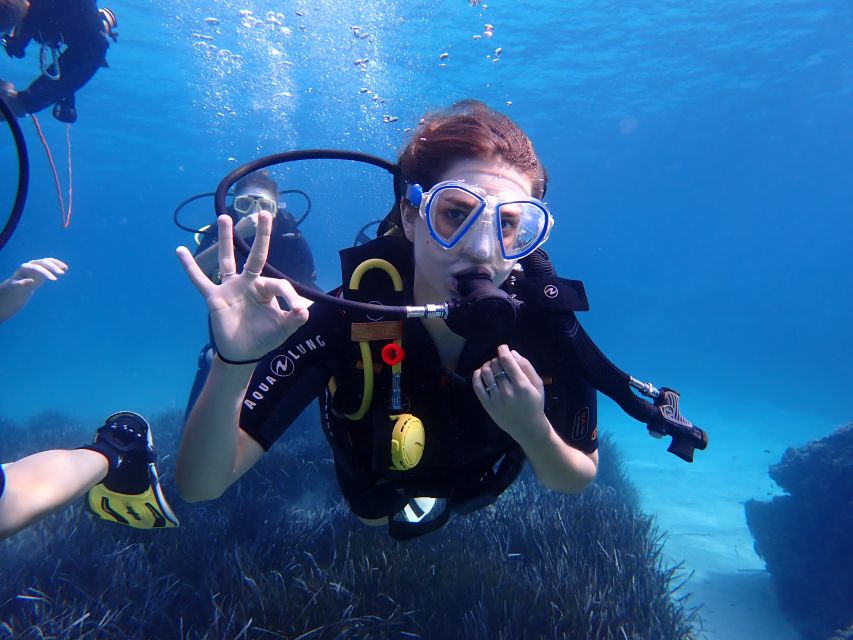
This is the kind of beginner program that makes sense the moment you arrive: small group, structured lesson, and a clear progression from land to shallow water to a short guided underwater section. The protected marine reserve matters because it’s meant to keep conditions more predictable for first-timers.
I also like that you’re not rushed into the deep end. You start with equipment explanations and breathing basics, then you build confidence in shallow water while your instructor stays right there, watching your breathing rhythm and listening for concerns. Recent participants repeatedly praised how patiently instructors helped nervous first-timers settle in.
In practice, you’ll see this in the instructor style. People mentioned instructors such as Robert, Bruno, and Raul for steady guidance, plus names like Marvin, Levi, and Uriel when groups were diving their first time. That mix of structure and calm “stay with you” attention is the real value here.
You can also read our reviews of more scuba diving tours in Mallorca
The 3.5 hours: what happens from meeting to finished certificate
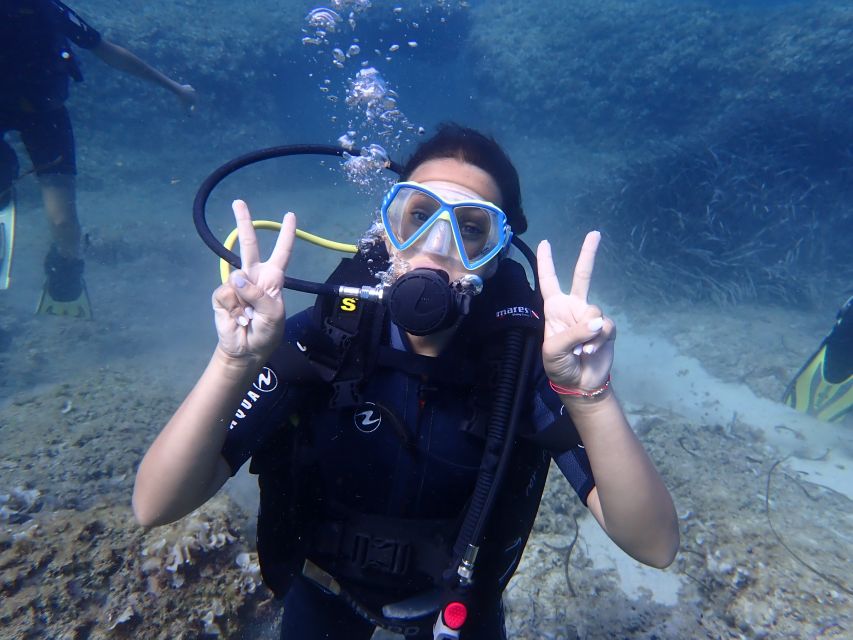
The schedule is short on purpose. You’re in and out in about 3.5 hours, which is perfect if you’re touring Mallorca and don’t want a whole day swallowed by one activity.
Here’s the flow you can expect:
1) Meet and get sorted with your group
You’ll start at one of two meeting points (details below), and the operator will then move you in an air-conditioned minivan to the nearby shore area inside the nature-protected zone.
2) Briefing and equipment prep
Before you go in the water, your instructor covers the essentials: how the equipment works, what your breathing should feel like, basic safety procedures, and how you’ll communicate underwater using hand signals. No experience is required, but you’ll still get a real lesson—this is training, not just a sightseeing ride.
3) Shallow-water practice
This is where most first-timers breathe easier because you’re not trying to perform in open water. You’ll practice the key skills one by one, slowly:
- breathing underwater
- equalizing your ears
- clearing your mask
- communicating with hand signals
The point is not to “pass.” The point is to feel in control. In several accounts, instructors were described as patient with people struggling to get the breathing pattern right—exactly what you want for your first time.
4) Your guided underwater section (max 6 meters)
Once you’re comfortable, you’ll take your first guided underwater session in a protected area. You’ll get the weightless feeling and the chance to observe marine life close to the shoreline environment. Depth is limited to 6 meters, and the whole plan is built for a relaxed pace.
5) Wrap-up and certificate
If you complete the program successfully, you receive an official PADI Discover Scuba certificate. The program notes that it may be credited toward the next step (the PADI Open Water Diver course) if you keep going.
Shallow-water skills: why they matter more than people expect
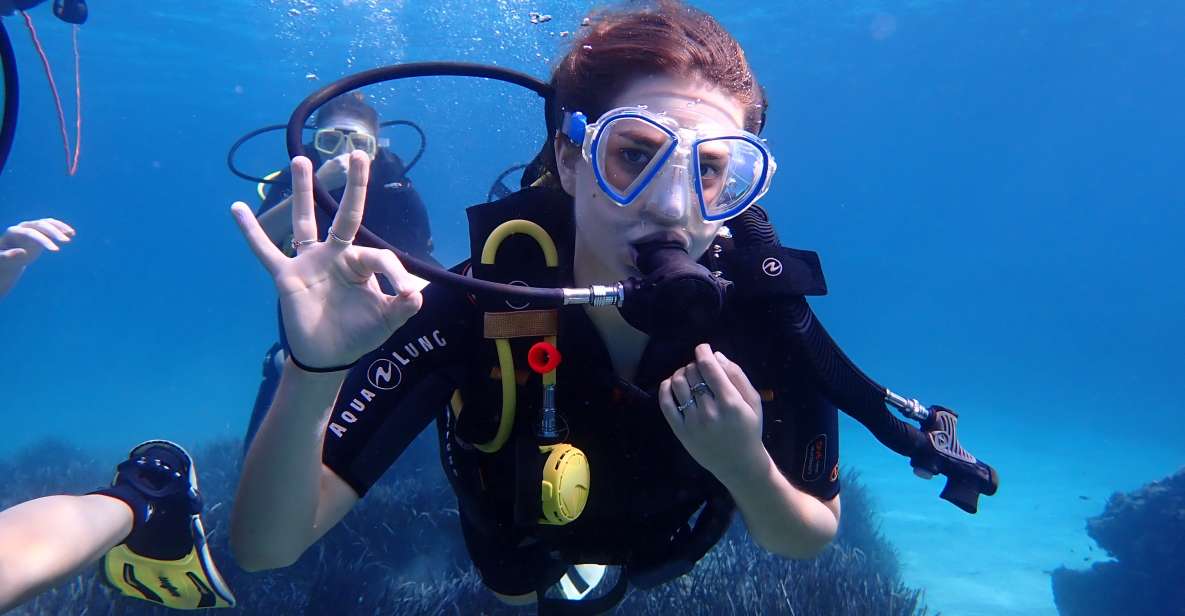
The shallow practice is the heart of why this works for beginners. Most fear comes from uncertainty: What if I can’t breathe? What if my ears hurt? What if I panic?
That’s why these four skills are central:
- Breathing underwater
You’ll practice breathing calmly underwater before the guided section. The goal is to stop thinking of scuba as “a machine that must be mastered” and start thinking of it as “breathing, but with gear.”
- Ear equalizing
Equalizing ears is one of the most important beginner techniques. You’ll practice it in shallow water where you can slow down and build the motion calmly.
- Mask clearing
If anything goes wrong with vision, mask clearing is how you fix it. Practicing it first in safe conditions removes a lot of future anxiety.
- Hand signals
Underwater communication isn’t optional. You’ll learn the basic signals your instructors will use, so you’re not stuck guessing what they want.
Several participants said they felt secure because the instructors continuously checked on them and guided people step by step. That matches what you want: not just a rulebook, but constant reassurance while you learn.
The protected marine reserve: what you’ll likely see at first-timer depth
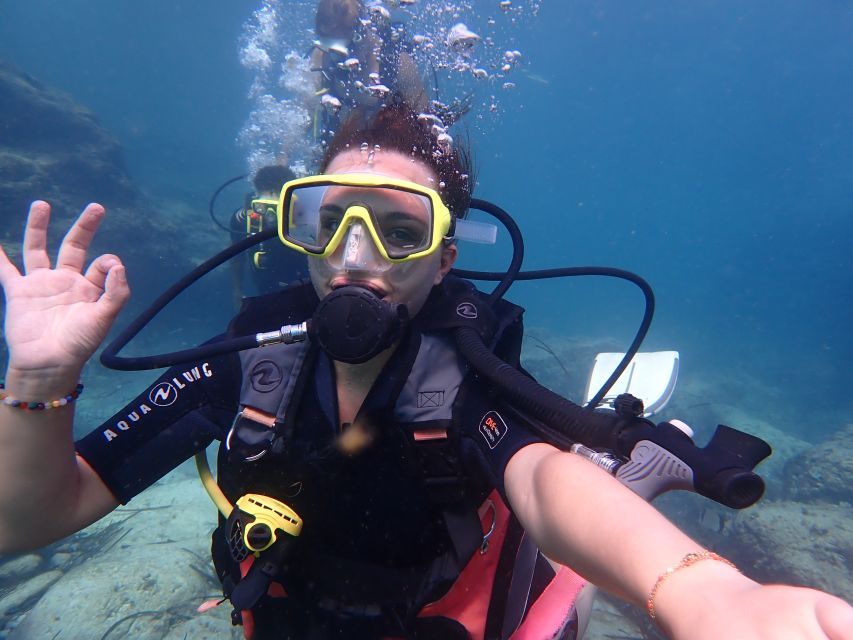
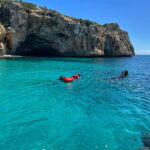
You’re going into a protected marine reserve area, which is a big deal for beginners. It helps keep the underwater section more controlled, with conditions that suit low-experience participants.
What about marine life? The most honest way to frame it is this: you should expect marine animals and a clear view at beginner-friendly depth, but the exact mix can vary by day. Some participants talked about lots of fish and even cool caves, while another noted limited fish sightings. That inconsistency is normal in natural environments and not necessarily a problem with the operator.
Depth stays at max 6 meters, which keeps things gentle and easy for your gear and breathing. You’re not there to set records—you’re there to experience the underwater world in a way that feels safe enough to want a second session.
Shore entry logistics: minivan rides and the heavy-kit walk
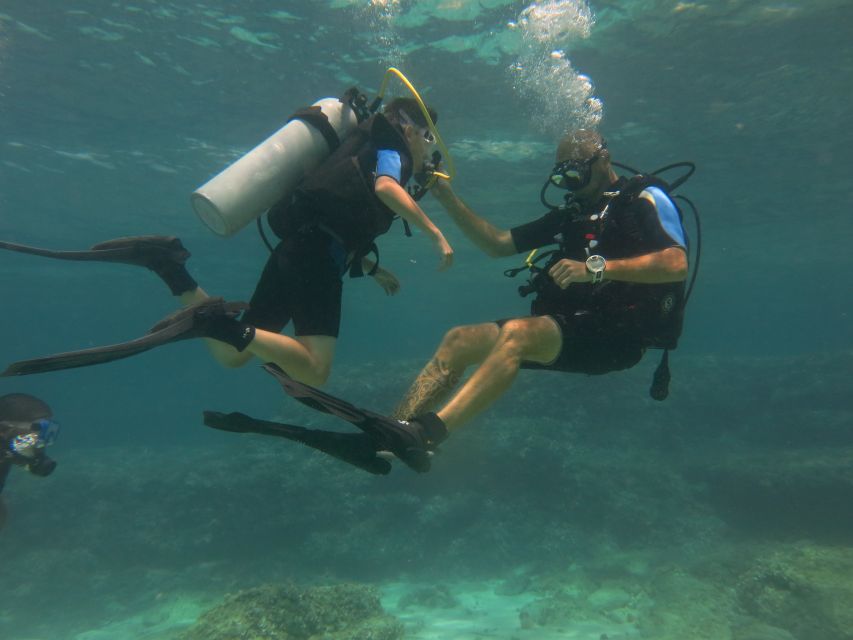
The experience includes transportation in an air-conditioned minivan to a nearby shore area within a protected nature reserve. Many first-timers enjoy this because you’re not juggling multiple transfers while wearing part of your kit.
Then comes the part people can underestimate: the equipment is heavy. One review called out a hike down the beach as difficult while carrying gear. Even if your walk is short, it’s still physical. If you’re coming with limited stamina, take it slowly. Don’t treat it like a sprint.
Once you’re at the water, entry is from shore using comfortable steps rather than jumping from a boat. That’s a real comfort factor for beginners who feel nervous about the first splash moment.
Practical tip: wear swimwear under your clothes. Bring a towel and a change of clothes so you’re not stuck sitting in damp fabric after the session.






Price and value at about $176 per person
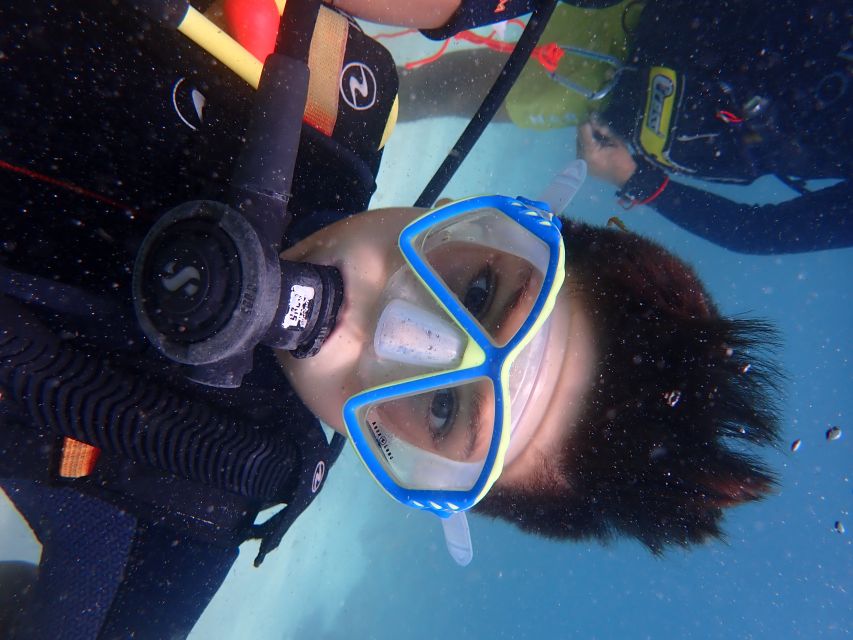
At $176 per person for a 3.5-hour experience, the value comes from what’s bundled in and what you’re paying for: certified instruction, safety, and equipment—plus the reserve entry fee.
You get:
- full scuba equipment
- two certified PADI instructors in the water
- small group limits (max 6)
- transport by air-conditioned minivan
- entry fee for the protected marine reserve
- insurance during the activity
- official PADI Discover Scuba certificate
- all the beginner training time (briefing + shallow skills + guided underwater section)
Photos are not included, so if you want pictures you’ll likely need an add-on. Still, the education piece is the main purchase here. For first-timers, paying for professional supervision and a structured skill progression is often better value than “cheaper” experiences that don’t spend time on breathing, ears, and mask skills.
Also, small-group size is part of the math. Max 6 participants and two instructors means you’re more likely to get direct help when something feels off.
Who this is best for, and who should skip it
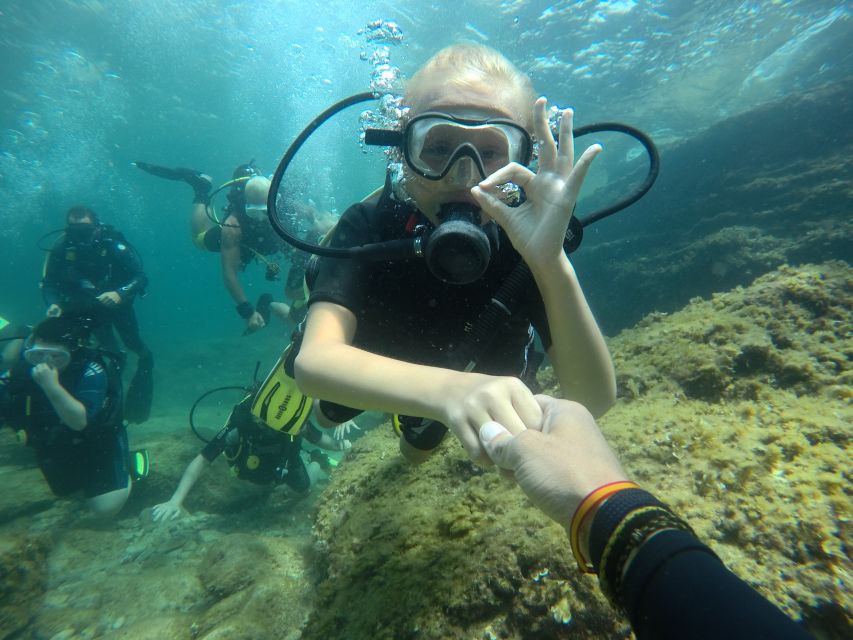
This program is designed for complete beginners, including people who don’t have scuba experience. You must feel comfortable in the water, though, because you’ll be practicing key underwater skills.
It’s not suitable for:
- children under 10
- pregnant women
- people with mobility impairments
- people with heart problems
- people with respiratory issues
There are also extra rules you should read carefully:
- Minimum age is 10. Under 14 must dive with an adult.
- Under 18 requires a legal guardian’s signature.
- Pregnancy excludes participation.
- You must complete the PADI Medical Questionnaire. If your answers require medical clearance, you may need a doctor’s sign-off in advance. If you can’t show clearance on the day, participation won’t be possible.
- Diving must be at least 12 hours before your flight.
If you’re simply afraid of water depth or you’re nervous about breathing underwater, this is exactly the type of structured intro that tends to work well—because it’s shallow first, and instructors stay close.
Where to meet in Playa de Palma vs driving to Cabo Regana
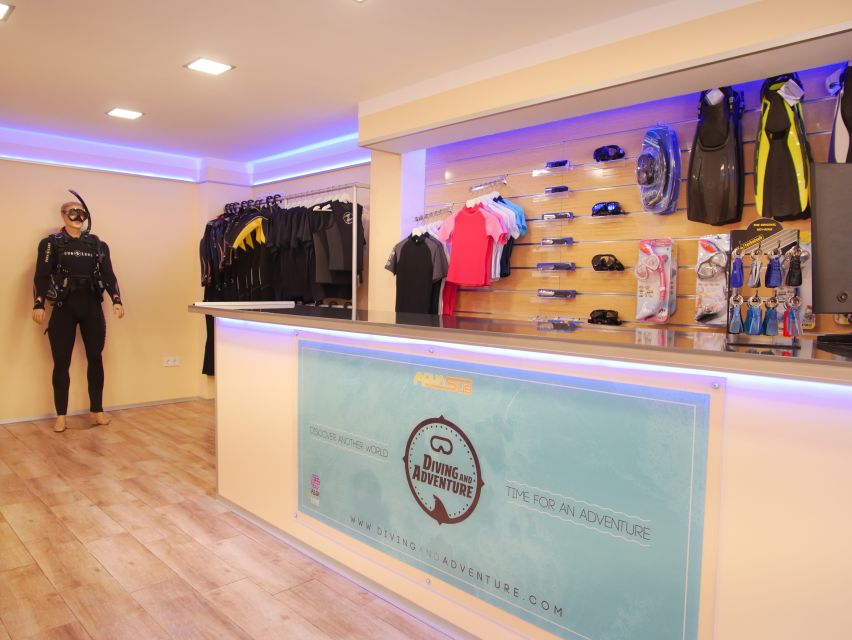
You’ll go to one of two meeting points depending on how you arrive. This matters because the van leaves early and won’t wait.
- If you’re walking from the Playa de Palma area: arrive at the ticket shop marked by a red arrow at Carretera de l’Arenal, 48, Platja de Palma (07600 El Arenal). Be there 30 minutes before start time.
- If you’re driving: go directly to the operator’s meeting point at Ctra. Cabo Blanco, Km 11, 07609 Cabo Regana. Parking is better if you park outside the barrier; the address is described as being on the right-hand side just after the barrier.
If you’re unsure, contact the operator ahead of time. It’s worth sorting this early so you don’t stress at the last minute while wearing gear.
My verdict: should you book this first scuba session?
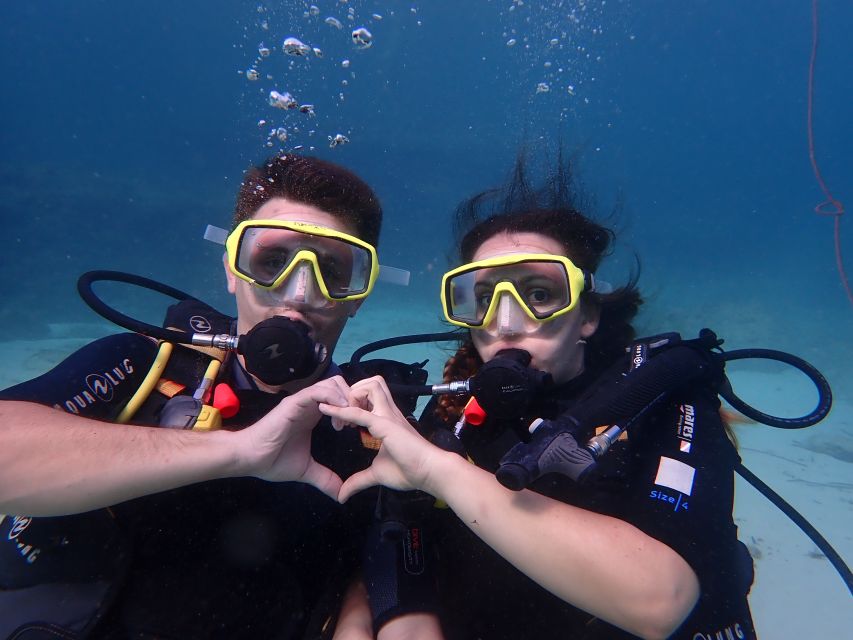
If your goal is a first-time scuba experience with tight supervision, this is a strong choice. The combination of max 6 people, two certified PADI instructors, and a structured shallow-water practice session is exactly what reduces first-timer anxiety. The protected marine reserve and shore entry also make it feel more controlled than many adventure-style formats.
I’d especially recommend it if you:
- want to learn key underwater skills (breathing, ears, mask clearing) rather than wing it
- prefer a slower, coached progression
- like the idea of an official PADI Discover Scuba certificate you can potentially credit toward the Open Water course
I’d think twice if:
- carrying heavy equipment and walking to shore will be a problem for your body
- you have a medical situation covered by the exclusions (heart, respiratory, mobility limitations)
- you’re pregnant or need to align with flight timing under the 12-hour rule
If you’re on the fence, book it. This is the kind of Mallorca activity that’s short enough to fit any itinerary, but taught well enough that you’ll leave understanding what to do next.
FAQ
Do I need any scuba experience to join?
No experience is required. You’ll get a briefing on safety, equipment use, breathing, and hand signals, then practice the key skills in calm, shallow water.
How small is the group, and how many instructors are there?
The group is limited to a maximum of 6 participants, and there are two certified PADI instructors in the water.
What’s the maximum depth during the underwater part?
The guided underwater section is limited to a maximum depth of 6 meters.
What’s the minimum age?
The minimum age is 10. Under 14 must dive with an adult, and participants under 18 require a legal guardian’s signature.
Do I need to complete a medical questionnaire?
Yes. The official PADI Medical Questionnaire is mandatory. Depending on your answers, you may need medical clearance from a doctor in advance.
What should I bring, and is alcohol allowed?
Bring your passport, swimwear, a change of clothes, and a towel (and something to drink). Alcohol and drugs are not allowed.
Do I get a certificate, and are photos included?
Yes, you receive an official PADI Discover Scuba certificate after successfully completing the activity. Photos are not included.