
REVIEW · CAN PICAFORT
Can Picafort: The lovely Magical Creatures, family &fun game
Book on GetYourGuide →Operated by Fun And Secrets · Bookable on GetYourGuide
Kids love a story walk that scores points. This one turns audio stories into a guided family adventure, with a 3-kilometer route of stops, songs, and small challenges in Can Picafort. I like that it gives kids something to do while you’re actually exploring, not just sightseeing. The trade-off: parts of the path can feel more demanding than you’d expect, especially if the route pulls you toward the beach area.
It’s also built for real family fun, not a museum shuffle. You can expect a guided stroll through side streets, fictional magical-creature tales, and interactive moments like riddles and jigsaw-style puzzles. Just keep in mind that some feedback points to puzzles being puzzle-heavy, so if your child only likes running games, you may want to set expectations early.
In This Review
- Key highlights you’ll notice fast
- A 2-hour magical-creature walk made for ages 5 to 13
- How the audio app turns side streets into a story route
- Riddles, jigsaws, points, songs: why the format works
- The 3 km route: mostly city walking, with possible beach strain
- What you’ll actually do at each stop (and how rewards work)
- Languages, timing flexibility, and how to start smoothly
- Price and value: $14 per group up to 5 for a 2-hour family game
- Who should book this in Can Picafort (and who might skip it)
- Should you book the Magical Creatures family walk?
- FAQ
- How long is Can Picafort: The Magical Creatures, family & fun game?
- How far is the route?
- Is it a guided activity or self-guided?
- Do I need a QR code to start?
- What languages are available?
- What is the age range the game is designed for?
- What’s included in the price?
- How much does it cost?
- Can I postpone the start time if the weather is bad?
- Is it a private group?
Key highlights you’ll notice fast

- Multilingual audio and app content in English, Spanish, German, and French
- 3 km route, about 2 hours, with short tasks at each destination
- Points, rewards, songs, and motivational sayings that keep the energy up
- Audio stories you can read, listen, or replay during and after the walk
- Family-friendly challenges aimed at ages 5 to 13, but adults often enjoy the stories too
- A predefined route through side streets, so you always know what comes next
A 2-hour magical-creature walk made for ages 5 to 13

This is a family game that looks like a simple walk on the map, but it’s designed to keep kids engaged the whole way. You follow a planned route through Can Picafort, stopping at destinations where you solve something small and get rewarded. The pacing is part of the appeal: it’s long enough to feel like an outing, but short enough that most families won’t hit that end-of-day meltdown.
What I like most is the target age range. The experience is specifically framed for kids around 5 to 13, and the challenges match that middle ground: not too complicated, but not purely random either. You’re not just chasing a character around. Kids get to collect points, solve riddles, and complete jigsaw-style tasks as part of the story flow.
For adults, the fun is more subtle but real. The narration and fictional adventures are written to be enjoyable for grown-ups too, and the route is deliberately set up so you can stay present rather than trying to “wait out” your kids.
One consideration: because this is a game-first experience, it’s not built as mainstream sightseeing. If you want famous landmarks and classic photo stops, you might feel a bit underfed. The upside is that you’ll see ordinary side streets through a story lens, which many families find more memorable.
You can also read our reviews of more tours and experiences in Can Picafort.



How the audio app turns side streets into a story route
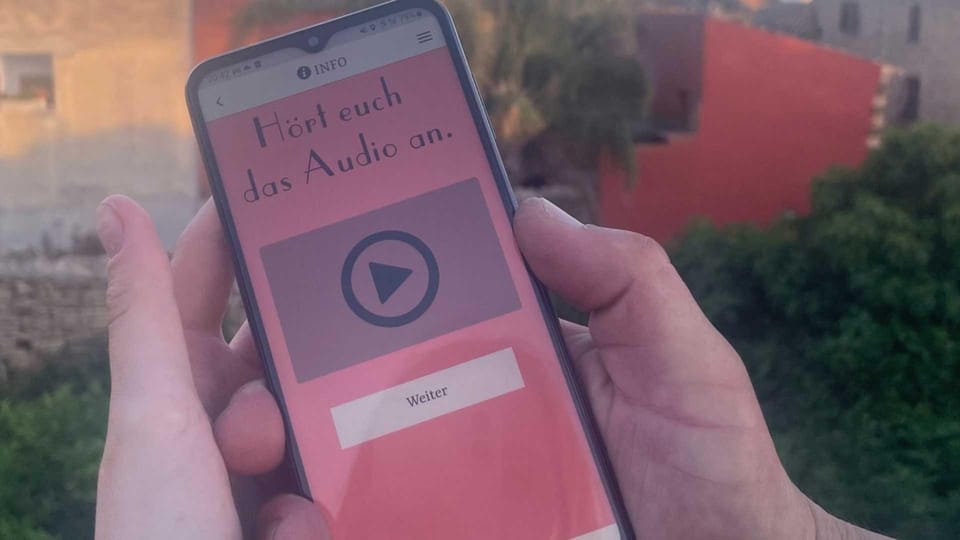
This walk runs on a smartphone audio experience. You don’t need to scan a QR code to start. Instead, you read the instructions email they send (you’ll receive one confirmation after booking and another email about how to begin about one hour before start). In practice, that means your biggest prep step is simply reading that message and making sure your phone is ready to go.
The core mechanic is straightforward: at each stop, you access an audio story segment and related media, then you do a short task tied to the magical creature theme. The app includes audio adventures, short videos, and songs. So instead of one long narration, the story comes in chunks, which helps kids stay focused.
You’re also not locked into finishing everything during the walk. You can read or listen to the stories at any time during the game or after it ends. That matters because with kids, you often need flexibility. Maybe someone gets tired earlier. Maybe you want a calm replay later while the beach towels dry.
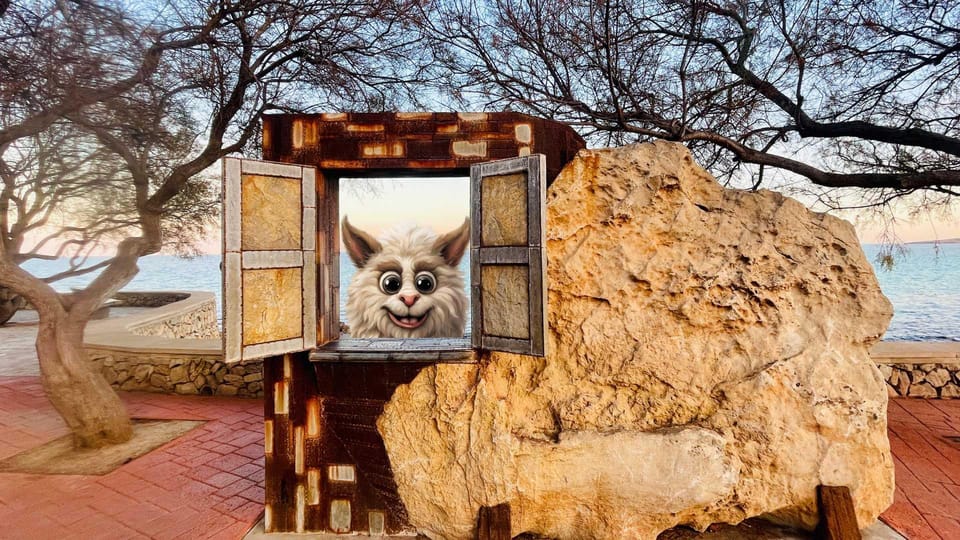
The “magical creatures” angle is more than branding. The stories guide you to various places on the route and frame them as parts of creature adventures. That changes how you notice the town: you start looking for clues, matching what you see to what you heard, and trying to solve the next step.
If you’re traveling with multiple languages at home, this is helpful. The experience supports English, Spanish, German, and French, and the audio guide matches those languages, so you can keep the whole group synced without switching content mid-walk.
Riddles, jigsaws, points, songs: why the format works

Each destination on the route is built around a “do something” moment. You might solve a small riddle, complete a task, or put together a jigsaw as part of the overall story. After that, you earn points and rewards, often with motivational sayings and short songs.
This design is good for families because it gives children a job. Kids don’t just move from Place A to Place B; they actively participate. That reduces the usual family walking tension where one person is bored and everyone else starts negotiating snacks.
That said, the puzzle type matters. Feedback includes complaints that the challenges were almost all jigsaws, which suggests the experience can lean more toward puzzle play than purely outdoorsy games. If your child loves putting pieces together, you’ll likely find that comforting. If they prefer riddles, scavenger-style searching, or more movement, you may want to mentally prepare for the jigsaw component.
Another practical benefit: because the tasks are small, you can often keep moving even if someone takes a second to think. The route is predefined, so you’re not wandering, and you’re not constantly asking adults to interpret what’s happening.
And the points/reward system helps families stay in “team mode.” Rather than policing behavior, the game offers a natural reason to cooperate. That’s the secret sauce of a lot of successful family activities: the structure does the parenting work for you.
The 3 km route: mostly city walking, with possible beach strain

The walk is about 3 kilometers and takes roughly 2 hours. In other words, it’s a proper walk, but it’s not a long hike. Still, it’s worth thinking of it as a stroller-suitable-to-not-suitable situation rather than a guaranteed smooth path for everyone. The description calls it a relaxed, guided route through side streets, which sounds gentle.
Then reality can add texture. One piece of feedback described a segment near the beach as exhausting, including having to climb over a fence to continue the path. That’s not something you want to discover mid-game, and it’s exactly the kind of detail that changes how a family should pack and plan.
So here’s my practical advice: wear shoes that handle uneven ground, and bring water even if it looks mild. If you’re traveling with a stroller, be ready for the possibility that not every stretch will be stroller-friendly. And if you have kids who get grumpy when they’re asked to maneuver around obstacles, keep them fueled and calm at the start.
Also remember: the checkpoints can feel spaced out depending on pacing and how long kids take at each riddle. One comment flagged that the checkpoints were far away from town and that there wasn’t much info about points of interest. That doesn’t mean the route is wrong; it means your family may want a slightly longer attention span than a quick stroll.
Bottom line: the “city walk” framing is true most of the time, but you should assume there may be at least one tougher moment.
What you’ll actually do at each stop (and how rewards work)

You’ll move along a predefined route through side streets. At each destination, the app and story content prompt you to solve something small. The game structure usually goes like this:
- You reach a destination point on the route.
- You access the related audio story or media in your selected language.
- You complete a task tied to that magical creature chapter (riddles and/or jigsaw-style puzzles).
- You receive rewards like points, motivational sayings, songs, and more story progress.
That’s the key: every stop has a reason to exist. Even if you’re not into puzzles, the story gives kids context for why they’re stopping, looking, and participating.
The storytelling also includes information about the region, traditions, and festivals of the islanders. You’re not getting it in a lecture style. You’ll learn through the fictional adventure wrapper, which is often easier for kids to accept and easier for adults to enjoy without feeling like homework.
A subtle win: the content is professionally written for children, and it’s meant to be used both during the walk and after. That means you can extend the value beyond the 2-hour activity window, especially on a travel day when you want an easy win for family time later.
Languages, timing flexibility, and how to start smoothly

This experience runs with support for English, French, German, and Spanish. The instructor language aligns with those options, and the audio guide is included in those languages.
Timing matters for family trips, and this one gives you flexibility. The tour is about two hours, and the provider offers multiple starting times depending on availability. If the weather isn’t suitable or you have other reasons, you can postpone and start later (up to 48 hours) without charge.
The real logistics are simple. You can start anywhere near the meeting address, and the exact start instructions come by email about one hour before. You don’t scan a QR code. You just read the email you receive and begin when instructed.
For the best experience, do this the way you would for any smartphone-based activity: charge your phone fully, bring a small power bank if you have one, and make sure your audio is working before you walk away from the start point.
Also keep your group size in mind. It’s listed as a private group, and the price is $14 per group up to 5, which is unusual in a good way.
Price and value: $14 per group up to 5 for a 2-hour family game
Let’s put the pricing in traveler terms. At $14 per group (up to 5 people), you’re not paying per head like most paid attractions. For families where two adults and up to three kids are sharing one phone and one team, that’s often a very fair deal.
Here’s what you’re buying for that money:
- A guided 3 km route designed around kid-friendly tasks
- Multilingual audio stories plus short videos and songs
- Riddles and rewards (points, motivational sayings)
- Professionally written children’s stories you can replay
If your goal is quality family time with a structured activity, value usually lands well. If your goal is standard tourism content, you’ll likely feel that the format is narrower than a conventional sightseeing tour.
Because the price is for the group, not the person, the value depends heavily on whether your group actually fits that up-to-five model and whether everyone will engage with the puzzle/story style. If you’re traveling with just adults, you may feel the story focus more strongly than you’d like.
Who should book this in Can Picafort (and who might skip it)
This is a strong fit if:
- You’re traveling with kids roughly 5 to 13
- Your children like audio stories, songs, and solving small challenges
- You want an activity that’s structured but not exhausting
- You’re okay trading mainstream sightseeing for something more playful and local-story flavored
It may be less ideal if:
- Your child strongly dislikes puzzles or jigsaws
- Your family needs the walk to be uniformly easy with zero awkward terrain
- You’re expecting classic monuments and major sights rather than a story-led route
One last angle: since the route is “magical creature” focused, you’ll enjoy it more if your kids buy in to fantasy characters and adventures. If they’re not into that theme, it can still work as a puzzle walk, but the emotional payoff drops.
Should you book the Magical Creatures family walk?
If you want an easy win for family fun—2 hours, a simple story structure, and audio content you can revisit later—this is worth considering, especially for a group of up to five. The price-to-time ratio is friendly, and the multilingual audio pieces are a smart way to keep mixed-language families on the same page.
Just go in with eyes open. Pack practical shoes, assume the route is mostly city walking but may include a tougher stretch, and be ready for puzzle moments that can skew toward jigsaw play.
If that matches your family’s vibe, you’ll likely leave with a story your kids remember longer than the average photo stop.
FAQ
How long is Can Picafort: The Magical Creatures, family & fun game?
The activity lasts about 2 hours.
How far is the route?
The route is about 3 kilometers.
Is it a guided activity or self-guided?
It’s a guided family walk with a predefined route, using an audio guide included in the experience.
Do I need a QR code to start?
No. You do not need to scan a QR code. You’ll start by reading the instructions email you receive.
What languages are available?
The activity and audio guide are available in English, Spanish, German, and French.
What is the age range the game is designed for?
It’s designed for families with children aged 5 to 13.
What’s included in the price?
You get the 3-kilometer route plus stories, songs, tasks, riddles, and rewards.
How much does it cost?
It’s $14 per group up to 5.
Can I postpone the start time if the weather is bad?
Yes. You can postpone and start later during the next 48 hours if needed, and postponing is free of charge.
Is it a private group?
Yes, it’s described as a private group.