REVIEW · MALLORCA
Secrets of Jewish Majorca – Half Day Experience
Book on Viator →Operated by Jewish Majorca · Bookable on Viator
Palma has secrets underfoot. This half-day walk focuses on the Jewish story in the city center, mixing quiet memorial details with street-level history tied to the Inquisition and the rise of the Crypto-Jews. I like that the pacing keeps you moving through real places, not just talking points, and you get a clear sense of how discrimination shaped daily life. One thing to keep in mind: a small number of past bookings reported that a specific shop stop in the description didn’t match what was on the ground, so stay flexible about any retail-focused expectations.
You’ll also get hands-on context for Mallorca’s Jewish legacy through sites around Palma’s old quarter and the Xueta neighborhoods—down to what families kept and what communities tried to survive. I especially liked the way the route connects big themes to details you can actually see, like the streets where Xueta families lived into the 1960s and how current jewelry shop ownership can trace back through generations.
If you’re coming for a perfectly scripted route that never changes, this may feel a bit more real-world than polished. Still, the overall rating is strong, with an average of 4.6 from 11 reviews, and the top feedback repeatedly points to guides who make the history make sense.
In This Review
- Key things to know before you go
- Palma’s Jewish story starts in the streets, not a textbook
- How the half-day fits together (about 4 hours)
- Stop 1: Palma de Mallorca and the Jewish Quarter Interpretation Center
- Ceramics workshop tunnel and memorial plaques
- Stop 2: Centre Maimó Ben Faraig Museum (about 30 minutes)
- Stop 3: Panaderia Fiol and that medieval oven story (about 30 minutes)
- Xueta streets and family-held jewelry: the legacy you can still see
- Crypto-Jews, forced conversions, and how public life can hide private truth
- Price and value: what you’re paying for
- Group feel, pacing, and what to do if expectations wobble
- Practical tips to make the most of your visit
- Should you book Secrets of Jewish Majorca?
- FAQ
- How long is the Secrets of Jewish Majorca half-day experience?
- What is the meeting point for the tour?
- Where does the tour end?
- What are the main stops on the itinerary?
- Are admissions included for the sites?
- Is coffee or lunch included?
- Is the tour private?
- Does the experience require good weather?
- When will I receive confirmation after booking?
- What is the cancellation window?
Key things to know before you go
- Jewish Quarter Interpretation Center as your launch pad, right by the old Call area entry point
- Secret tunnel in a ceramics workshop, adding an unexpected visual pause in the middle of the story
- Crypto-Jews and forced conversions explained through the streets and public signs you’ll encounter
- Xueta streets and family-held jewelry shops, including traces of a marginalized community still visible today
- Centre Maimó Ben Faraig Museum for a compact, focused museum stop
- Panaderia Fiol’s medieval oven (1652), a tasty historical link to food and prejudice
Palma’s Jewish story starts in the streets, not a textbook
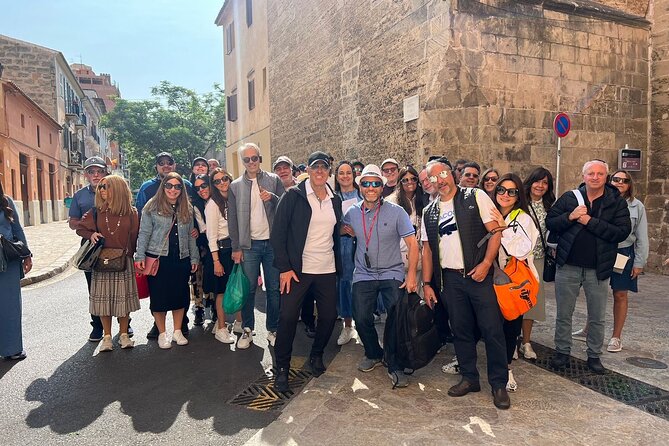
This is one of those experiences where the city feels like a living document. You start in the middle of Palma, then the tour quietly pulls you toward the places where Jewish life once clustered—and where later pressures forced people to adapt in public while holding onto identity in private. It’s not only about what happened. It’s about what the changes did to everyday geography: where families lived, which trades survived, and how even food became a form of memory and defiance.
What makes it work is the blend of big historical forces with small, physical cues. You’re guided to plaques, street names, and heritage markers you can’t easily “google later.” If you like walking tours that don’t drown you in dates, this format fits well.
You can also read our reviews of more tours and experiences in Mallorca.

How the half-day fits together (about 4 hours)
You should plan on roughly four hours total, with a steady walking rhythm plus three main stops. The first stop is the longest—about three hours—so treat it as the backbone of the story. The second and third stops are shorter, around 30 minutes each, and they function like anchors: one museum context stop, then one bakery stop that turns food into a historical clue.
Because the group is on foot through central Palma, comfortable shoes matter more than anything else. You’ll be outside for at least part of the time, so it’s smart to dress for the weather you’ll actually get. The experience also requires good weather, meaning the operator may shift dates if conditions are poor.
Stop 1: Palma de Mallorca and the Jewish Quarter Interpretation Center
Your tour starts at Starbucks, Plaça de Cort 1, right in Palma’s center. From there, you head to the Jewish Quarter Interpretation Center, located next to the entry point to Palma’s old Jewish Quarter area. The location choice is practical: it gets you oriented fast, before you start hunting for cues in the maze of old streets.
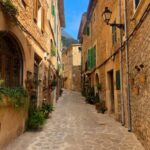
One of the most useful details you’ll learn here is the naming. In Catalan-speaking regions—like the Balearics, Valencia, and Barcelona—you may see signs like Carrer de Call, meaning Street of the Jewish Quarter. Even if your goal is history, language matters. It’s the simplest way to spot what the city itself once acknowledged.
From this starting point, the guide connects the physical space to the harder parts of the story: the Inquisition, forced conversions, and the later emergence of the Crypto-Jews—people who publicly professed Catholicism while privately holding onto Judaism. Instead of abstract explanations, the tour keeps returning to the idea that identity under pressure changes what you can show and where you can go.
Ceramics workshop tunnel and memorial plaques
A standout moment is the visit to a secret tunnel inside a ceramics workshop. You might not expect a detour like this on a history walk, but it works because it adds a “proof-of-life” feeling. You’re seeing the sort of hidden space people could rely on when public life demanded caution.
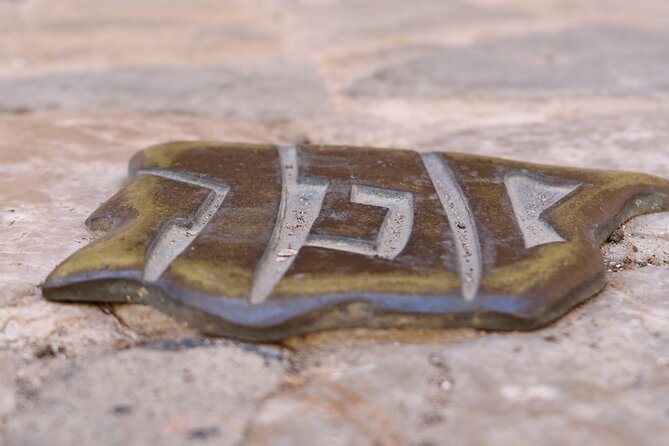
After that, you’ll look at memorial plaques or Stopelsteins linked to the Spanish Civil War. This part is important because it shifts the discussion from one era of oppression to how violence and persecution echo over time. It’s also a moment where the tour becomes quieter and more reflective—less about lecture, more about reading what’s set into the city.
Stop 2: Centre Maimó Ben Faraig Museum (about 30 minutes)
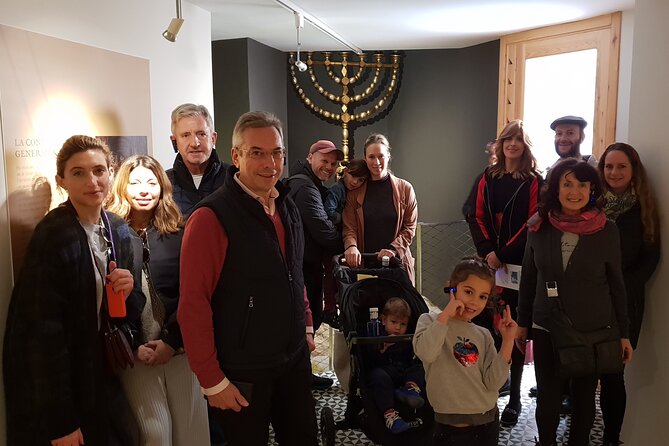
The second stop is Centre Maimó Ben Faraig Museum, a shorter 30-minute visit. This is the kind of stop that works well in a half-day: it gives you context without turning the whole outing into a museum marathon.
What I like about adding a compact museum segment is that it helps you interpret what you’re seeing later—or what you might have already noticed on your own. Even in a limited timeframe, museum walls can offer structure: names, themes, and the “why” behind the streets you’ll walk.
If you’re the sort of person who enjoys a few focused exhibits over a massive building, this stop is a good fit.


Stop 3: Panaderia Fiol and that medieval oven story (about 30 minutes)
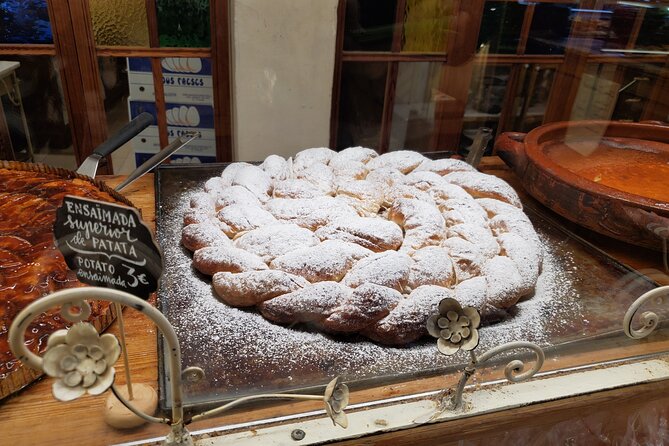
Next comes Panaderia Fiol, where you’ll visit a modern bakery that still has a medieval oven built in 1652. The practical win here is simple: you get a chance to reset with a familiar setting that still carries historical weight.
But the deeper payoff is how the tour connects food to prejudice. You’ll hear about the Mallorquin pastry ensaimada and the claim that it was specifically made with pork fat as a reaction to centuries-old prejudice and discrimination. Even if you’ve had ensaimada before, the framing changes the moment: it becomes a symbol of adaptation and survival, not just a sweet treat.
Try to keep your brain switched on during this stop. It’s tempting to focus only on sampling, but the history lesson is the point.
Xueta streets and family-held jewelry: the legacy you can still see
One of the most compelling threads running through this experience is the Xueta story. The tour leads you to the specific streets where Xueta families lived for centuries, reportedly as recently as the 1960s. That timing matters. It means this wasn’t only something from long-gone medieval life. The pressures and stigmas persisted into modern decades.
You’ll also learn about traces of this marginalized community that remain visible today. The tour notes that many of the current jewelry shops have been kept within families for generations. That’s a subtle but powerful way to understand heritage: not only through monuments, but through businesses, ownership, and what gets passed down.
If you tend to miss details on walking tours, slow down here. Let the guide point out what to watch for in shopfronts and street-level clues. It’s the kind of information that makes your later self-walk of Palma feel more intelligent.
Crypto-Jews, forced conversions, and how public life can hide private truth
The heart of the tour is the story of the Inquisition and the forced conversions that shaped Jewish life in Mallorca. You’ll hear how the Crypto-Jews publicly professed Catholicism while privately adhering to Judaism. The tour doesn’t just name the terms—it aims to show how the city’s social pressure could push people to live double realities.
I like how this connects to what you’ll actually see. When a tour can tie historical oppression to street geography, it stops being abstract. You start to notice how discrimination can affect where families cluster, what trades remain accessible, and what cultural practices get modified—or protected.
And yes, you’ll also get that “food history” angle again through the ensaimada. It’s not random. In a place where public conformity was demanded, food could carry meaning, either as compliance or as a sign that life had to keep going.
Price and value: what you’re paying for
At $259.29 per person, this isn’t a bargain-basement outing. But it’s not overpriced for what you get either, especially because several costs are folded in.
Here’s the value logic:
- You get about 4 hours of guided walking through central Palma.
- The tour includes all fees and taxes.
- You also have a private tour setup—your group participates together, not mixed with strangers.
- The stops are designed so you’re not just wandering. You’re hitting specific heritage locations tied to Jewish history and linked sites in the city.
What’s not included is equally important for planning. Coffee/tea, breakfast, lunch, and snacks aren’t part of the price. So budget a meal or plan to grab snacks during the downtime between stops.
My practical takeaway: if you’re in Palma for a short time and want the Jewish heritage story tied directly to places, this feels like a worthwhile use of time. If your schedule is flexible, you’ll still likely spend money after the tour anyway on a meal—so plan for it.
Group feel, pacing, and what to do if expectations wobble
This is described as a private tour for your group, and it runs about four hours. The walking route begins at Starbucks and ends back at that same meeting point, which helps you keep your bearings.
Still, there’s one realistic caution to factor in. A small number of past bookings said the description no longer matched a shop stop tied to the operators, and mentioned that the end-point shop referenced in advance was no longer there. Another comment flagged disorganization and a guide who didn’t land the material as well as hoped.
That doesn’t mean you’ll have a bad experience. But it does mean you should manage expectations: go for the heritage and the guided story, not for a guaranteed retail stop. If you care about seeing a particular storefront, message the operator ahead of time and ask what the current stop sequence looks like.
Practical tips to make the most of your visit
A half-day walk is only great if you show up ready to pay attention.
- Wear comfortable shoes for central old-street walking.
- Bring a light layer. Even in good weather, Palma can feel different in sun versus shade.
- If you’re focused on photos, ask your guide when it’s best to pause. Some moments (plaques and memorial cues) deserve a quiet pace.
- Skip a big breakfast if you think you’ll want a bakery stop. The tour itself doesn’t include snacks, and you’ll likely want to eat after.
Should you book Secrets of Jewish Majorca?
I’d book it if you want a guided Jewish heritage walk that connects major historical forces to the actual street-level Palma you can walk through afterward. The combination of the Jewish Quarter Interpretation Center, the ceramics workshop tunnel, the Xueta street focus, and the short museum and bakery stops creates variety without eating your whole day.
But I wouldn’t book it if your main goal is a tightly guaranteed list of shopfronts and retail stops. The experience’s strength is the history lesson tied to place—not shopping.
If you’re curious about the Inquisition, forced conversions, and the lived reality of Crypto-Jews, and you like learning from what’s still visible today, this half-day is a strong choice. Bring good shoes, expect some real-world variability, and you’ll leave with Palma feeling more meaningful than you expected.
FAQ
How long is the Secrets of Jewish Majorca half-day experience?
It’s about 4 hours.
What is the meeting point for the tour?
The meeting point is Starbucks at Plaça de Cort, 1, Palma, Spain.
Where does the tour end?
It ends back at the same meeting point.
What are the main stops on the itinerary?
You’ll visit the Jewish Quarter Interpretation Center area, the Centre Maimó Ben Faraig Museum, and Panaderia Fiol.
Are admissions included for the sites?
The itinerary notes admission ticket free for the first two stops, and the experience includes all fees and taxes.
Is coffee or lunch included?
No. Coffee/tea, breakfast, lunch, and snacks are not included.
Is the tour private?
Yes. It’s described as private, with only your group participating.
Does the experience require good weather?
Yes. It requires good weather, and if it’s canceled due to poor weather, you’ll be offered a different date or a full refund.
When will I receive confirmation after booking?
Confirmation is received within 48 hours of booking, subject to availability.
What is the cancellation window?
Free cancellation is available. You can cancel up to 24 hours in advance for a full refund.