REVIEW · PALMA DE MALLORCA
Palma de Mallorca : Private Custom Walking Tour with A Guide
Book on Viator →Operated by Guydeez · Bookable on Viator
Palma gets real with a local guide. This private custom walking tour strings together the core sights of Palma at a pace you help set, with private customization and free-entry landmarks noted for each stop along the way. You’ll get a guided sense of how old Palma fits together, from city-square politics to Muslim-era architecture and royal power.
The big catch is simple: success depends on smooth meeting details and guide quality. I’d plan for meeting-point clarity and be ready to communicate quick needs (pace, breaks, and comfort) so the tour stays relaxing instead of frustrating.
In This Review
- What Makes This Private Palma Walk Worth Your Time
- Key Highlights You’ll Care About
- Price and What $84.02 Per Person Really Covers
- Starting Point: Pickup, Hotels, and the One Mistake to Avoid
- Plaça de Cort: City-Square Orientation in 30 Minutes
- Santa Eulalia Parish Church: Local Faith and a Cultural Landmark
- Banys Arabs: The Arab Baths and the Surprise of Muslim Architecture
- Reial Covent de Sant Francesc: Gothic Cloister Energy
- Plaça Major: The Central Square Moment for Rest and People-Watching
- Palau de l’Almudaina: Royal Alcázar Power Without Needing a Pageant
- How Guide Quality Shows Up Fast (Even in a Well-Planned Tour)
- Who This Tour Fits Best in Palma
- Should You Book This Palma Private Walking Tour?
What Makes This Private Palma Walk Worth Your Time
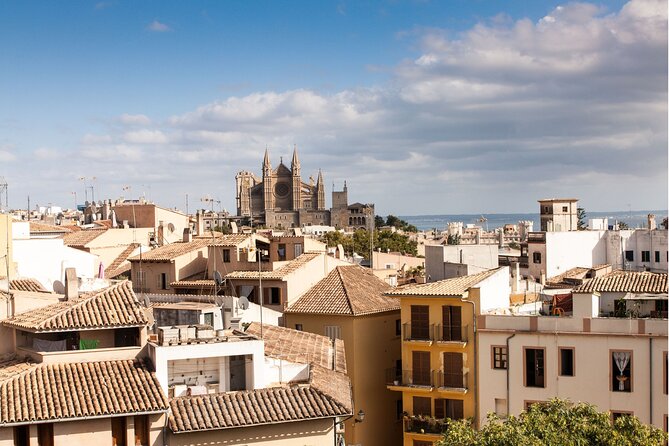
This is not a one-size-fits-all checklist. The tour is private, and the “custom” part matters because Palma is best when you slow down for the stuff you actually care about—churches, architecture, local markets, photo stops, or just getting your bearings fast.
Another reason it works: the route is built around walkable central areas and stops that are meaningful on their own. You’ll bounce through iconic places like Plaça de Cort, the Santa Eulalia area, the Banys Arabs, the Sant Francesc convent complex, Plaça Major, and then end in the Almudaina orbit. Even when you only get about 30–40 minutes at each stop, a good guide can turn that time into real understanding.
One more practical advantage: pickup is offered, including from hotels in Palma (or a cruise terminal / convenient city-center meeting point if you’re outside the city). That cuts out the guesswork that can eat half a day.
Key Highlights You’ll Care About
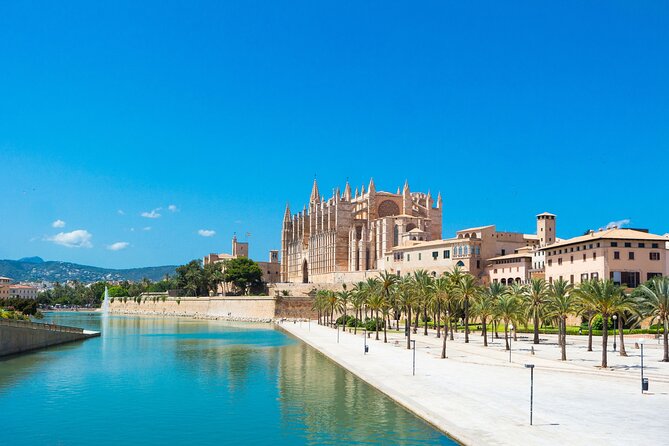
- Custom routing and pacing: 2 to 8 hours, tuned to your interests and how long you want to linger.
- Historic sites with free entry noted: each of the main stops is shown as ticket-free in the plan.
- Central Palma, made for walking: squares, cloisters, and palace grounds you can connect without constant transit.
- A guide can steer the day: several guide names pop up in positive feedback for flexibility and story-driven explanations.
- Small comfort issues can matter: a few problem reports point to meeting-point confusion or guide mismatch, so confirm details early.
You can also read our reviews of more walking tours in Palma de Mallorca
Price and What $84.02 Per Person Really Covers
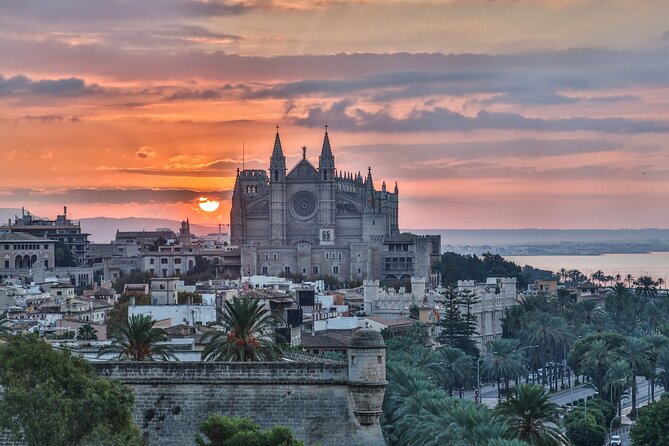
At $84.02 per person, the price can feel high or fair depending on what you’re comparing it to.
What you’re paying for is:
- a private experience (not shared with strangers),
- a guide who can adapt the route length (2 to 8 hours), and
- a plan that hits major landmarks in central Palma so you don’t waste time figuring out where to go next.
If you’re the type who enjoys context—why a square is named a certain way, why a building style looks the way it does—then the per-hour value often lands in the “worth it” zone. If you prefer reading on your own and only want the quick exterior hits, you may feel like it’s overpriced for what you personally want.
Also: food and drink are not included. If you want coffee, water, or a snack break, you’ll pay for it separately. The upside is you can stop exactly when your group needs it.
Starting Point: Pickup, Hotels, and the One Mistake to Avoid
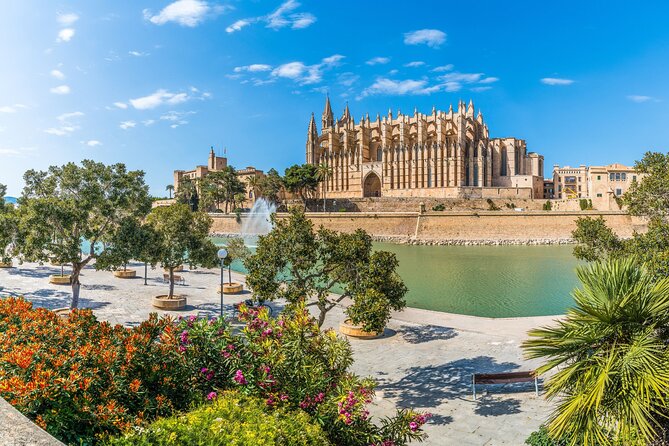
Pickup is offered if you’re staying in Palma. You can request your tour to start from any hotel in Palma, and if you’re not in the city, the organizer will choose a convenient meeting point in the center. Pickup is also listed for cruise-terminal travelers.
In a walking tour, the meet-up point is everything. A few past experiences point to how a wrong pin or unclear instructions can turn the first hour into standing around. Before the day of the tour, I’d do two things:
- confirm the exact meet-up location in plain terms (street name / landmark), and
- save the pin on your phone so you can show it instantly if you’re unsure.
If you’re traveling with mobility needs, you should also plan on walking lots of old-street footing. The tour notes that it’s near public transportation, but it’s still fundamentally on foot.
Plaça de Cort: City-Square Orientation in 30 Minutes
Your first stop is Plaça de Cort, the civic heart of Palma. The square sits in the center and is tied directly to the town hall area—historic court meetings happened here, which gives the place more meaning than a casual photo stop.
Why this opening works: it gives you a “map in your mind” before you go underground with architecture details later. A good guide can connect this square to nearby streets and landmarks, so your later walks feel logical instead of random.
The 30-minute timing is also smart. You’ll get enough to understand the role of the square, without it turning into a long lecture. If your group likes to move, this is a decent start.
Santa Eulalia Parish Church: Local Faith and a Cultural Landmark
Next up is the Iglesia parroquial de Santa Eulalia, dedicated to Eulalia de Barcelona. It’s listed as a Catholic worship temple, and it’s marked as a Bien de Interés Cultural since 1931.
This stop is less about ticking a box and more about noticing details. In places like Palma, church architecture isn’t only about art—it’s about what the city valued at different moments in time, and how religion shaped daily life.
Potential drawback: if your guide focuses only on the outside or rushes the interior, you might leave wanting more time here. So if you care about seeing inside, tell your guide early that you want time to look around and ask questions.
You can also read our reviews of more guided tours in Palma de Mallorca

Banys Arabs: The Arab Baths and the Surprise of Muslim Architecture
Then you hit the Banys Arabs, one of Palma’s most emblematic monuments tied to Muslim-era architecture. It’s located on Can Serra street, number 7, and the tour plan notes it’s one of the few surviving examples of Muslim architecture in Mallorca.
This is the kind of stop that tends to convert skeptics—people who think they already know Palma’s “standard” monuments often perk up here. You’re not just looking at a building; you’re seeing a different layer of the island’s identity, and the guide can make the timeline feel real rather than abstract.
Time is 30 minutes. That’s enough for orientation plus key architectural points, but not enough for a long wandering session. If your priority is baths and architecture, ask for a bit more time here when you’re customizing the route.
Reial Covent de Sant Francesc: Gothic Cloister Energy
The Reial Covent de Sant Francesc is a complex that includes the minor basilica, cloister, and attached buildings. Construction began at the end of the 13th century, and the Gothic cloister was declared a National Monument in 1881 (as listed in the plan).
This stop rewards slow looking. Cloisters and convent layouts can feel similar in photos, so you’ll want your guide to point out what makes this one distinctive—spacing, structure, and how the complex is arranged. A guide can also connect the convent to how Palma evolved around it.
What to expect from the group dynamic: this is usually a quieter, reflective part of the walk. You’ll likely get a change of pace compared with squares and busier streets.
Plaça Major: The Central Square Moment for Rest and People-Watching
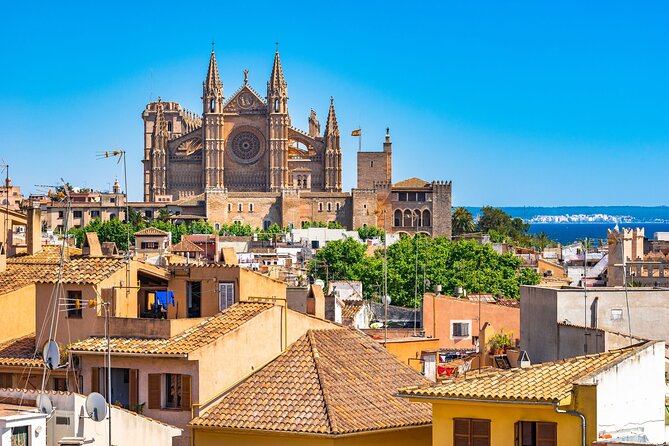
Plaça Major is the Plaza Mayor in central Palma, a few meters from major landmarks like the church of San Miguel and the main theater. The timing is 30 minutes, which works well as a reset point during a walking tour.
Use this time strategically. If you need photos, use them here. If you need a break, this is a natural spot to ask your guide for a moment to sit, hydrate, and regroup.
One small caution: square time can vary in value depending on your guide’s style. If you like storytelling and local context, you’ll likely get more out of this stop. If you prefer details and interiors, you may want to spend more of your overall tour time on places like the church or convent.
Palau de l’Almudaina: Royal Alcázar Power Without Needing a Pageant
The Royal Palace of La Almudaina is one of the official residences of the Spanish royal family. It’s described as a fortified palace (an Alcázar) in Palma.
The key here is perspective. Palau de l’Almudaina is not only about royalty; it’s also about the layered defensive and political role the space played. A strong guide helps you notice how the palace sits in relation to the city, and why that location mattered.
Time is 40 minutes, giving a slightly longer window than many other stops. That makes sense because palaces take a bit more time to read visually, even when you’re primarily outside or in a limited area.
How Guide Quality Shows Up Fast (Even in a Well-Planned Tour)
This tour can be excellent—or merely okay—based on the guide leading it. That’s not a dig at the concept. It’s how walking tours work.
In the high-scoring experiences, you’ll see a pattern: guides like Hannah, Cristina, Marion, Mimi, Alvaro, Alex, Hamid, and Tiara were praised for being friendly, flexible with what you wanted to see, and good at answering questions. A couple of those standouts also reportedly added practical extras—helping take photos, adjusting pace for a teen, and even suggesting or arranging a restaurant reservation (one guide name was tied to a standout meal experience at Cellar Pages).
On the flip side, a few problem reports highlight real-world risks you should watch for:
- meeting-point confusion (like not being able to find the right location),
- guide communication issues or a last-minute replacement that didn’t match expectations,
- comfort concerns when group needs weren’t handled well, and
- tours that felt too focused on outside views with fewer facts inside key buildings.
What should you do with that? Simple. Confirm meet-up details ahead of time, tell your guide what you need at the start (pace, breaks, interior time), and be ready to communicate if you feel something is off. In a private setting, you have leverage—use it.
Who This Tour Fits Best in Palma
This is a smart pick if you want:
- a private introduction to central Palma,
- a route with major monuments without overplanning, and
- a guide who can steer the day toward what your group actually cares about.
It’s especially good for first-timers who want context on the city’s layers. The mix of Plaça de Cort, Santa Eulalia, the Banys Arabs, and Sant Francesc gives you a fuller picture than a single-genre tour (like only churches or only beaches).
If your group is mainly looking for a quick self-guided stroll and doesn’t care much about explanation, you might not get your money’s worth at this price point.
Should You Book This Palma Private Walking Tour?
I’d book this tour if you match the “guide-led, context-forward, flexible pacing” style. The structure is solid: central squares plus landmark sites that are easy to connect on foot, and enough time at each stop to actually absorb something.
I’d hold off or ask more questions first if you’re the type who gets upset when schedules don’t match perfectly. A walking tour lives or dies by meet-up clarity, and the tour plan allows some days to end at a different location unless you request otherwise. Also, because the tour quality can swing with the specific guide assigned, you should treat the first few minutes as a chance to set comfort and priorities.
If you want Palma without the stress of planning routes, this is a strong way to do it—especially if you care about how the city evolved and you want someone to point out what you’d likely miss on your own.