REVIEW · MALLORCA
Guided Tasting Tour in 16th century House and Olive Oil Factory
Book on Viator →Operated by Can Det · Bookable on Viator
Sixteenth-century olive oil in one short visit. Step into the 400-year-old Can Det house and oil mill in Sóller, where you get a guided look at traditional Mallorca production and end with a real food break. I especially love how this is a family-run operation, explained in a relaxed way by hosts such as Ann or Tomeo (or sometimes the elder son).
I also love that the tastings are not a few sad bites. You sit down for a brunch-style spread built around Mallorcan staples: olive oil, olives, bread, ramallet tomatoes, cheese, toasted almonds, marmalade, and the family’s orange juice, plus local wine.
One possible drawback: if you visit outside the October-to-January window, you might not see oil pressing live, depending on olive availability.
In This Review
- Key things to know before you go
- Can Det: a 16th-century olive oil house in Sóller
- The one-hour flow: what you’ll do from start to finish
- The tasting brunch: olive oil, bread, tomatoes, cheese, and real orange juice
- What you learn about Mallorca’s olive traditions
- Seasonal olive pressing: when you might see it live
- Views over the Sóller valley (and why the setting matters)
- Finding the place: meeting point, parking, and timing reality
- Price of $31.46: what you’re really paying for
- Who should book this tour in Sóller, and who might not
- Should you book this guided olive oil tasting at Can Det?
- FAQ
- Where is the meeting point for the tour?
- What time does the guided tasting tour start?
- How long does the experience last?
- Is the tour offered in English?
- What’s included in the tasting brunch?
- Is live olive oil production included?
- Does the tour include visits to orange and olive tree plantations?
- Is this tour private?
- Are service animals allowed?
- What is the cancellation policy?
Key things to know before you go
- Can Det is both a historic house and an operating oil mill, showing the old system still in use.
- Your tasting is more like brunch than a snack, with olive oil plus multiple local products.
- The guide is part of the family business, so explanations feel practical, not like a lecture.
- There’s an audiovisual presentation of the oil production process, even when live pressing isn’t happening.
- Season matters: live pressing is more likely between October and January.
- Parking can be tricky in Sóller, so give yourself extra time if you drive.
Can Det: a 16th-century olive oil house in Sóller
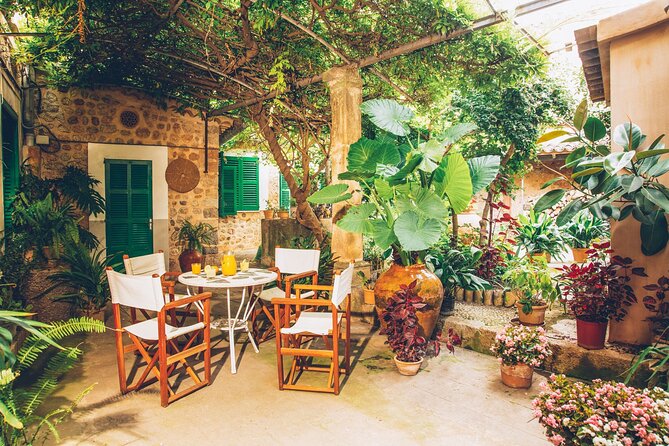
This tour centers on Can Det, a family property in Sóller that blends history with daily work. You’re not just looking at a museum room—you’re walking through an old home setting with an oil mill that preserves the traditional method of making olive oil. The house itself is dated to the 16th century, and the property includes an imposing garden that frames the visit with that unmistakable “this has been here for generations” feeling.
What makes Can Det click for most people is the mix of old and understandable. You get context about local farming and citrus and oil production, but it’s explained in plain terms tied to what the family does now. The hosts are often members of the family, and the tone tends to be warm and welcoming rather than stiff.
If you like Mallorca beyond the beaches—if you want to see how people actually built food culture here—this is one of the cleaner, more direct ways to do it.
You can also read our reviews of more food & drink experiences in Mallorca

The one-hour flow: what you’ll do from start to finish
Your visit is about one hour long, with the day’s program built to keep moving. You meet at Carrer d’Ozones, 8, in Sóller at 12:00 pm. From there, you’ll spend your time at the Can Det property: touring the historic space and the oil mill, then finishing in the dining room for tasting.
Here’s the practical rhythm of what you should expect:
- Meet up and get oriented
The group gathers near the meeting point in Sóller. The location is near public transportation, and a mobile ticket is used, with confirmation received at booking.
- Historic house + traditional mill tour
You’ll see the 400-year-old historic house of Can Det, including the garden and the oil mill setup. This is where the visit earns its name as a guided tasting tour: you learn the ins and outs of local olive oil production in a setting designed for it.
- How production works (including an audiovisual step)
An audiovisual presentation shows the process of oil production. Even if you don’t catch live pressing, you’ll still get a clear view of how olives move from cultivation to processing.
- Brunch-style tasting in the dining room
You finish with a sit-down tasting that pairs olive oil with typical Mallorcan products. This is not hurried. You’ll be eating and drinking while the family talks through what you’re tasting and how it fits their traditions.
Logically, the one-hour timing works. It’s long enough to feel like you learned something, but short enough that you’re not losing half a day in an indoor activity.
The tasting brunch: olive oil, bread, tomatoes, cheese, and real orange juice
The tasting is the payoff. You’ll sit down in the family dining room and sample their olive oil alongside Mallorcan staples. The menu example includes:
- Typical Mallorcan bread
- Olive oil
- Olives
- Ramallet tomatoes
- Cheese
- Toasted almonds
- Marmalade (including orange jam)
- Plus orange juice made by the family and served with water and local wine
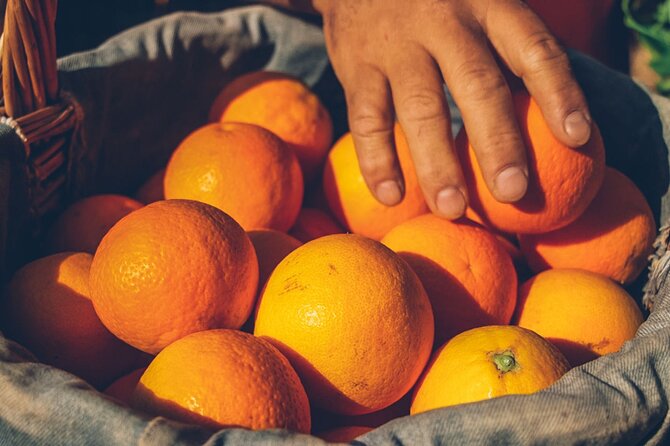
If you’re used to olive oil tastings that are mostly talk and tiny samples, this feels different. The bread-and-oil pairing is central, but you also get supporting flavors that explain why olive oil matters in everyday cooking here—tomatoes for acidity and freshness, cheese for salt and richness, almonds for texture, and marmalade for that sweet citrus note that ties back to Mallorca’s orchards.
One extra detail I like: you’ll get a guided explanation of how the family ties their olive trees, citrus, and oil production together. The tasting isn’t just consumption—it’s interpretation. You leave with a better sense of what locals mean when they talk about the balance of flavors in Mallorca cooking.
Also, if you’re traveling with food questions, this is a good setting to ask. The hosts are part of the business, so you’re not stuck with generic answers.
What you learn about Mallorca’s olive traditions
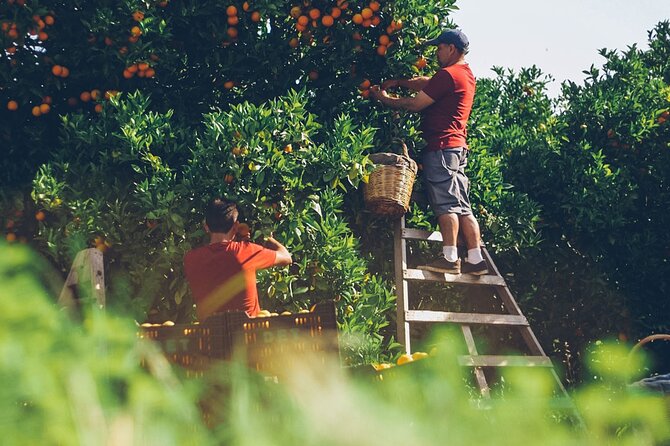
This tour is built around the family’s link to traditional cultivation of ancient olive trees, plus citrus and oil production. You’ll get an explanation of the activity tied to those trees—how the land and the seasons connect to the oil-making process.
Even when live pressing isn’t available, you won’t feel like you missed the main event. The combination of the historic mill tour and the audiovisual presentation gives you the full story arc: how the olives are processed and how the end product fits into daily life.
And here’s the practical part: when you taste the oil, you’re tasting with context. You know what you just saw, what steps lead to the flavor, and why the family emphasizes tradition. That makes it easier to judge what you’re buying later—because you’re not guessing.
Seasonal olive pressing: when you might see it live
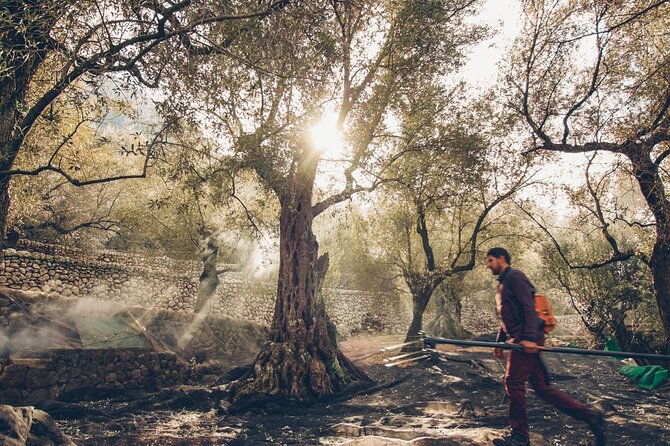
The big “maybe” is live olive pressing. Between October and January, visits might be able to include live oil production, depending on olive availability. Outside that window, you’ll still get the mill tour and the explanation of the process, but you shouldn’t expect the active pressing moment.
If your goal is to see the whole thing happening in real time, plan around those months. If you’re visiting in another season, focus on the house setting, the production education, and the tasting. You’ll still get plenty out of it, but set expectations so you don’t feel like you paid for a highlight that didn’t happen.
You can also read our reviews of more guided tours in Mallorca


Views over the Sóller valley (and why the setting matters)
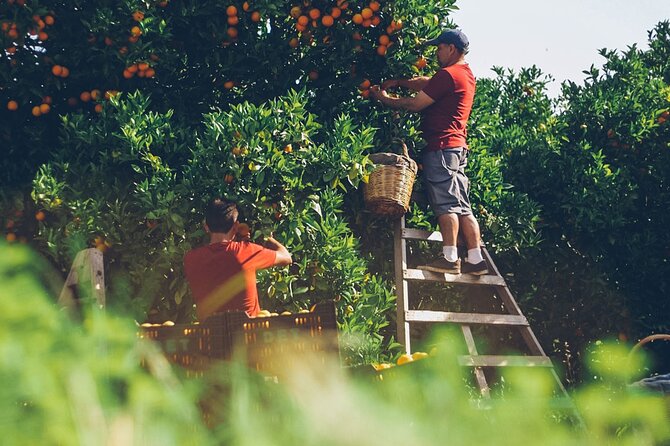
This tour includes beautiful views overlooking the Sóller valley. It’s not the kind of “look at scenery from afar” experience that feels disconnected from the food. The views connect to the theme: olives and citrus grow in a working landscape, and the tour’s property layout helps you understand why the family stayed there and kept going.
In other words, the setting isn’t decoration. It’s part of the story of land, trees, and production.
Finding the place: meeting point, parking, and timing reality
You meet at Carrer d’Ozones, 8, in Sóller. Timing starts at 12:00 pm, and the activity ends back at the meeting point.
If you’re driving, give yourself extra time. Parking is often described as tricky, and the place is not the easiest spot to find quickly. This is the kind of tour where being 10 minutes late can cut into your experience, so I’d treat “on time” as “a bit early.”
One more note: the experience is listed as private for your group. Still, you may end up sharing seating or the dining room with other international visitors depending on scheduling. Either way, you’re guided through the experience and you’re fed, so don’t worry about the food turning into a chaotic mess. The structure is set for groups.
Price of $31.46: what you’re really paying for
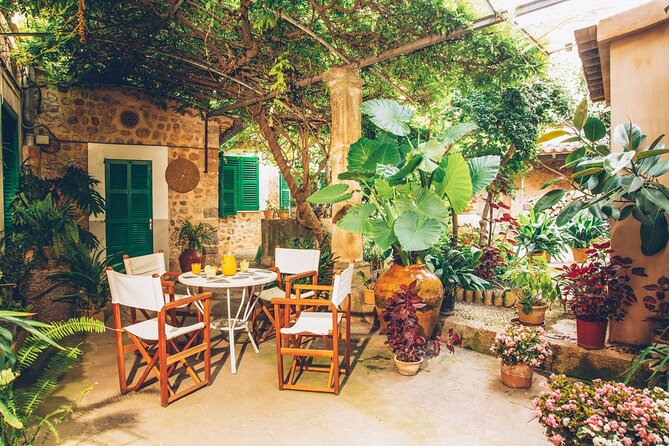
At $31.46 per person for about an hour, this is one of those Mallorca experiences that feels like good value because it’s doing multiple jobs at once:
- Historic house + traditional oil mill tour
- Guided explanation of cultivation and production
- Audiovisual overview of how the process works
- A sit-down tasting that includes olive oil plus multiple local foods
- Drinks: orange juice, water, and local wine
When food is involved, price gets tricky. Here, it helps that the tasting isn’t just a sip-and-smell situation. You get enough to feel like you had brunch, not a snack.
Also, this is the kind of stop where buying olive oil to take home can be the extra value. Some visitors report being able to purchase bottles directly from the family home, and not typically through regular stores. If you like shopping with a story attached, that’s a plus.
Finally, it’s often booked about 26 days in advance on average, which tells me demand is steady. If you’re going in peak season or on a tight itinerary, booking earlier is smart.
Who should book this tour in Sóller, and who might not
This works best if you want an authentic, family-run food experience that mixes history with something you can taste immediately.
You’ll likely enjoy it if you:
- Like olive oil tastings that come with a proper meal
- Want a guided explanation of traditional production, not just samples
- Prefer smaller, local experiences over big commercial tours
- Are visiting Sóller and want to add one high-impact activity without a long day plan
You might pass if you:
- Only care about seeing live pressing and you’re visiting outside October to January
- Want a visit to actual olive orchards as part of the standard program (this tour does not include tree plantations)
Should you book this guided olive oil tasting at Can Det?
I’d book it if your priority is traditional Mallorca food culture in a real working setting. The strongest reasons are the combination: historic Can Det house and mill, a family-led explanation, and a brunch-style tasting that actually fills you up.
If your travel window lines up with October to January, you get an extra potential win: live oil production, when olives are available. If not, you still get the full story through the mill tour, the audiovisual presentation, and the tasting.
One final decision tip: if you’re driving, plan for slower parking. If you’re arriving from Palma, remember Sóller is about a 45-minute drive away, and the road is part of the charm—so build time for the full experience, not just the appointment.
Bottom line: for the price, the time, and the food, this is the kind of tour that tends to leave people smiling, not just educated.
FAQ
Where is the meeting point for the tour?
The tour meets at Carrer d’Ozones, 8, 07100 Sóller, Illes Balears, Spain.
What time does the guided tasting tour start?
The start time listed is 12:00 pm.
How long does the experience last?
The duration is approximately 1 hour.
Is the tour offered in English?
Yes, it’s offered in English.
What’s included in the tasting brunch?
The tasting includes olive oil, olives, Mallorcan bread, ramallet tomatoes, cheese, toasted almonds, marmalade (including orange jam), and orange juice. Water and local wine are also included.
Is live olive oil production included?
Live pressing might be possible between October and January, depending on the availability of olives. Outside that period, you should expect the tour and tastings, plus an audiovisual explanation of the process.
Does the tour include visits to orange and olive tree plantations?
No. The tour does not include the orange and/or olive tree plantations. If you want an extra plantation visit, you need to contact the provider in advance to arrange it and learn the cost.
Is this tour private?
Yes, it is listed as a private tour/activity, with only your group participating.
Are service animals allowed?
Yes, service animals are allowed.
What is the cancellation policy?
Free cancellation is available up to 24 hours in advance for a full refund.