REVIEW · MALLORCA
Coasteering in South Mallorca with Transfers
Book on Viator →Operated by Experience Mallorca S.L · Bookable on Viator
One word: sea-cliff adrenaline. This coasteering outing pairs South Mallorca transfers with a guided push along rugged cliffs and sea caves, including progressive cliff jumps. It is physical, wet, and not everyone’s idea of relaxing.
I like that the day is built around real coaching: you start controlled, learn the rope-and-rappel rhythm, and then choose how far you go with jump heights from about 2 to 12 meters. I also like the value math here because you get minivan transport, full safety gear, and local instruction rolled into one price. One thing to plan for: the ocean can be choppy, and you may end up working harder on climbs and footing than you expected.
In This Review
- Key Points to Know Before You Go
- South Mallorca Transfers, Then You Hit the Wild Coast
- What Coasteering Actually Looks Like Here
- Sea Caves, Pools, and That Rope-Down Feeling
- Cliff Jumps from 2 to 12 Meters: Realistic Progression
- Safety Gear: What’s Included and What to Watch
- Your 4 Hours: How the Flow Usually Works
- Terrain Reality Check: When the Ocean Makes It Harder
- Price and Value: Why $90.51 Can Make Sense
- What to Bring (So You Are Not Just Surviving)
- Who Should Book This Coasteering Trip
- Weather and Rescheduling: The Ocean Has the Final Word
- Should You Book Coasteering in South Mallorca with Transfers?
- FAQ
- Do I get hotel pickup and drop-off?
- How long is the coasteering experience?
- What time does the tour start?
- Where does pickup happen in southern Mallorca?
- Do I need to speak Spanish or English?
- What’s included in the price?
- What should I bring with me?
- What’s not included?
- What heights do the cliff jumps involve?
- Is there an age limit?
Key Points to Know Before You Go
- South-to-North transfer included: you get picked up in the south and driven to a more adventure-ready stretch of coast.
- Learn rappelling and cliff-jump technique: you are not just dropped at a cliff with wishful thinking.
- Sea caves and pools as your playground: you explore formations you can only reach from the waterline.
- Progressive jump options: start smaller, then scale up if you want to.
- Small groups (max 10 people): easier pacing, clearer instructions, and more personal attention.
- You bring the lunch, food not included: plan for a simple daypack setup.
South Mallorca Transfers, Then You Hit the Wild Coast
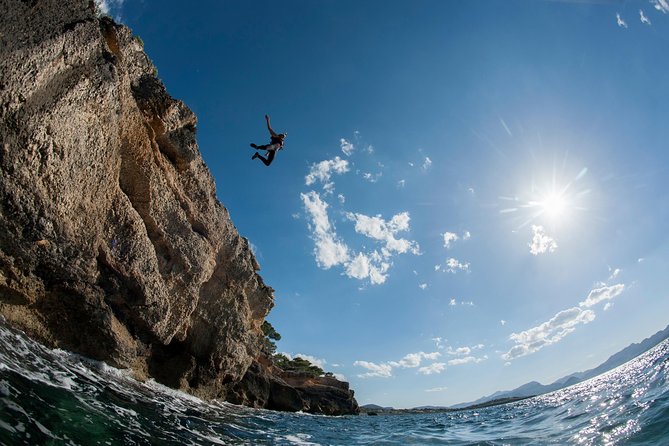
This trip is set up for convenience first, then adventure. In the morning or afternoon, you meet the driver either at your hotel or at a central pickup in southern Mallorca, then ride by minivan toward the north side of the island for the coasteering section.
A key detail for booking: the operator notes separate zones. Coasteering in the Alcúdia area runs north for those clients, while Cala d’Or and Cala Ratjada clients go east. If your lodging sits outside the standard south pickup band, double-check that you selected the correct zone so you are not surprised by where the driver meets you.
Once you arrive at the coast area, the day shifts fast. You go from Mallorca road life to tight shoreline travel, wet rock, and a guide who is focused on safe movement from one jump spot to the next.
You can also read our reviews of more tours and experiences in Mallorca.


What Coasteering Actually Looks Like Here
Coasteering is part climbing, part scrambling, part swimming, and part cliff jumping. The format on this outing is built around moving along the rocky edge and working your way through a chain of coastal features that include sea caves, pools, and ledges where you can drop into the water.
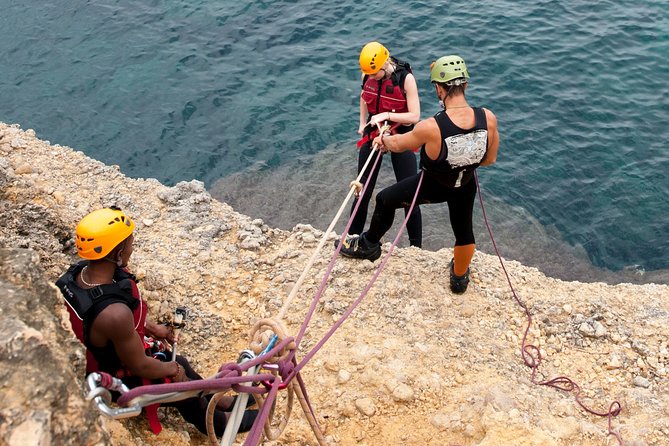
You start off with equipment and safety instruction, then you get lowered by rope using a rappel device. From there, the coastline becomes a sequence of challenges: climb out, descend again, swim a short stretch, and keep going until you reach the end point and head back.
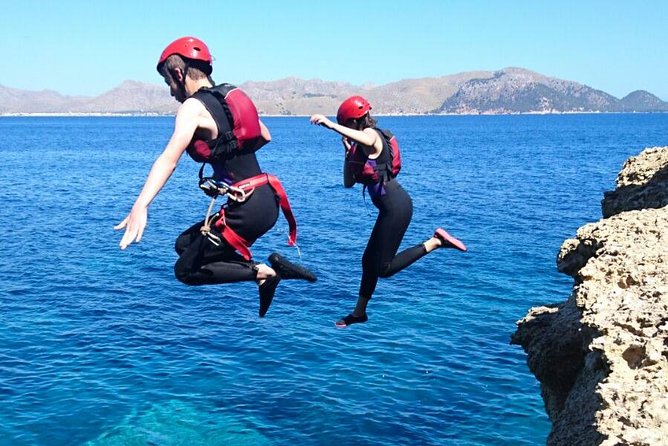
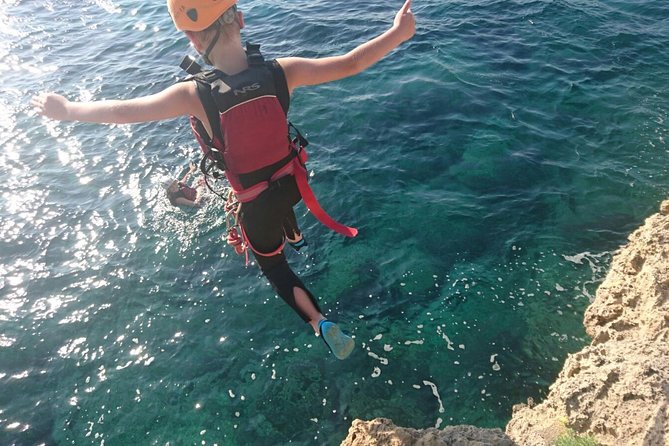
The star moments are the cliff jumps. You get a range of options, typically starting at lower jumps (around 6 feet / 2 meters) and, if conditions and your comfort allow, progressing upward. One thing I appreciate in the way this is run is choice. People can do the experience at their own level, skipping higher elements if they are not ready.
Depending on the specific coastal spot and the day’s setup, you might also see extra components like a zip-line segment between cliffs. That detail shows up in multiple experiences tied to this activity style, and it usually lands as one of the fun crowd-pleasers after the jumping and climbing.
Sea Caves, Pools, and That Rope-Down Feeling
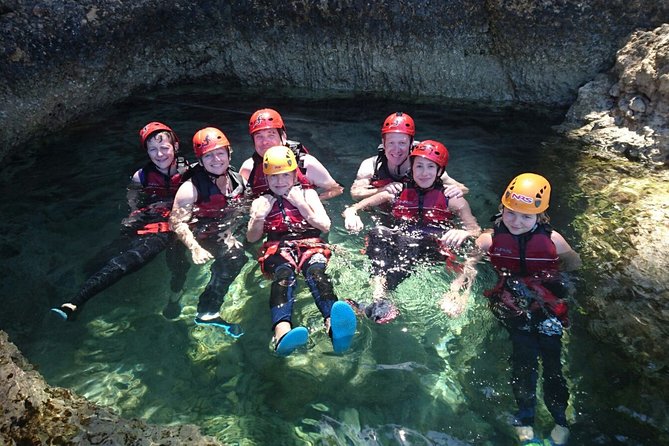
This outing is not just about jumping once and calling it a day. After the initial instruction, you explore the coastline’s maze of sea pools and formations that sit right where cliffs meet ocean.
The rappel part matters more than it sounds. You are being taught the mechanics of controlled descent, which changes the whole mindset from fear to technique. It is also a practical way to reach the waterline and move through areas that are awkward or impossible to access otherwise.
A lot of the enjoyment here comes from switching modes. One moment you are gripping wet rock edges, the next you are swimming across open water to the next station. Then you climb out again. It is repetitive in a good way because each move has a clear purpose: get to the next jump, get to the next cave pool, or get you safely back to dry gear.
Cliff Jumps from 2 to 12 Meters: Realistic Progression
The jump heights are clearly part of the pitch: about 2 meters up to 12 meters (roughly 6 feet to 39 feet). What makes this workable for many people is that the jump progression is taught, not guessed.
In practice, you begin on smaller jumps to practice the timing and the body position. Guides then offer ways to go higher. If you want adrenaline, you can ask for the bigger drops. If you want the experience without pushing into your fear zone, you can keep it at a level that feels manageable.
I also like that this experience tends to be coaching-focused. Guides on this operator include people such as Naco, Joni, Mario, Niko, José, Rafael, Alfonso, and Gemma in different groups. Regardless of the name, the pattern is similar: you get step-by-step direction for where to stand, how to jump, and how to move along the cliff edge so you are not improvising while hyped up.
Safety Gear: What’s Included and What to Watch
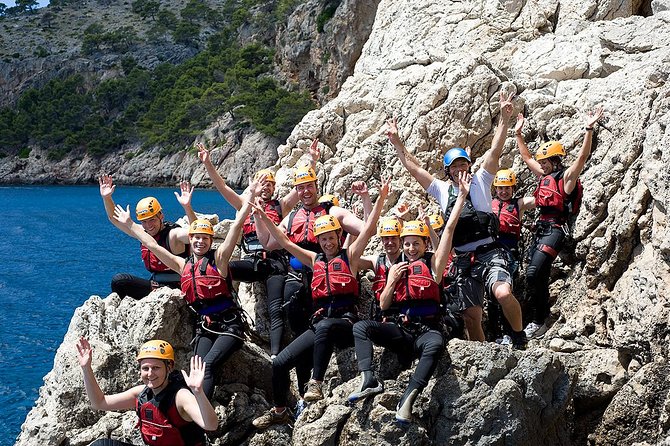
You get kitted out with the core gear: a wetsuit, safety equipment, water shoes (footwear for wet rock), and a helmet. The tour also includes insurance and is guided by a qualified local adventure guide, which helps put structure around a sport that can easily turn scary if it is not run correctly.
One helpful reminder: the wetsuit is mainly there for protection and scrape prevention as you move along sharp rock, not for turning the ocean into a heated pool. The water temperature can still feel refreshing once you are in, but the wetsuit is part of reducing abrasions during climbing and sliding moments.
Footwear deserves extra attention. A single unhappy experience in the mix complained about shoes and grip, but it was countered by the operator saying you can bring your own and choose between options at the van. So here’s the practical approach I’d use: if your shoes feel slick on rock when you test your footing, tell the guide right away and ask for another option. Do not wait until you are at the cliff edge to discover the fit is wrong.
Also, protect your stuff. Bring a waterproof phone case if you care about recording. One of the best practical tips from people who have done this is that a waterproof case saves your phone in the splashes you cannot fully predict.




Your 4 Hours: How the Flow Usually Works
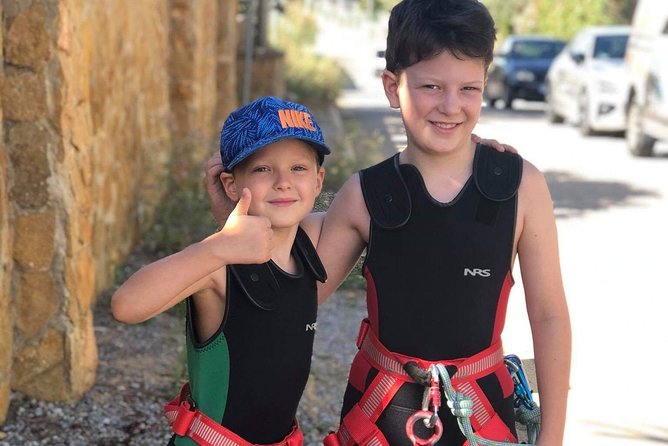
The day runs about 4 hours (approx.), which is long enough to feel like an adventure and short enough that you are not cooked by late-day fatigue.
A common pattern looks like this:
- Meet your driver for pickup in southern Mallorca, then transfer to the coast.
- Change into your wetsuit and get briefed on safety and movement.
- Start with controlled technique for rappel and easier jumps.
- Move along the cliff line with repeated cycles of climb, rappel or descent, then swimming to the next zone.
- Work up through progressively higher jump options if you want them.
- Finish at the end point along the coast, then return to the meeting area and close out.
Even with a tight schedule, the experience typically feels “eventful” because you are doing several different skills back-to-back: rappelling, cliff jumps, climbing along the edge, swimming between spots, and sometimes a zip-line segment depending on the day.
One caution: rougher seas can slow things down. If waves are stronger than expected, you might find the water crossings take more effort and the climbs out require extra patience and balance.
Terrain Reality Check: When the Ocean Makes It Harder
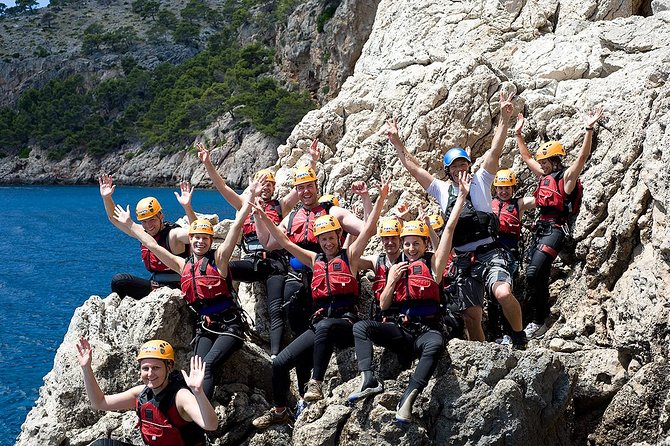
This is active travel, not a gentle scenic walk. Coasteering involves slippery rock, uneven footing, and climbs that can feel tough even if you are fit.
Some people describe rougher-than-expected water and a scramble-like approach to the climbing. Others note that the hike down to a jump spot and the repeated effort of getting out of the water can leave hands a bit sore afterward. That tracks with the sport: you are gripping to pull yourself up, again and again.
So I’d plan like this:
- Wear shoes that you trust on land, because you still need to walk in and out.
- Keep your pace slow during the climbs. Your goal is stable footing, not speed.
- If you feel off balance, tell the guide. They can usually adjust the plan or help you pick the right next move.
If you go in expecting a smooth, easy day, the ocean will correct your expectations fast. If you go in expecting to work and learn, you’ll likely have a blast.
Price and Value: Why $90.51 Can Make Sense
At about $90.51 per person for roughly 4 hours, the value depends on what you compare it to.
Here, you are not just paying for a thrill. You are paying for:
- Hotel pickup and drop-off (or central pickup in southern areas)
- Transport by minivan
- A qualified local guide
- Wetsuit and safety equipment, including helmet and climbing-ready footwear
- Insurance
- A small-group setup (max 10 people)
Food and drinks are not included, so you do need to bring a simple lunch and plan for hydration. The operator specifically asks you to bring sun screen and bottled water, plus your own lunch.
When I look at value for adventure activities, the big question is always: do I have to rent and arrange everything myself? In this case, the gear and guide are baked in, which reduces friction. The transfer also matters because the best coasteering stretches are not always near your hotel.
What to Bring (So You Are Not Just Surviving)
The essentials are pretty clear:
- Comfortable clothes and hiking shoes
- Bathing suit and towel
- Sun screen
- Bottled water
- Your own lunch
A couple extra items I’d strongly consider based on how wet this type of day can be:
- Waterproof phone case for photos and videos
- A small snack for the drive after, especially if you tend to get hungry during active days
Also, at booking time you must provide all passenger heights, weights, and shoe sizes. That matters because equipment fit is part of safety and comfort. Do it early so they have time to prepare gear for your group.
Who Should Book This Coasteering Trip
This is best for people who want a guided, skill-based adventure and are comfortable with heights, water, and getting a little banged up in a normal, active-travel way.
You do not need to be an expert. The operator states that most travelers can participate, and multiple experiences describe guides easing people in with progressive steps. If you are a first-timer, you’ll still get technique instruction before bigger jumps.
It may not be the best match if:
- You hate being in cold water or getting wet for an extended stretch
- You dislike physical scrambling and repeated climbing out of the ocean
- You have mobility or safety concerns that make climbing on rocky edges a bad idea
If you like hands-on activities and you want an adrenaline-heavy Mallorca memory beyond beaches and viewpoints, this fits well.
Weather and Rescheduling: The Ocean Has the Final Word
This experience requires good weather. If it gets canceled due to poor conditions, you will be offered another date or a full refund. That matters because coasteering depends on safe water movement and stable conditions for jump and rappel areas.
If you are traveling in Mallorca during a time when storms are possible, build flexibility into your schedule. A lot of the enjoyment comes from the guide being able to run the plan as intended, and weather is the deciding factor.
Should You Book Coasteering in South Mallorca with Transfers?
If you want a top-tier Mallorca action day with pickup, gear, a qualified guide, and guided progression, then yes, it’s a strong choice. The combination of cliff jumps, rappelling technique, sea cave exploration, and small-group attention gives you value that many “just jump once” tours do not.
But book with your eyes open. This is not a lazy half-day. You will be wet, you will work a bit, and sea conditions can make the climbs and swims more challenging. If you can handle that, you’ll come away with a story you cannot buy in a souvenir shop.
My practical rule: if you can handle the idea of jumping into the ocean from a height you can build up to, then go. If you want guaranteed calm water and zero scrambling, look for a different kind of Mallorca outing.
FAQ
Do I get hotel pickup and drop-off?
Yes. Hotel pickup and drop-off is included, and meeting points can be arranged for air B&B.
How long is the coasteering experience?
It is about 4 hours (approx.).
What time does the tour start?
The start time is listed as 10:00 am. The operator also offers a choice of morning or afternoon departure.
Where does pickup happen in southern Mallorca?
You pick up clients from areas in the south from Puig de Ros along the coast to Andrax. Pickup can also be arranged via meeting points.
Do I need to speak Spanish or English?
The tour is offered in English, and everyone will speak Spanish and English as a minimum.
What’s included in the price?
Included are hotel pickup and drop-off, all equipment and shoes, a qualified local guide, insurance, and transport by minivan.
What should I bring with me?
Bring sun screen, bottled water, and your own lunch. You should also wear comfortable clothes and hiking shoes, and bring a bathing suit and towel.
What’s not included?
Food and drinks are not included.
What heights do the cliff jumps involve?
The jumps range from about 6 feet (2 meters) up to about 39 feet (12 meters), with progressively higher options.
Is there an age limit?
Yes. The minimum age is 8 years.