REVIEW · MALLORCA
Mallorca: Windmills, Legends and Charming Villages
Book on Viator →Operated by Driveando · Bookable on Viator
Windmills, stories, and village wandering. This 5-hour Mallorca tour is built for an easy day out, with pickup/drop-off from select hotels and time to see lesser-known places with a local guide. You’ll also get snacks plus a typical pamboli tasting, so you’re not just sightseeing with empty hands.
Two things I especially like about this experience are the convenient pickup and drop-off service for people staying from Cala Blava to Calvià and the way the tour turns food into part of the journey (sweet and salted bites, bottled water, and a proper lunch-style stop). One note: it’s not a good fit if you have limited walking ability, and it’s also not recommended for kids under 6, since you’ll be moving through villages for short stretches.
In This Review
- Key highlights you’ll actually feel during the day
- Why Mallorca’s windmills-and-villages route works in 5 hours
- Pickup from Cala Blava to Calvià: the “start easy” advantage
- Stop-by-stop: what each village and landmark gives you
- Stop 1: Santuari de Cura (30 minutes, entrance ticket included)
- Stop 2: Puig de Randa (30 minutes, no admission ticket)
- Stops 3 to 6: Algaida, Pina, Lloret de Vista Alegre, Montuiri (about 20 minutes each)
- Stop 7: Bar s’Hostal (50 minutes, entrance ticket included)
- Pamboli tasting, sweet-and-salted snacks, and staying hydrated
- Dietary issues: do your part, and the guide may do theirs
- The local guide effect: windmills, questions, and practical tips
- Price and value: why $90.31 can make sense (or not)
- Group size, timing, and weather: what to expect in real life
- Who should book this tour—and who should skip it
- Quick tips to get the most from the day
- Should you book this Mallorca Windmills, Legends, and Charming Villages tour?
- FAQ
- How long is the Mallorca windmills and village tour?
- What time does the tour start, and where does it meet?
- Do I get pickup if I don’t have a car?
- What language is the tour offered in?
- What’s included in the price?
- Which stops include entrance tickets?
- Is it refundable if plans change or if weather is bad?
Key highlights you’ll actually feel during the day
- Hotel-area pickup (Cala Blava to Calvià): less hassle, more time on the road seeing the real island.
- Pamboli tasting + local snacks: sweet and salty stops, plus bottled water to keep you comfortable.
- Guided viewpoints and lesser-known villages: you’re not just passing through towns—you’re learning why they matter.
- Entrance tickets handled where needed: included for Santuari de Cura and one longer stop at Bar s’Hostal.
- Small-group feel: capped at 40 people, so questions are realistic.
Why Mallorca’s windmills-and-villages route works in 5 hours
This tour is a smart length for Mallorca. In about half a day, you get a “greatest hits” feeling—windmills and country stories—without burning the entire day in the car or standing in one crowded spot for hours. The format is simple: you hop between a series of village settings and viewpoint moments, with just enough time at each stop to look around, absorb the atmosphere, and move on.
You’re also paying for a guide who connects the dots. The vibe here isn’t museum-only facts. It’s more like: why this place looks the way it does, how locals live, and what the landscape and landmarks mean in everyday Mallorca. That’s the kind of knowledge that makes your photos better—and your next taxi ride easier because you understand what you’re seeing.
You can also read our reviews of more tours and experiences in Mallorca.



Pickup from Cala Blava to Calvià: the “start easy” advantage
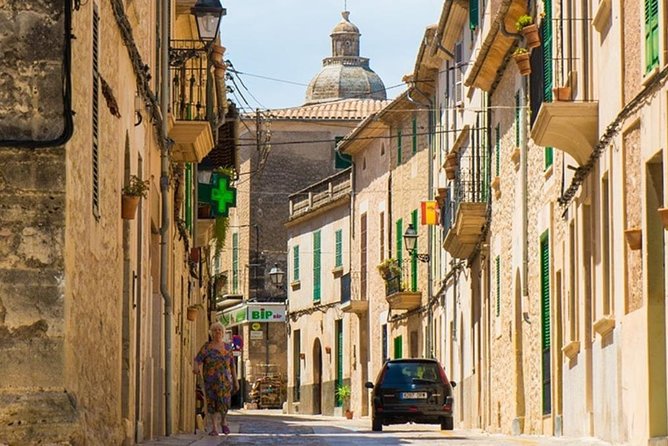
If you’re staying along the south coast, pickup is one of the biggest value pieces. The tour offers pick up and drop-off in the areas from Cala Blava to Calvià (and you’ll get details 24–48 hours before).
The meeting point is Camí de Son Fangos, 151, at Platja de Palma / Pla de Sant Jordi area. The tour starts at 10:00 am and ends back there.
Why does that matter? Because Mallorca traffic and parking can eat time fast. When pickup is available, you’re buying back time and energy—especially in warmer months—so your day feels like a trip, not a logistics project.
If you do have a car, you can still enjoy the tour format, but you’ll want to compare your own driving time and parking hassle against the convenience offered.
Stop-by-stop: what each village and landmark gives you
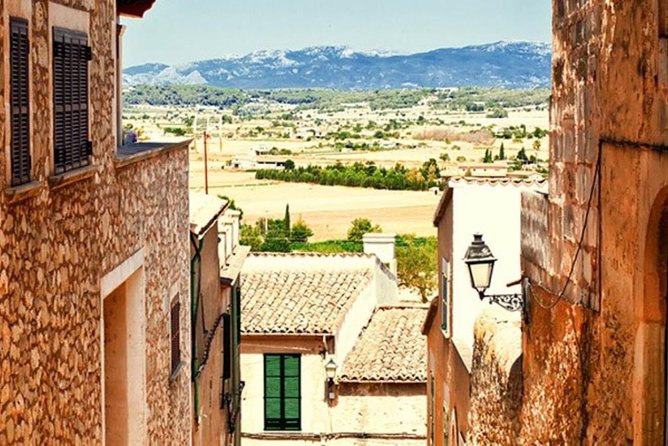
This route moves through a sequence of places that feel different from one another, even though the total day is short. Times are tight enough that you won’t get bored, but long enough that you won’t feel rushed through everything either.
Stop 1: Santuari de Cura (30 minutes, entrance ticket included)
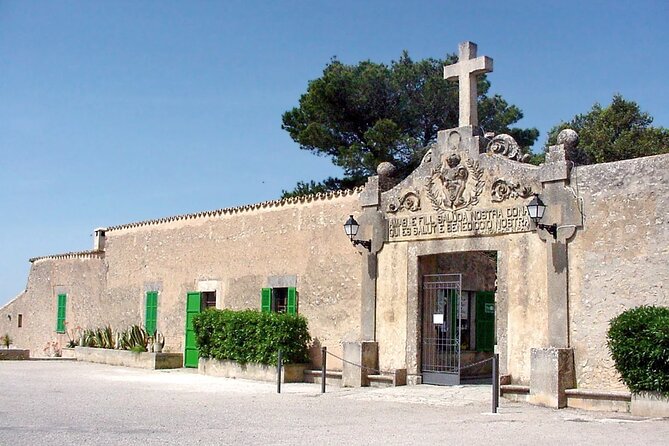
Santuari de Cura (Monasterio de Cura) is your first “set the tone” stop. With a 30-minute guided visit and the entrance ticket included, you can expect the guide to orient you—what this site represents and why it’s still part of local life.
The benefit here is pacing. Starting with something anchored (a sanctuary/monastery setting) gives you context before the tour turns into village wandering and countryside stories.
Practical note: religious sites often mean uneven ground or stair steps. You’ll want comfortable shoes.
Stop 2: Puig de Randa (30 minutes, no admission ticket)
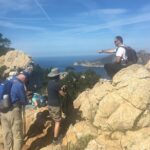
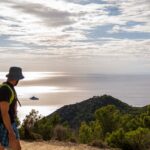
Puig de Randa is where the tour leans into views. The experience highlights mention vantage points, and Puig de Randa fits that role perfectly as a brief “look out and breathe” pause.
Even if you only have 30 minutes, a viewpoint stop is the kind of reset that makes the rest of the day feel more satisfying. You’ll see how the terrain and settlement patterns relate to each other—useful if you plan to drive around later.



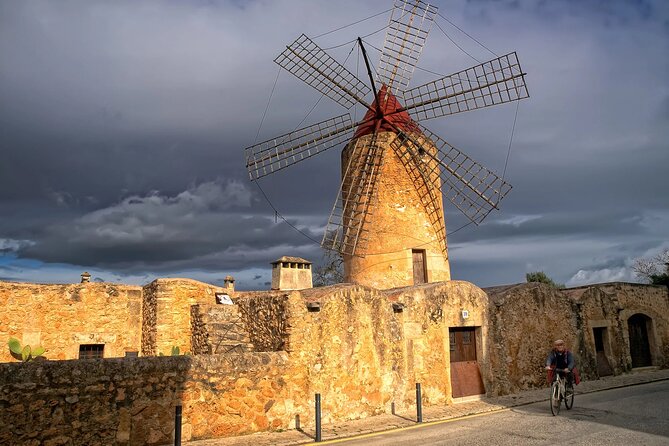
Stops 3 to 6: Algaida, Pina, Lloret de Vista Alegre, Montuiri (about 20 minutes each)
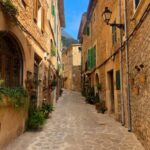
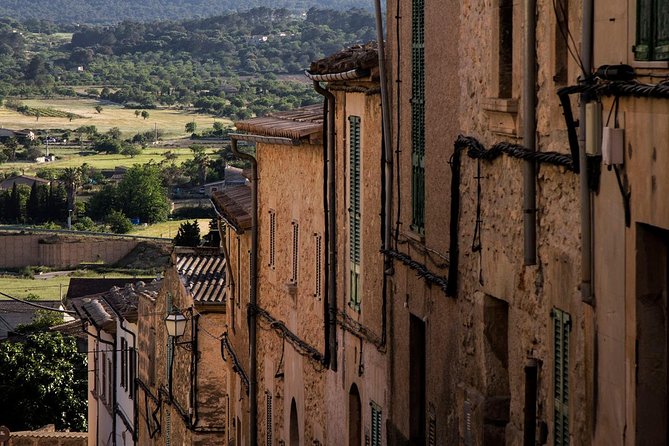
These are the charming village blocks. Each stop is short—generally 15 to 20 minutes—but that’s exactly why they work. You get to walk through real town rhythms: small streets, local signage, everyday storefront life, and the sense that these aren’t set up only for visitors.
Here’s what makes these mid-route stops valuable:
- You’re practicing “slow sightseeing” instead of doing one giant attraction.
- Your guide can point out small differences between towns that you’d likely miss on your own.
- The group stays comfortable because you’re not stuck in long lines or long transit stretches.
The drawback is simple: you shouldn’t plan on big shopping missions at every stop. Think browsing and orientation, not browsing and buying for hours.
Stop 7: Bar s’Hostal (50 minutes, entrance ticket included)
This is the longer final stop, which usually means it’s doing double duty: a proper break plus a structured part of the experience. The entrance ticket is included here, and the stop runs about 50 minutes, giving you time to slow down.
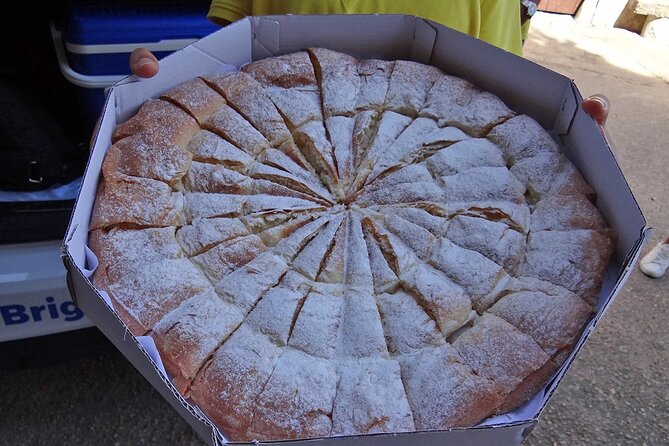
It’s also often where tours feel most “local.” In past departures, the guide included tastings like Ensaimada pastry, and the general approach leaned toward food-as-story, not just food-as-refreshment.
If you have dietary needs, this is the moment to pay attention. One guide (Birgit, in examples from prior groups) went out of her way to accommodate dietary restrictions when people communicated them ahead of time. If that matters to you, tell the operator before the tour so they can plan the snacks and tasting.
Pamboli tasting, sweet-and-salted snacks, and staying hydrated
Food is a core part of the experience here, not an afterthought. You get:
- Sweet and salted local snacks
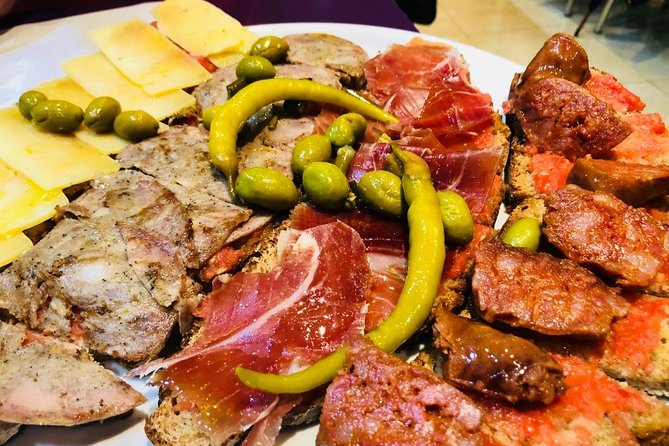
- Lunch (typical pamboli tasting)
- Bottled water
- Water is specifically called out, which matters on a hot island day.
Pamboli is one of those Mallorca basics that tastes simple but actually connects you to local ingredients and habits. The tour’s approach—snacks plus a tasting lunch—means you’ll likely sample more than one flavor profile and get a better feel for what locals actually eat on an ordinary day.
A nice bonus from earlier groups: people were treated to a yummy Ensaimada pastry. You shouldn’t assume it’s guaranteed every single time, but it fits the tour’s pattern of adding thoughtful little extras.
Dietary issues: do your part, and the guide may do theirs
If you need adjustments, send details in advance. The tour description doesn’t list every dietary accommodation, but real-world examples show the guide can be flexible when you flag restrictions ahead of time. That’s the difference between “no problem” and “we’ll just skip food” when you’re on a group schedule.
The local guide effect: windmills, questions, and practical tips
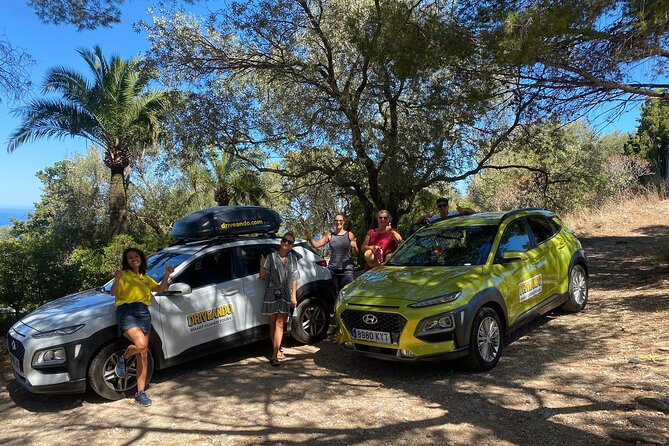
The tour is guided by an expert local guide, and this is where the day can feel more meaningful than the itinerary alone. In examples, the guide (Birgit) was praised for being warm, full of knowledge, and very good at storytelling with real context.
One standout technique: in some cases, the guide used a two-way radio setup so the group and even a separate car could ask questions while traveling. That turns the drive into something active instead of silent—and it helps you ask about what you’re seeing right then, not later when you’ve forgotten.
You’ll also get the kind of advice that helps after the tour. The best guides don’t only point at places; they recommend areas and small stops that match what you like—things that aren’t just standard tourist circuits.
Price and value: why $90.31 can make sense (or not)
At $90.31 per person for about 5 hours, this tour isn’t the cheapest option, but it’s also not trying to be. It offers several value components at once:
- Pickup/drop-off service where available (big time-saver)
- Snacks (sweet and salted)
- Lunch-style pamboli tasting
- Bottled water
- Entrance tickets included for at least key stops
Even if you’re the kind of traveler who usually prefers free-roam days, this is priced in a way that helps you avoid decision fatigue. You don’t need to figure out which village stop is worth it. You don’t need to manage ticket timing for multiple locations. The guide does that.
What could make it feel less worth it for some people?
- If you have a car and you already know exactly where you want to go, you might be able to replicate parts of the route on your own.
- If you strongly dislike walking around in short bursts, the village format may feel too stop-and-go.
But if you want a well-paced half-day with help built in, this price usually feels fair.
Group size, timing, and weather: what to expect in real life
This tour keeps a maximum of 40 travelers. That’s large enough that you won’t feel like you’re on a private boat, but small enough that the guide can still manage the group and conversations.
Timing is tight in a good way: you’ll move from place to place, spend brief periods at each stop, and finish back at the start point. The day is designed to fit into your vacation schedule without swallowing your afternoon.
Weather matters. The experience requires good weather, and if it gets canceled due to poor conditions, you’ll be offered another date or a full refund.
Who should book this tour—and who should skip it
This tour is a strong match if you want:
- A guided introduction to inland Mallorca beyond the coast
- A day with both history/culture context and food
- A practical plan that reduces driving and parking stress
- To learn from a guide who can answer questions during the trip (not just during a speech)
It may not be ideal if:
- You have limited walking ability, since village walking and site grounds are part of the experience.
- You’re traveling with kids under 6, since it’s not recommended for that age group.
- You want long free time at a single attraction. This is a sequence tour, not one-stay-and-flop.
Quick tips to get the most from the day
- Wear shoes you trust on uneven ground, especially if any religious or viewpoint areas have steps.
- Bring a light layer. Even on sunny days, inland air can feel different than the coast.
- If you have dietary needs, mention them ahead of time so the pamboli tasting and snacks can be planned.
- Have your water bottle or just rely on the included bottled water. Either way, pace yourself—5 hours in the sun adds up.
Should you book this Mallorca Windmills, Legends, and Charming Villages tour?
If you’re the kind of traveler who likes structure but still wants authentic atmosphere, I’d book it. The best part is the balance: windmill/countryside stories, a handful of village stops for everyday Mallorca texture, and a food plan built around pamboli tasting plus snacks and hydration.
Skip it if you need lots of wheelchair-friendly or minimal-walking options, or if you’d rather spend your half-day driving your own route with no guided stops. Also, if your vacation schedule is very weather-sensitive, know that the tour depends on good conditions.
For most people staying in the right pickup zone, this is a solid, low-stress way to feel like you visited inland Mallorca—not just the coastal strip.
FAQ
How long is the Mallorca windmills and village tour?
It runs for about 5 hours.
What time does the tour start, and where does it meet?
It starts at 10:00 am. The meeting point is Camí de Son Fangos, 151, Platja de Palma i Pla de Sant Jordi, Illes Balears, Spain, and the tour ends back at the meeting point.
Do I get pickup if I don’t have a car?
Pickup is offered from select hotels in the areas from Cala Blava to Calvià. If you’re outside those areas, pickup/drop-off isn’t included.
What language is the tour offered in?
The tour is offered in English.
What’s included in the price?
Inclusions include sweet and salted local snacks, lunch (typical pamboli tasting), bottled water, an expert local guide, and entrance tickets (including at Santuari de Cura and Bar s’Hostal).
Which stops include entrance tickets?
Entrance tickets are included for Santuari de Cura (Monasterio de Cura) and for Bar s’Hostal. The other listed stops are marked as admission ticket free.
Is it refundable if plans change or if weather is bad?
You can cancel for a full refund up to 24 hours before the experience starts. If it’s canceled due to poor weather, you’ll be offered a different date or a full refund.