REVIEW · MALLORCA
Mallorca: Carthusian Monastery Valldemossa Entrance Ticket
Book on GetYourGuide →Operated by Reial Cartoixa de Valldemossa.SC · Bookable on GetYourGuide
Carthusian quiet with art and royal intrigue. The Carthusian Monastery of Valldemossa is one of those places where you feel history in the stones: a king’s former palace (dating to 1309), a frescoed church, and a long corridor of white arches leading to monks’ cells that were used for centuries. I especially love the way the visit mixes sacred spaces, everyday monastery life, and standout culture—then tops it off with a 15-minute piano recital. The one drawback to plan for: some special rooms tied to the Chopin story and a museum can be ticketed separately, so your total spend may creep up if that’s your priority.
This is a 1-hour walk-through you can do without feeling rushed, especially if you arrive ready with headphones and a charged phone for the audio guide app. You’ll also get a downloadable audio guide in multiple languages (Catalan, English, French, German, Spanish), plus the chance to step out onto gardens and terraces with big valley views. If you’re the type who likes to linger, you might feel the time limit a bit—so use the audio guide to steer you to your must-sees first.
In This Review
- Key highlights worth your time
- Valldemossa monastery: why this entrance ticket feels like a mini journey
- King Sancho’s former palace and the Royal Charterhouse setting
- The church frescoes by Bayeu: art you can actually connect to
- The white-arch corridor and 400 years of monk solitude
- Gardens and terraces: where your photos finally make sense
- Pharmacy, Cell No. 2, and the art rooms with Joan Fuster
- The 16th-century printing press, woodcuts, and Archduke Ludwig Salvator
- The 15-minute piano recital and the audio guide that keeps you moving
- Price, timing, and planning a smooth 1-hour visit
- Who this monastery entrance ticket is best for
- Should you book the Valldemossa monastery entrance ticket?
- FAQ
- What’s included with the Mallorcan monastery entrance ticket?
- How long does the visit take?
- Where do I meet for the entrance?
- What languages are available on the audio guide?
- What should I bring?
- Is free cancellation available?
Key highlights worth your time
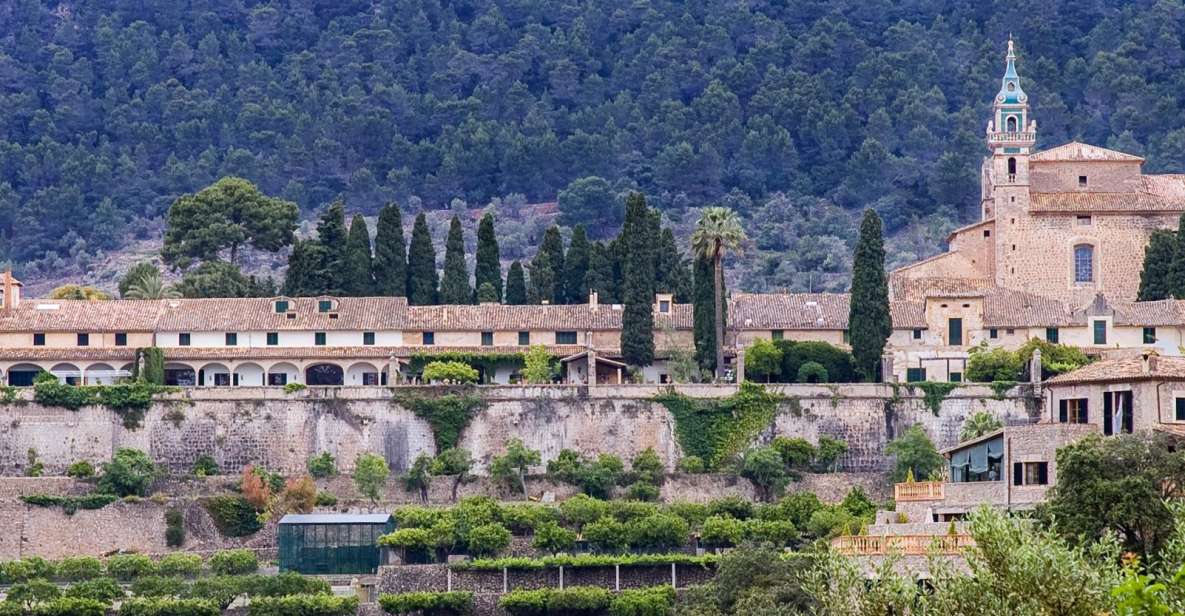
- Royal Charterhouse and King Sancho’s 1309 palace for medieval power and a real sense of place
- Church frescoes linked to Bayeu (Goya’s brother-in-law) that give the visit an art-history spine
- The white-arch corridor and monks’ cells showing how solitude shaped the monastery for 400 years
- Gardens and terraces with Valldemossa valley views that balance the indoor quiet
- Cell No. 2 as one of the most famous stops inside the complex
- Piano recital during your visit for a memorable, short live-music moment
Valldemossa monastery: why this entrance ticket feels like a mini journey
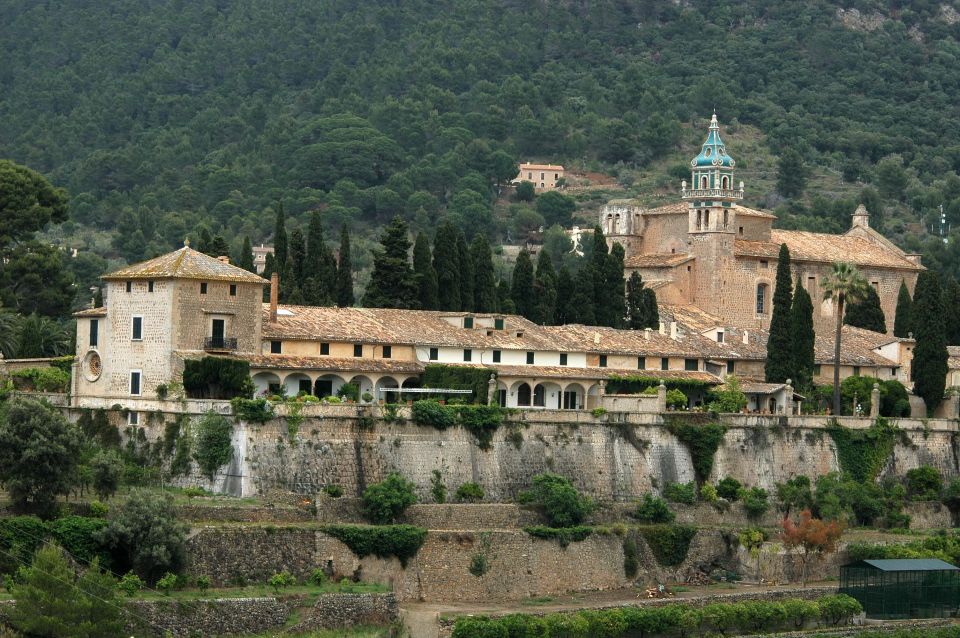
The Carthusian Monastery of Valldemossa is about 20 minutes from Palma, yet it feels worlds away from beach-town energy. The complex is monumental, and that matters because you don’t just see one room. You move through a sequence of spaces designed for different moods: royal residence, church, working monastery areas, art galleries, then outlooks over the valley.
I like how the ticket gives you a blend of “wow” and “oh, that explains it.” You get the grand look of the palace and church, but you also get everyday details—like an old pharmacy with ancestral utensils and medicines. That combination turns this from a quick sightseeing stop into a place that makes you think about how people actually lived, prayed, and worked here.
Also, the time commitment is manageable. At about 1 hour, you’re not trapped inside an all-day schedule. It’s ideal if you’re doing Valldemossa as a half-day detour, or if you want culture without committing to a long museum-style slog.
You can also read our reviews of more tours and experiences in Mallorca

King Sancho’s former palace and the Royal Charterhouse setting
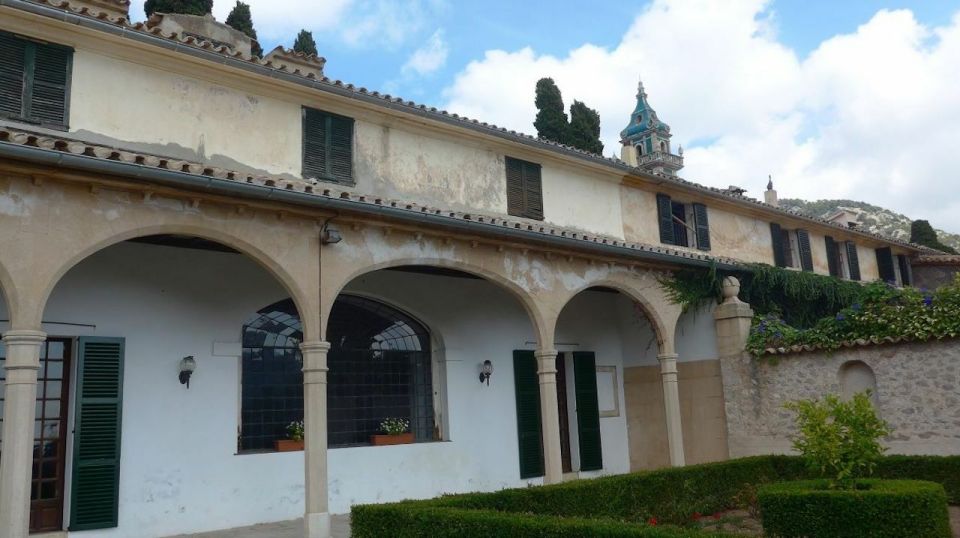
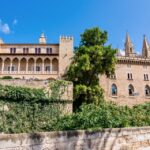
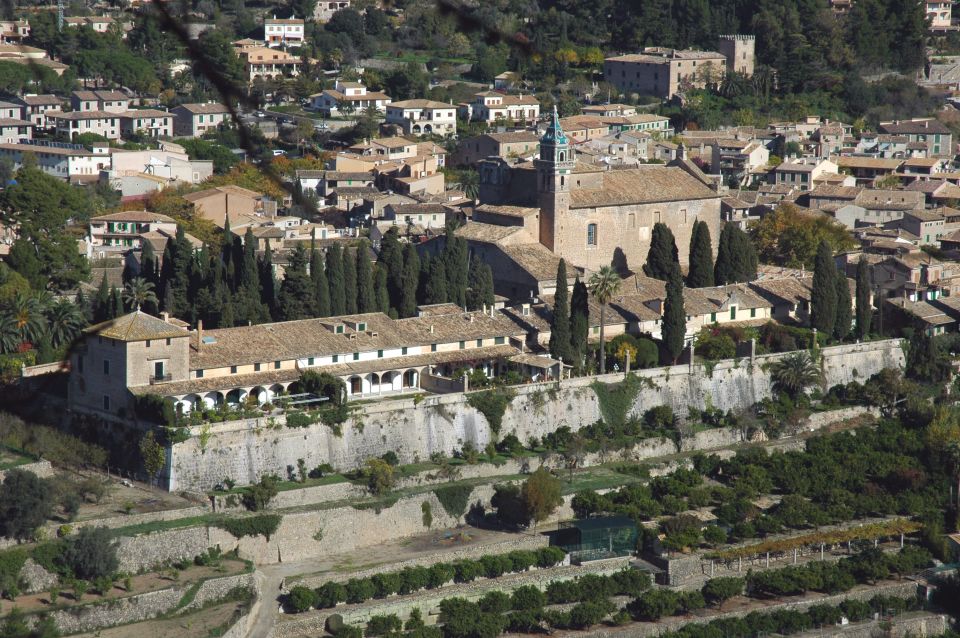
The heart of the experience is the Royal Charterhouse side of the complex and the former residence connected to King Sancho of Majorca, which dates back to 1309. Even if you don’t know medieval Spanish royal history, the palace idea lands fast. You can feel the difference between a functional monastery space and something built to project authority.
What you’re aiming for here is not just a photo spot. You’re trying to understand the monastery as a political and spiritual node. A royal residence within a religious complex hints at big relationships between power and faith in medieval Majorca. And it sets the stage for everything else you’ll see: the church, the artworks, and the sense that the place has always attracted artists, thinkers, and notable visitors.
If you like details, keep an eye out for the way the complex’s layout guides you from grand spaces to calmer, more private ones. That shift is part of the story.
The church frescoes by Bayeu: art you can actually connect to
Inside, the church brings you face-to-face with frescoes by Bayeu, identified as Goya’s brother-in-law. That connection matters because it gives the art more weight than just decoration. You’re not looking at anonymous religious scenes; you’re looking at work linked to the broader artistic world of Spain.
Frescoes also reward a slower glance. They can look dramatic at first and then reveal texture and narrative when you spend an extra few seconds on them. In a 1-hour visit, you might not be able to stare at every panel, but even a quick scan helps you appreciate the church as the spiritual center of the whole complex.
I’d treat this stop as your “reset.” When the art hits, it changes your pace for the rest of the visit.
The white-arch corridor and 400 years of monk solitude
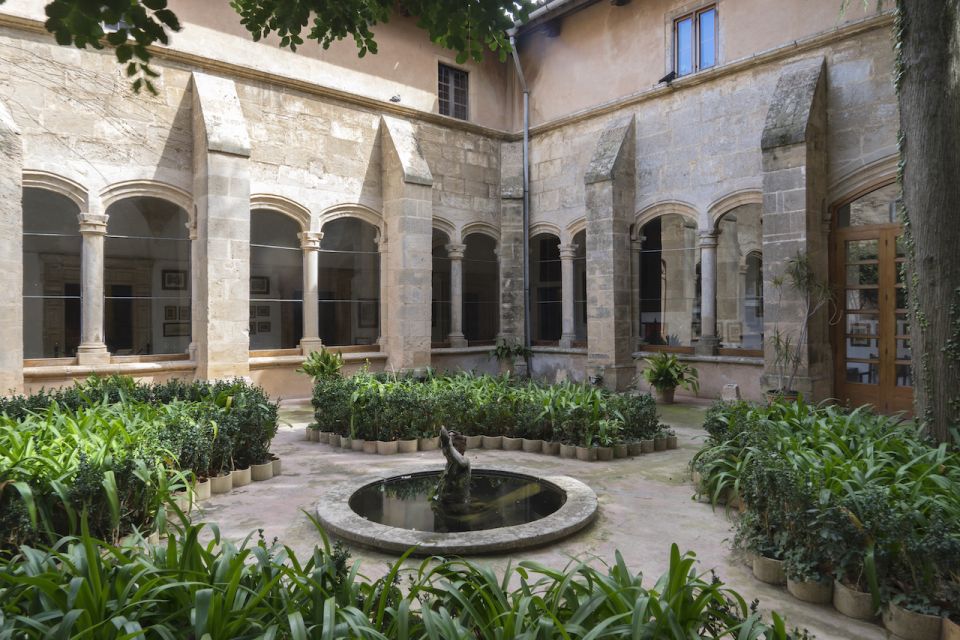
One of the most memorable parts is the long corridor with white arches. It leads to different cells where monks lived, designed to support peace, rest, and isolation. You’re walking through a physical layout that’s basically a philosophy.
This is where the monastery stops being just a pretty building and starts becoming a system. The corridor isn’t accidental. It’s a way to move through shared space while still keeping each cell separate. After you see the corridor, everything else you’ve visited—palace rooms, church, gardens—feels like it has another layer: the monastery isn’t only about grandeur. It’s about routine and discipline.
If you want an easy practical strategy, follow the audio guide here and don’t overthink it. The app helps you connect the design to the purpose, and it makes the corridor feel less like a hallway and more like a lived-in pathway through time.
Gardens and terraces: where your photos finally make sense
After the interior quiet, the gardens and terraces are a welcome release. You get one of the most spectacular views over the Valldemossa valley, and it’s the kind of view that explains why this place has always pulled people in.
I love this section because it balances the heaviness of history. Inside, you’re surrounded by stone and centuries. Outside, you’re hit with open air and depth—valley, slopes, and that soft sense of distance that makes the whole island feel bigger.
Even if you’re not a serious landscape photographer, step to the best viewpoints for a moment without your phone. The view is part of the monastery’s emotional architecture. It’s the monastery’s way of letting you breathe.




Pharmacy, Cell No. 2, and the art rooms with Joan Fuster
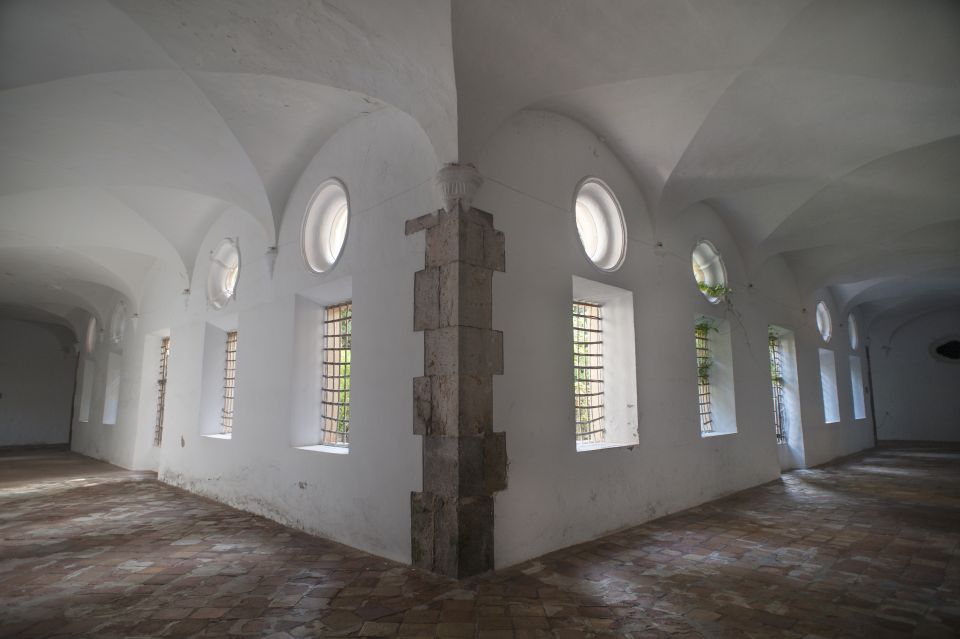
The monastery isn’t only about worship and architecture. It also preserves “how people cared for themselves,” literally, with an old pharmacy that still contains ancestral utensils and medicines. It’s a fascinating stop because it shifts the story from prayer to practical survival. You can imagine the day-to-day reality that existed alongside religious devotion.
Then come the art collections. You’ll see collections of paintings featuring Spanish and local painters, including Joan Fuster. Art here doesn’t feel like a separate attraction bolted on for tourists. It feels like another chapter in how this monastery inspired creativity.
Two stops deserve special mention:
- Cell No. 2, which is one of the famous highlighted rooms you can visit during your time inside.
- The way the monastery’s art collections link visitors to place. The site’s atmosphere has long influenced artists, and the collections help you understand that connection without needing a degree in art history.
One practical heads-up from my standpoint: if you’re specifically chasing the Chopin / George Sand story, it may involve separate paid rooms or a museum area beyond what’s automatically covered. So if that’s your top reason for coming, plan your budget accordingly before you arrive.
The 16th-century printing press, woodcuts, and Archduke Ludwig Salvator
A true surprise in Valldemossa is the 16th-century printing press and the associated woodcut collection. This is one of those museum-style elements that can easily get ignored in a rushed visit, but it’s worth your attention because it expands the monastery beyond painting and prayer into publishing and reproduction of ideas.
Woodcuts also help you visualize the era. You’re not just seeing finished works; you’re seeing the tools and techniques that allowed images to travel and spread. In a place defined by stillness, that sense of shared knowledge adds a different energy.
And then there’s Archduke Ludwig Salvator of Austria, a cousin of Empress Sissi, who came to Mallorca on a steamship and fell in love with this part of the island. That royal connection adds a personal twist to the history. It’s not only about the monastery’s past role; it’s also about how later influential figures came here and what the place represented to them.
If you’re wondering why the museum portion matters, this is your answer. The printing press and visiting aristocrat story show the monastery as a long-term magnet for culture.
The 15-minute piano recital and the audio guide that keeps you moving
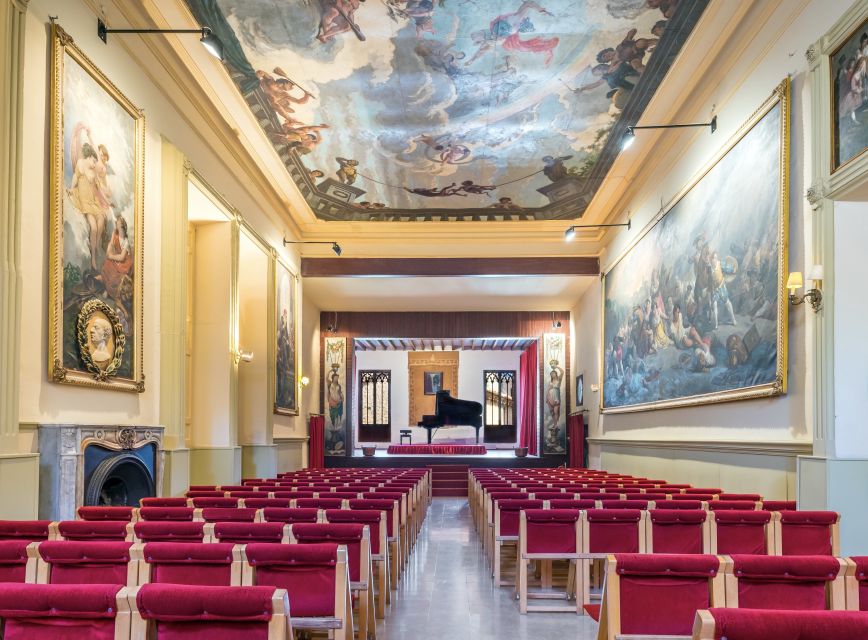
The visit includes a piano recital—about 15 minutes—and it’s one of the most memorable parts of the experience because it’s short, live, and perfectly timed with the mood of the monastery. The music makes the quiet feel intentional, not empty. When you step from corridors and cells into the recital, your brain starts matching sound to space.
Just as important is the Cartoixa de Valldemossa audio guide app. You get it included, and you can choose from Catalan, English, French, German, Spanish. There’s free WiFi in Valldemossa, but I strongly recommend you install the app before you go—then your visit won’t depend on cell service or spotty reception.
Practical things to do before you arrive:
- Bring headphones (don’t assume there will be spares).
- Make sure your smartphone is charged.
- Download and open the app beforehand so you can start fast.
I also like the pacing the audio guide encourages. For a 1-hour ticket, you need help picking what matters most. The app does that job without forcing you into a rigid tour group schedule.
Price, timing, and planning a smooth 1-hour visit
At $14 per person, this entrance ticket is good value because it bundles several things that are often separate elsewhere: entrance access, the audio guide app, and the piano recital. For a short visit, that combination saves you time and avoids decision fatigue.
The only pricing twist I’d plan for is the add-on reality. Some rooms related to Chopin / George Sand and a museum may require separate payment once you’re inside. If you care about those parts, factor that in early so you’re not surprised mid-visit.
Timing matters too. The experience runs for about 1 hour, and you should check available starting times so you don’t end up arriving at a moment that doesn’t match the entry flow. If you want your best shot at seeing everything without stress, show up a few minutes before your slot.
Location is simple: you come directly to the entrance on the main square of Valldemossa, and the visit ends back at that same meeting point. That makes it easy to pair with strolling the town afterward.
One more practical note if you’re driving: parking in Valldemossa is for residents only. If you’re arriving by car, plan on alternative parking and expect a walk in.
Who this monastery entrance ticket is best for
This ticket works well if you want a high-impact cultural stop without losing half a day. It’s especially good for:
- People who like a mix of art + architecture + atmosphere
- Visitors who appreciate short music moments, like the piano recital
- Travelers who want a 1-hour plan that fits neatly into a Valldemossa or Palma day
It may be less ideal if you’re the type who wants to spend hours in one room, or if your main goal is a very specific museum or special exhibit tied to the Chopin chapter. In those cases, budget for possible extra ticketed areas and give yourself a bit more time than the basic 1-hour flow.
Should you book the Valldemossa monastery entrance ticket?
Book it if you want an efficient, meaningful visit that mixes Royal Charterhouse history, church frescoes, monks’ cells, gardens with valley views, plus an included piano recital. For the money, the package feels balanced: you’re not only buying entry, you’re buying context.
Skip or adjust your plan if Chopin-related rooms and museum time are your top obsession, because you might need extra separate tickets for certain parts. Also, if you hate time limits, be prepared to move with purpose rather than wander for long stretches.
If you do book, my best advice is simple: download the Cartoixa audio guide first, bring headphones, and treat Cell No. 2 and the white-arch corridor as your “must-not-miss” anchors. With that mindset, the monastery becomes less of a checklist and more of a calm story you walk through.
FAQ
What’s included with the Mallorcan monastery entrance ticket?
The ticket includes the entrance, a downloadable audio guide app (Cartoixa de Valldemossa), and piano recitals during your visit.
How long does the visit take?
The duration is about 1 hour. You should check availability to see the starting times.
Where do I meet for the entrance?
Go directly to the entrance on the main square of Valldemossa. The visit ends back at the meeting point.
What languages are available on the audio guide?
The audio guide app is available in Catalan, English, French, German, and Spanish.
What should I bring?
Bring headphones and a charged smartphone for the audio guide.
Is free cancellation available?
Yes. You can cancel up to 24 hours in advance for a full refund.